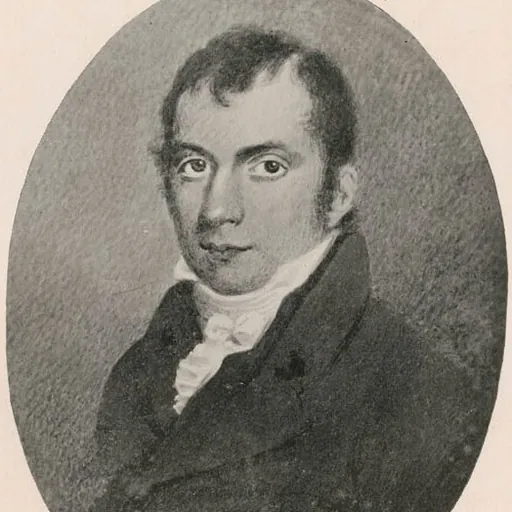
About Robert Semple
Lived 1766 – 1816 (aged 49–50). Robert Semple was an American and Canadian politician, writer, governor and travel writer.
Robert Semple (26 February 1777 – 19 June 1816) was an American-born fur trader and merchant who served as governor of the territories controlled by the Hudson's Bay Company in the Canadas from 1815 until his death in 1816.
Background Semple was born on 26 February 1777 in Boston, Mass. He was the son of Robert Semple, a prominent London merchant and Anne Greenlaw. Semple's parents were loyalists, and sometime during or after the American Revolution, the family returned to England.
Because he was not a British citizen, but an American, Semple was able to travel to many countries that British subjects would barred from entering due to wartime restrictions. During his travels he wrote travel books including Walks and sketches at the Cape of Good Hope; to which is subjoined a journey from Cape Town to Blettenberg's Bay (London, 1803); Observations on a journey through Spain and Italy to Naples; and thence to Smyrna and Constantinople: comprising a description of the principal places in that route, and remarks on the present natural and political state of those countries (2v., London, 1807); A second journey in Spain, in the spring of 1809; from Lisbon, through the western skirts of the Sierra Morena, to Sevilla, Cordoba, Granada, Malaga, and Gibraltar; and thence to Tetuan and Tangiers (London, 1809); Sketch of the present state of Caracas; including a journey from Caracas through La Victoria and Valencia to Puerto Cabello (London, 1812); and Observations made on a tour from Hamburg, through Berlin, Gorlitz, and Breslau, to Silberberg; and thence to Gottenburg (London, 1814). His disapproval led Robertson to leave the Settlement on 11 June 1816 and he intended to return to England. After another attack by the Hudson's Bay Company, the North West Company and the Metis who were all living in close proximity to Semples land, began to prepare for war. Cuthbert Grant, the leader of the Metis, wanted to take back Qu'appelle. They fought and took back the Brandon house from the Hudson's Bay Company on 1 June 1816. There are a few different versions of how the next events took place. On the other hand, the story entered Métis lore as proof of their supremacy over the land and other people, as in Pierre Falcon's song, "La chanson des Bois-brûlés," and especially "La chanson de la Grenouillère" (see below).
Coltman's Report One of the first accounts of what happened at Seven Oaks is known as Coltman's report. Today, Coltman is praised for providing one of the best sources on the incident. Unfortunately, this source was largely ignored by many historians until 1910. Coltman gathered information from an equal number of people, from both sides of the battle, and analysed their credibility. Coltman also did not let his personal beliefs cloud his report. Overall, the information that he gathered was mostly unbiased and very extensive. The conclusions that Coltman made in his report did not support the ideals that many of the white-Anglo historians wanted to convey. This source was intentionally ignored as historians would choose sources that agreed with their opinions rather than those that told the truth.
Coltman's report determined that the Selkirk men fired the first shot and began the battle. He argued that the battle should not be called a massacre because Semple had begun the battle. The fight was lost due to the Selkirk men being unaccustomed to the way the Metis fought. The Metis were skilled at close combat, allowing them to win the battle with such a high rate of success.
Coltman examined the rumours of the Metis "finishing off the enemy", meaning killing men that would have otherwise lived. He determined that this practice did happen but it was not an act of extreme violence. Rather, they did this because the Metis did not take prisoners.
Other rumours such as the Metis did not bury the bodies and left them to be eaten by animals were found to be true. Coltman argued that some Metis did behave cruelly, but it could not be applied to the whole group.
Chanson de la Grenouillère Pierre Falcon a Métis, wrote the "Chanson de la Grenouillère" a song about what happened at the battle of Seven Oaks. This song was not ever looked at by historians for the same reasons that Coltmas report was not utilised; because it did not support the ideals of the white-Anglo historian.
Alexander Ross Alexander Ross wrote a book on the battle in 1856. Modern historians explain that "Ross's interpretive framework is uncomplicated: it is a straightforward expression of the theme of "civilization versus savagery". The civilized white man versus the savage Indian that Ross portrayed became a theme that repeated in the majority of history books afterwards. The Metis were labeled as the ones who fired the first shot and killed Semple and his men. The writing of the book was an "effort by Ross to privilege his own European ethnicity in opposition to the posited savagery of all Native people within the Red River Settlement, including persons of mixed race".
Ross's book had success and was widely accepted by historians despite much of the account being false and lacking in proper evidence. It was this book that began the false telling of what happened at the Red River Settlement between Semple and Grant.
The stereotypes he created would then be repeated throughout history. The history that Ross wrote is said to have been the tool used by white Anglos to justify having settled on native land without reasonable grounds.
George Bryce Similar to Ross, George Bryce was asked to write Manitoba's history from his white, European, and upper class perspective. The history that he wrote was one sided and promoted Selkirks actions. Bryce describes "Selkirk and his party [as] the unproblematic heros, and the NWC and the Metis the villains, underscored by their putative role at Seven Oaks". There were many problems with the credibility of Bryce's research. "In researching 7 oaks, [Bryce] simply looked for testimony from the Selkirk side alleging Metis savagery, quoted it at length and ignored contrary evidence". Thus, the same problems and stereotypes that were present in Ross's history were then repeated and set further precedent for other historians poorly representing the incident at Seven Oaks. Bryce, like Ross understood that "representing 7 oaks as a "massacre: was therefore integral the construction of a new master narrative of progress in the West".
French Canadian writings Writings on the Seven Oaks incident by French Canadians were kinder to the Metis, but still stated that the Metis were responsible for the battle and coined the event as a massacre.
W. L. Morton W. L. Morton's history further discredited the Metis. He states in his history that either Deschamps or Machicabou (an Indian) killed Semple and repeatedly represents the Metis as savages who terrorised Semple's group. Like the other white-Anglo historians before him, Morton wrote a biased history that promoted his ethnic group and class. His history was also used to discredit the Riel resistance. In his writings, Morton was harsher on the description of the Metis. Whereas older historians had presented the Metis as wild but noble (a mix of positive and negative characteristics) Morton describes the Metis as completely negative.
Legacy To justify white-Anglo actions, the Metis needed to be shown as violent and lacking judgement and a prime example of this was done through the histories written on the battle at Seven Oaks. "Seven oaks provided a convenient vehicle for the presentation of an alleged Metis weakness of character, implicitly justifying the disposition of their lands".
Today, the myths of what happened at Seven Oaks have become nearly "resistant to revision" due to the original histories on the topic.
Don’t just read it —
keep it.
Full-length biographies made to live with: read them, listen on the way to work, watch them tonight.
- E-book
- Audio
- Video
Instant download · yours to keep · every purchase keeps this site free
Important facts
People in Robert Semple's life
Named in this biography and alive at the same time

Related people
Same field, nearest in time


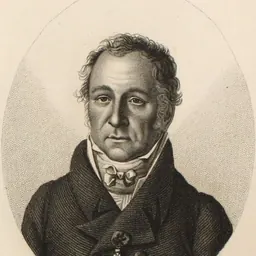

Contemporaries
People whose lives overlapped Robert Semple's





Frequently asked questions
Who was Robert Semple?
Canadian businessman and writer
When was Robert Semple born?
Robert Semple was born in 1766 in Boston.
When did Robert Semple die?
Robert Semple died in 1816 in Fort Garry.
What was Robert Semple's occupation?
Robert Semple was a politician, writer, governor and travel writer.
What nationality was Robert Semple?
Robert Semple was American and Canadian.
Sources & further reading
· DBpedia: Robert Semple (fur trader)
Cite this page
APA: Biography.guide. (2026). Robert Semple. https://biography.guide/robert-semple-politician/
MLA: "Robert Semple." Biography.guide, https://biography.guide/robert-semple-politician/.
Chicago: "Robert Semple." Biography.guide. https://biography.guide/robert-semple-politician/.
Data last updated: 2026-09-22 · Spot an error? Report a correction.
Portrait: Wikimedia Commons · author & licence
Page generated 2026-09-27 05:02 UTC