
Robert S. Wistrich
Professor at the Hebrew University of Jerusalem
About Robert S. Wistrich
Lived 1945 – 2015 (aged 70). Robert S. Wistrich was a Russian, British and Israeli historian, university teacher and writer.
Robert Solomon Wistrich (April 7, 1945 – May 19, 2015) was a scholar of antisemitism, considered one of the world's foremost authorities on antisemitism. Wistrich considered antisemitism "the longest hatred" and viewed anti-Zionism as its latest incarnation. According to Scott Ury, "More than any other scholar, Wistrich has helped integrate traditional Zionist interpretations of Jewish history, society, and fate into the study of antisemitism." Other researchers have reproduced much of his work without questioning its founding assumptions.
Biography Robert Wistrich was born in Lenger, in the Kazakh Soviet Socialist Republic on April 7, 1945. After World War II, the Wistrichs returned to Poland. Later, finding the post-war environment in Poland to be dangerously anti-Semitic, the family moved to France and then to England. Wistrich grew up in England, where he went to Kilburn Grammar School, where in Wistrich's words, he was taught by "Walter Isaacson, a refugee from Nazi Germany who first taught me how to think independently" From 2002, he was the director of SICSA, and edited its journal, Antisemitism International.
Wistrich wrote prolifically on antisemitism in the Islamic world, insisting that "The Islamists have never made any secret of the centrality for them of the religious dimension of the Muslim–Jewish conflict—something very poorly understood in the West. This is clearly spelled out in the radically antisemitic Hamas Covenant of 1988, which constitutes the ideological basis for its continuing jihad to annihilate Israel. The Covenant draws on an ancient hadith attributed to Muhammad himself in which he purportedly declares: 'The Day of Judgment will not come until Muslims fight the Jews, when the Jew will hide behind stones and trees. The stones and trees will say, O Muslims, O Abdullah [servant of Allah], there is a Jew behind me, come and kill him.'"
In 2014, Wistrich authored an exhibition entitled "The 3,500 year relationships of the Jewish people to the Land of Israel". The exhibition was scheduled for display at the headquarters of UNESCO, but was canceled under pressure from Arab nations. The exhibit eventually opened six months later after the phrase "Land of Israel" was replaced with "Holy Land". In response to the controversy, Wistrich said the cancellation "completely destroyed any claim that UNESCO could possibly have to be representing the universal values of toleration, mutual understanding, respect for the other and narratives that are different, engaging with civil society organizations and the importance of education."
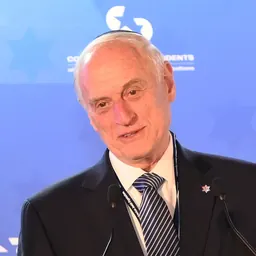
At his death, he was considered the world's foremost authority on antisemitism. Malcolm Hoenlein of the Conference of Presidents of Major American Jewish Organizations called his death a tragic loss to "the entire Jewish community and to all those engaged in the efforts to counter resurgent antisemitism". Irwin Cotler, former Minister of Justice and Attorney General of Canada, said "the world of academe has lost an outstanding scholar and historian; the world of Jewish studies has lost a seminal thinker." Charles A. Small of the Institute for the Study of Global Antisemitism and Policy called Wistrich "a scholar committed to the sober documentation of facts and the highest caliber of scholarship." From this perspective, Wistrich's late embrace of the idea that antisemitism was a "historically continuous, unique, and potentially ineradicable phenomenon", his polemical and visceral anger at the Left's criticism of Israel which he viewed as a "betrayal" of Jews, and his anxieties over the putative emergence of a new antisemitism all reflect points made by the earliest Zionists in the context of comparable tensions at the end of the 19th century in Europe. For Ury, the resurgence of the old paradigm evidenced in the works of Ettinger and Wistrich, to the point that they now form the "dominant academic and public framework" for studying antisemitism, is puzzling. For the re-emergence of "assumptions, concepts, and paradigms that were introduced and canonized in debates that shaped turn-of-the-century society and politics across Eastern and Central Europe" in contemporary scholarship re-embraces "a set of postulates that supply ready-made answers to familiar questions" which only lead, in his view, to circular arguments. The line between politics and scholarship is consequently blurred.
In the last article he wrote before his death, which was published posthumously, entitled "The Anti-Zionist Mythology of the Left", he declared: "The negative symbolization of Israel and the Jews in this abject discourse is not, of course, confined to the left. False analogies, misleading amalgams, and Orwellian doublespeak long ago replaced intellectual integrity or reasoned thought in the anti-Zionist camp—transcending older political divides. This is as true of liberals, conservatives, or proto-fascists as it is of leftists. The relentless efforts over the last forty years to equate Zionism with racism, colonialism, ethnic cleansing, apartheid, or Nazism are indeed among the more pathological symptoms of a universal pollution of contemporary political vocabulary. It is, however, the 'anti-racist' pretensions of the anti-Zionist left that make their specific betrayal of socialist values particularly repugnant and shameful."
Published works
Selected books
Revolutionary Jews from Marx to Trotsky. Barnes & Noble Books, 1976. The Left Against Zion. Vallentine Mitchell & Co, 1979. Who's Who in Nazi Germany. Weidenfeld and Nicolson, London, 1982. Socialism and the Jews. Oxford University Press, 1982.
The Jews of Vienna in the Age of Franz Joseph. Oxford University Press, 1989. Between Redemption and Perdition: Modern Antisemitism and Jewish Identity. Routledge, 1990. Anti-Zionism and Antisemitism in the Contemporary World. New York University Press, 1990. Antisemitism, the Longest Hatred. Pantheon, 1992. Terms of Survival. Routledge, 1995. A Weekend in Munich: Art, Propaganda and Terror in the Third Reich (with Luke Holland). Trafalgar Square, 1996. Theodor Herzl: Visionary of the Jewish State. New York and Jerusalem: Herzl Press and Magnes Press, 1999, 390 pages. Demonizing the Other: Antisemitism, Racism and Xenophobia. Routledge, 1999. Hitler and the Holocaust. Random House, 2001. Nietzsche: Godfather of Fascism? Princeton, 2002. Laboratory for World Destruction. Germans and Jews in Central Europe, University of Nebraska Press, Lincoln, Nebraska 2007. A Lethal Obsession: Anti-Semitism from Antiquity to the Global Jihad, Random House, 2010. From Ambivalence to Betrayal. The Left, the Jews and Israel, University of Nebraska Press, Lincoln, Nebraska 2012.
Don’t just read it —
keep it.
Full-length biographies made to live with: read them, listen on the way to work, watch them tonight.
- E-book
- Audio
- Video
Instant download · yours to keep · every purchase keeps this site free
Important facts
People in Robert S. Wistrich's life
Named in this biography and alive at the same time





Related people
Same field, nearest in time

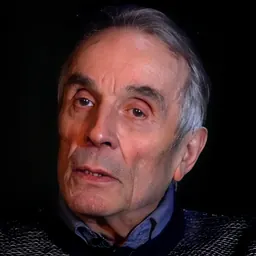
Contemporaries
People whose lives overlapped Robert S. Wistrich's

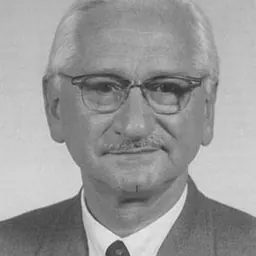
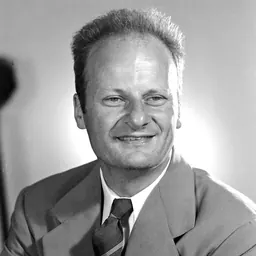
Frequently asked questions
Who was Robert S. Wistrich?
Professor at the Hebrew University of Jerusalem (1945–2015)
When was Robert S. Wistrich born?
Robert S. Wistrich was born on 7 April 1945 in Lenger.
When did Robert S. Wistrich die?
Robert S. Wistrich died on 19 May 2015 in Rome.
What was Robert S. Wistrich's occupation?
Robert S. Wistrich was a historian, university teacher and writer.
What nationality was Robert S. Wistrich?
Robert S. Wistrich was Russian, British and Israeli.
Sources & further reading
· Wikipedia: Robert S. Wistrich
Cite this page
APA: Biography.guide. (2026). Robert S. Wistrich. https://biography.guide/robert-s-wistrich/
MLA: "Robert S. Wistrich." Biography.guide, https://biography.guide/robert-s-wistrich/.
Chicago: "Robert S. Wistrich." Biography.guide. https://biography.guide/robert-s-wistrich/.
Data last updated: 2026-09-20 · Spot an error? Report a correction.
Page generated 2026-09-27 05:17 UTC