
About Robert Roddam
Lived 1719 – 1808 (aged 88–89). Robert Roddam was a British naval officer.
Admiral of the Red Robert Roddam (1719 – 31 March 1808) was a Royal Navy officer who served in the War of the Austrian Succession, Seven Years' War and American War of Independence. He survived to see the French Revolutionary and Napoleonic Wars, but was not actively employed during them.
Roddam was born intto a landed gentry family in northern England, and entered the British navy some years before the outbreak of the War of Jenkins' Ear. He worked his way up through the ranks during this war, and the wider War of the Austrian Succession, distinguishing himself in several actions and gaining promotions which eventually led to his first command in 1746. He impressed his superior officers, including George Anson and Sir Peter Warren, with his ability and enthusiasm, particularly during a daring attack on a French force at Cedeira . Appointed to larger and more powerful ships, Roddam continued to win praise, and spent some time in North American waters, where he became embroiled in local power struggles. Sent to the Caribbean shortly after the outbreak of the Seven Years' War, Roddam encountered a powerful French squadron, and after a hard-fought struggle, was captured and taken prisoner. Released after a period of time spent imprisoned in poor conditions, Roddam was tried by court martial and honourably acquitted.
He spent some time with the Channel Fleet watching the French coast, and was briefly employed as senior officer of one of the blockading squadrons, where he again showed his willingness to fight against heavy odds. He was employed briefly escorting convoys before the end of the war, after which he went ashore. Returning to active service during the Falklands Crisis in 1770, he commanded ships until 1773, and was again recalled to active service, this time with the outbreak of the American War of Independence. He was promoted to flag rank not long afterwards, and became commander-in-chief at the Nore. His final period of active service came during the Spanish armament of 1790, when he was commander-in-chief at Portsmouth, and readied ships for the anticipated war with Spain. He continued to be promoted, reaching the rank of admiral of the red in 1805. He inherited the family seat at Roddam Hall, but though he married three times, he died without issue in 1808.
Family and early life Robert Roddam was born in 1719 at the family seat of Roddam Hall, in Northumberland. He was the second of three sons born to Edward Roddam, and his wife, Jane. Roddam entered the navy in 1735, joining the 20-gun as a midshipman under Captain Drummond, with whom he served in the West Indies for the next five years. He then transferred in succession to the 80-gun ships , and
During this time, he served with Sir Chaloner Ogle and Sir Edward Vernon at the Battle of Cartagena de Indias, and the occupation of Cumberland Bay in 1741.
Hervey's court martial Hervey had gained a reputation for ill treatment of his officers, and on Superbs return to Plymouth in August 1742, Hervey was tried by court martial on charges of 'cruelty, ill usage of his officers, and neglect of duty'. Roddam gave evidence to support the charges against Hervey, who was found guilty and cashiered, while Hardy was honourably acquitted. When relieved by Lieutenant Hamilton, Roddam related the strange behaviour of the ship, suggesting that some sort of witchcraft was responsible. In Hamilton's presence, Roddam attempted to repeat the procedure, and for the fourth time the ship missed stays. At daybreak a strange sail was sighted ahead of Monmouth, which was chased down and captured. She proved to be a Spanish ship, valued at £100,000, which would otherwise have been missed had Monmouth come about during the night. Roddam was advanced to second lieutenant on 14 July 1744, during the captaincy of Henry Harrison, and two years later, on 7 June 1746, was promoted to his first command, that of the 14-gun sloop , which was nearing completion at Poole. Shortly after his arrival, the commander-in-chief, George Anson expressed a desire to stop a fleet, then at Plymouth, from sailing. The commanders of the various ships in the fleet argued against sending a ship, owing to the strong south-westerly wind, but Roddam, despite having a brand-new ship, not fully fitted and trialled at sea, offered to make the attempt. Impressed, Anson wrote to the Admiralty, and requested that Roddam be placed under his command.
Impressed with Harrison's confidence, Warren ordered Roddam to make an attack. Roddam sailed that evening, and was in position the following morning. He stormed the first battery, carrying it and destroying all its guns, as well as capturing a Spanish privateer which emerged from the bay. He then entered the bay, burnt twenty-eight merchant ships and captured five of them, the most he could provide sailors to man from his small crew. During this time he escorted Thomas Pelham-Holles, 1st Duke of Newcastle, who was on a diplomatic mission to the Dutch Republic. Roddam's time in the North Sea came to an end with the signing of the Treaty of Aix-la-Chapelle in 1748, which brought the War of the Austrian Succession to a close.
On assessing Greenwichs strength, the frigate kept close to the squadron, which then came up and attacked, action commencing at 9 a.m. when Diadème opened fire. For the next twelve hours Greenwich was constantly engaged with one or other of the French ships.
The colours were then struck to Éveillé, upon which her commander demanded Roddam come aboard his ship. A lieutenant was then sent over in a boat from the French ship, and Roddam came aboard. The French commander, Captain Merville, gave Roddam the bedding of the ordinary ship's company and a dirty rug, and did not allow him to change his clothes.
Captivity Roddam and his men were taken to Hispaniola and imprisoned there. At first Roddam was allowed to visit his men everyday, but after some time, this was refused. His men became concerned that he had been murdered, and on not getting a satisfactory answer to their queries, seized their guards and took up arms. The prison governor sent for Roddam and asked him to restore order among his men, which Roddam only agreed to do once he had received promises of better treatment for them. Their treatment improved, and after two months in prison the men were paroled back to Jamaica. Roddam was exchanged shortly after his arrival in England, and went out as a passenger aboard to join the fleet off Ushant under Sir Edward Hawke. On arriving he received orders to watch a fleet of transport ships, with an escort of 16 frigates, moored there, believed to be preparing to carry troops to invade Ireland. Lacking sufficient ships to engage the frigates, Roddam gave orders that if possible the French were to be engaged so as to target the transport ships and shoot away their masts, but to avoid the frigates. Reynolds forbade Roddam from trying, whereupon Roddam suggested that Reynolds cruise off one of the channels of Belle Île, while Roddam covered the other. Reynolds agreed to this, but that night the French were able to elude Reynolds, and escaped into the river Vans. Roddam was then sent to Saint Helena, with Captain Jeekill's 60-gun under his orders, to bring home the East Indies convoy. They were joined for their return voyage by Sir George Pocock's squadron.
Falklands crisis and American War of Independence Roddam was recalled to active service during the Falklands Crisis in 1770, with an appointment to command the 74-gun on 7 December. The crisis died down without breaking into open conflict, and Roddam remained in command of Lenox, which was used as the Portsmouth guardship, until 19 December 1773, when he was relieved by Captain Matthew Moor. He was without active employment for a time after the end of the war, but was promoted to vice-admiral of the red on 24 September 1787, and on 20 April 1789 he became Commander-in-Chief at Portsmouth. None of Roddam's marriages produced any children, and he left his estates to his distant relative William Spencer Stanhope, of Cannon Hall near Barnsley in south Yorkshire, the great-grandson of his first cousin Mary Roddam, wife of Edward Collingwood, and cousin to Admiral Lord Collingwood. He appears to have spent his time improving the house and grounds, and was probably responsible for adding the late eighteenth-century wings to the hall.
b. The controversy eventually involved a number of colonial leaders, including Chief Justice James DeLancey, Governor George Clinton, who was also Roddam's father-in-law, and John Russell, 4th Duke of Bedford, the Secretary of State for the Southern Department. Part of the debate revolved around the rights of the civil authorities to intervene in the military's judicial process, with Clinton criticising DeLancey's attempts to extend his authority at the expense of military discipline.
c. Greenwich enjoyed only a brief career with the French. She was taken into their service under Captain Foucault, and saw action with Guy François de Coetnempren, comte de Kersaint's squadron at the indecisive Battle of Cap-Français on 21 October 1757. She survived the action and escorted a convoy to France, but was wrecked in a gale as she neared the French coast on 1 January 1758.
Don’t just read it —
keep it.
Full-length biographies made to live with: read them, listen on the way to work, watch them tonight.
- E-book
- Audio
- Video
Instant download · yours to keep · every purchase keeps this site free
Important facts
People in Robert Roddam's life
Named in this biography and alive at the same time


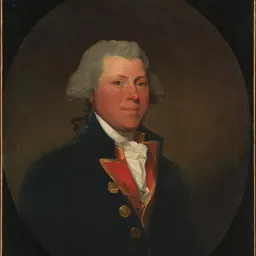
Related people
Same field, nearest in time
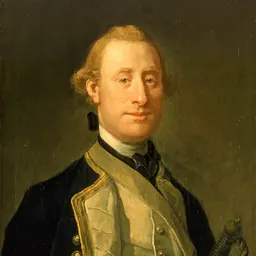
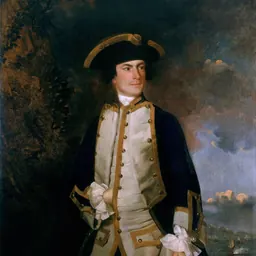



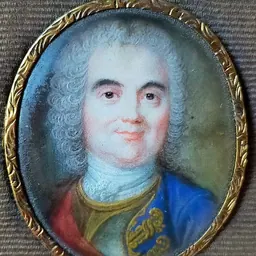
Contemporaries
People whose lives overlapped Robert Roddam's



Frequently asked questions
Who was Robert Roddam?
Royal Navy admiral (1719-1808)
When was Robert Roddam born?
Robert Roddam was born in 1719 in Roddam Hall.
When did Robert Roddam die?
Robert Roddam died on 31 March 1808 in Morpeth.
What was Robert Roddam's occupation?
Robert Roddam was a naval officer.
What nationality was Robert Roddam?
Robert Roddam was British.
Sources & further reading
Cite this page
APA: Biography.guide. (2026). Robert Roddam. https://biography.guide/robert-roddam/
MLA: "Robert Roddam." Biography.guide, https://biography.guide/robert-roddam/.
Chicago: "Robert Roddam." Biography.guide. https://biography.guide/robert-roddam/.
Data last updated: 2026-09-20 · Spot an error? Report a correction.
Page generated 2026-09-27 05:21 UTC