
Robert Murdoch Smith
Scottish engineer, archaeologist and diplomat
About Robert Murdoch Smith
Lived 1835 – 1900 (aged 64). Robert Murdoch Smith was a British engineer, anthropologist, archaeologist, diplomat and soldier.
Major General Sir Robert Murdoch Smith (18 August 1835 – 3 July 1900) was a Scottish engineer, archaeologist and diplomat. He is known for his involvement with the excavation of antiquities found at Knidos and Cyrene, the telegraph to Iran, Persian antiquities bought for the Victoria and Albert Museum, and for serving as Director of the Edinburgh Museum of Science and Art.
Early life Smith was born on 18 August 1835 in Bank Street, Kilmarnock. He was the second child of Jean (born Murdoch) and Dr Hugh Smith. He attended Kilmarnock Academy and went on to spend four years at Glasgow University. Smith's role was significant as he was presented with a large statue that had fallen onto its front face on a high cliff The limestone core of a monument was still there but the marble had been moved or stolen. Other pieces of worked stone lay around where they had been abandoned. Smith was able to replace, examine and move each of the remaining stones, and to create a detailed report on the supposed construction and its historical context. The Lion of Knidos was loaded onto the naval ship HMS Supply and shipped to London, where it is now held in the British Museum. In 1862, Smith was able to publish his account of the excavations at Knidos, and in 1864 he wrote and Porcher illustrated their report on the Cyrene work.
In parallel with this he had not lost his interest in culture. In 1873, he was given the unusual task of gathering artefacts and antiquities for the United Kingdom paid for by the Department of Science and Art. Smith did not just buy individual items, but in at least one case bought an entire collection belonging to Jules Richard in 1875.
He lived in Tehran and his collection was so extensive that a special exhibition was staged in 1876 with a guide to the Victoria and Albert Museum's special gallery written by Smith. The V&A acknowledge that it is Smith's acquisitions that formed their Iranian collection. Smith had not ignored his main job and his partnership with the Shah, Nasir al-Din, was noted when he received his Sword of Honour.
He died at home, 17 Magdala Crescent in Edinburgh in 1900, leaving two daughters.
Don’t just read it —
keep it.
Full-length biographies made to live with: read them, listen on the way to work, watch them tonight.
- E-book
- Audio
- Video
Instant download · yours to keep · every purchase keeps this site free
Important facts
People in Robert Murdoch Smith's life
Named in this biography and alive at the same time



Related people
Same field, nearest in time

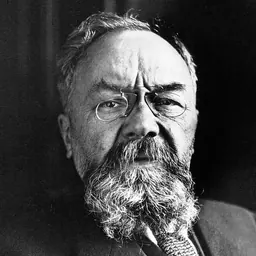
Contemporaries
People whose lives overlapped Robert Murdoch Smith's



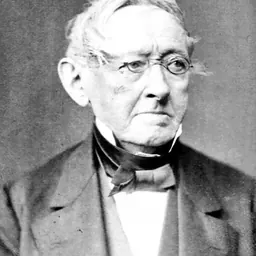

Frequently asked questions
Who was Robert Murdoch Smith?
Scottish engineer, archaeologist and diplomat
When was Robert Murdoch Smith born?
Robert Murdoch Smith was born on 18 August 1835 in Kilmarnock.
When did Robert Murdoch Smith die?
Robert Murdoch Smith died on 3 July 1900 in Edinburgh.
What was Robert Murdoch Smith's occupation?
Robert Murdoch Smith was an engineer, anthropologist, archaeologist, diplomat and soldier.
What nationality was Robert Murdoch Smith?
Robert Murdoch Smith was British.
Sources & further reading
· Wikipedia: Robert Murdoch Smith
· DBpedia: Robert Murdoch Smith
Cite this page
APA: Biography.guide. (2026). Robert Murdoch Smith. https://biography.guide/robert-murdoch-smith/
MLA: "Robert Murdoch Smith." Biography.guide, https://biography.guide/robert-murdoch-smith/.
Chicago: "Robert Murdoch Smith." Biography.guide. https://biography.guide/robert-murdoch-smith/.
Data last updated: 2026-09-25 · Spot an error? Report a correction.
Page generated 2026-09-27 05:13 UTC