
About Robert Mugge
Born 1950. Robert Mugge is an American film director, screenwriter, film editor and director.
Robert Mugge (born May 8, 1950) is an American documentary film maker. He has focused primarily on films about music and musicians, but some of his earliest films were not music focused and he is now continuing to branch out as his interests and work evolve.
Biography Robert Mugge was born in Chicago, Illinois as Mugge's father finished his dissertation on Black Migration in the South and began a career in state and federal government. In 1959, Mugge moved with his father, his mother Elizabeth Mugge (née Messersmith), and three younger siblings to the Washington, D.C. suburb of Silver Spring, Maryland, which the family made its permanent home.
Mugge attended John F. Kennedy High School in Silver Spring during its progressive period of the mid-1960s where he was encouraged to write poetry, perform in rock bands, compose a musical comedy, and publish an underground newspaper and yearbook. During a two-year stint at Frostburg State University, he wrote short plays, practiced photography, and staged large scale multimedia events before transferring to the University of Maryland, Baltimore County (UMBC) to study filmmaking. At UMBC, he designed his own academic major titled Film and Associated Art Media and received one of the first "Youthgrants in the Humanities" from the National Endowment for the Humanities to direct a long form documentary titled Frostburg which focused on the Appalachian mining town where he had lived previously. He then spent one year as a grad assistant and MFA candidate in Temple University's Documentary Filmmaking program but left without finishing in order to pursue his career. As an aspiring filmmaker, he was perhaps most influenced by a course in film theory given by the late Serbian-American filmmaker and educator Slavko Vorkapich at the AFI Theatre at the Kennedy Center. Other influences on his work (whether evident or not) included Ken Russell's passionate portraits of artists, dancers, and composers for the BBC, the surreal animation of Max and Dave Fleischer, the kaleidoscopic choreography of Busby Berkeley, the intimate documentaries of D.A. Pennebaker and Les Blank, the sprawling historical documentaries of Marcel Ophuls and Louis Malle, and the films of such international auteurs as Akira Kurosawa, Federico Fellini, Jean-Luc Godard, Samuel Fuller, Nicholas Ray, Yasujiro Ozu, Nicolas Roeg, Ernst Lubitsch, and Max Ophuls.
For approximately four decades, Mugge has worked as an independent producer-director-writer-editor, obtaining financing for his film and television projects from a wide variety of national and international funders. From 2003 to 2005, he served as Filmmaker in Residence for Mississippi Public Broadcasting and its Foundation for Public Broadcasting in Jackson, MS. From 2005 through 2009, he returned to independent filmmaking, first in Mississippi and then in Media, PA, a suburb of Philadelphia. From 2009 through 2014, he was given a five-year appointment as the Edmund F. and Virginia B. Ball Endowed Chair in Telecommunications at Ball State University in Muncie, Indiana where he designed and taught upper-level courses in the art, craft, and business of fiction and nonfiction filmmaking while utilizing students as crew for his own latest productions. Since completing that appointment in July 2014, Mugge has produced additional films in collaboration with Diana Zelman, his production partner since 2005 and his wife since 2012. In 1983, he was commissioned to direct Cool Runnings: The Reggae Movie, a 105-minute concert film, at the 1983 Sunsplash Festival in Montego Bay, Jamaica. In 1986, with funding from Britain's Channel 4, Japan's Yomiuri Shimbun, Fantasy Records, and others, he directed Saxophone Colossus, a 101-minute portrait of jazz great Sonny Rollins. In 1987, with funding from the State of Hawaii, Sony Video Software, and the Corporation for Public Broadcasting, he directed Hawaiian Rainbow, an 85-minute film on the history of Hawaiian music. In 1988/1989, with funding from the State of Hawaii and in collaboration with kumu hula (master teacher) Vicky Holt Takamini, he directed Kumu Hula: Keepers Of A Culture, an 85-minute film about the history of Hawaiian dance. In 1993/1994, with funding again from BMG Video and others, he directed three films simultaneously: the 101-minute Gather At The River: A Bluegrass Celebration;
Memphis Blues Again: The 25th Anniversary W. C. Handy Blues Awards (unreleased)
Don’t just read it —
keep it.
Full-length biographies made to live with: read them, listen on the way to work, watch them tonight.
- E-book
- Audio
- Video
Instant download · yours to keep · every purchase keeps this site free
Important facts
People in Robert Mugge's life
Named in this biography and alive at the same time


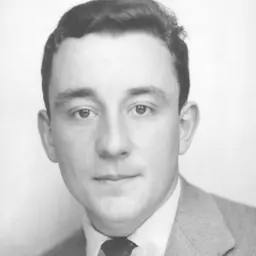
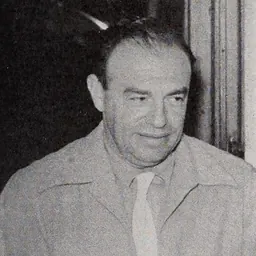

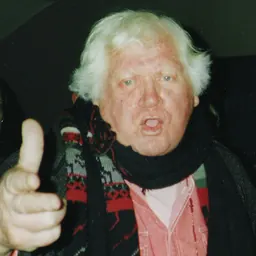

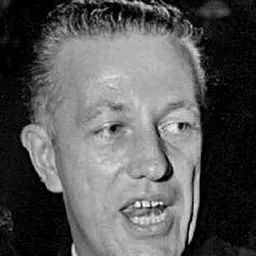
Related people
Same field, nearest in time

Contemporaries
People whose lives overlapped Robert Mugge's

Frequently asked questions
Who is Robert Mugge?
American filmmaker
When was Robert Mugge born?
Robert Mugge was born on 8 May 1950 in Chicago.
What is Robert Mugge's occupation?
Robert Mugge is a film director, screenwriter, film editor and director.
What nationality is Robert Mugge?
Robert Mugge is American.
Sources & further reading
Cite this page
APA: Biography.guide. (2026). Robert Mugge. https://biography.guide/robert-mugge/
MLA: "Robert Mugge." Biography.guide, https://biography.guide/robert-mugge/.
Chicago: "Robert Mugge." Biography.guide. https://biography.guide/robert-mugge/.
Data last updated: 2026-09-22 · Spot an error? Report a correction.
Page generated 2026-09-27 05:27 UTC