
Robert Minor
American journalist, political cartoonist
About Robert Minor
Lived 1884 – 1952 (aged 67–68). Robert Minor was an American journalist, editorial cartoonist, draftsperson, caricaturist and visual artist.
Robert Berkeley "Bob" Minor (July 15, 1884 – January 26, 1952), alternatively known as "Fighting Bob", was a political cartoonist, a radical journalist, and, beginning in 1920, a leading member of the Communist Party USA.
Early life Robert Minor, best known to those who knew him by the nickname "Bob", was born July 15, 1884, in San Antonio, Texas. Minor came from old and respected family lines. On his father's side, General John Minor had served as Thomas Jefferson's Presidential campaign manager; his mother was related to General Sam Houston, first President of the Republic of Texas. His father was a school teacher and lawyer, later elected as a judge, while his maternal grandfather was a doctor.
Despite the notable family forefathers, Bob Minor was the product of what one historian has called "the hard-up, run-down middle class," living in an "unpainted frontier cottage in San Antonio." Minor left home two years later, going to work at a variety of different jobs, including time spent as a sign painter, a carpenter, a farm worker, and a railroad laborer.
Adult career An example of Minor's early pen-and-ink work in the St. Louis Post-Dispatch (1911). In 1904, at the age of twenty, Robert Minor was hired as an assistant stereotypist and handyman at the San Antonio Gazette, where he developed his artistic talent in his spare time. Minor emerged as an accomplished political cartoonist.
Cartoonist Minor moved to St. Louis to take a position as a cartoonist for the St. Louis Post-Dispatch. Minor's work, initially very conventional in form using pen-and-ink, was transformed by his move to the use of grease crayon on paper. Minor gained recognition as the chief cartoonist at the Post-Dispatch and was considered by many to be among the best in the country.
In 1911, Robert Minor was hired by the New York World, where he became the highest paid cartoonist in the United States. His father was on a parallel path of advancement, transformed by a 1910 election "from an unsuccessful lawyer to an influential district judge."
Journalist A controversial Minor cartoon from the July 1916 issue of The Masses. The caption reads: "Army Medical Examiner: 'At last — a perfect soldier!'"
In 1907, Minor joined the Socialist Party of America. By the beginning of 1912, he had moved towards an anarchist orientation and support of revolutionary industrial unionism.
Minor had saved several hundred dollars earned in St. Louis and decided that he wanted to go to Paris to attend art school to perfect his craft. In France he enrolled in a class at the Ecole des Beaux Arts, the French national art school, but he found the experience unsatisfying. Minor spent the rest of his time in Paris studying art on his own and taking part in the left wing labor movement through the Socialist Party of France. However, with the outbreak of hostilities in August Minor began to make a series of aggressive and provocative cartoons attacking both sides of the European conflict for their imperialism. While The World initially began to use these cartoons, it was not long before Minor came to the banks of the Rubicon, when his employer demanded that the artist begin to draw pro-war panels. Minor was unalterably opposed to the World War and was faced with a choice between his paycheck and his beliefs. His convictions won and Minor was successful in having his contract with The World annulled. Minor also began contributing aggressively anti-war cartoons to Max Eastman's radical New York monthly, The Masses. Minor's radical cartoons would later provide fodder for the United States government's prosecution of The Masses for alleged violation of the Espionage Act of 1917, a legal assault which would eventually lead to the demise of the magazine when Wilson's administration banned it from the U.S. Mail. (Eastman regrouped and commenced publication of The Liberator, whose editorial staff Minor later joined.) Minor was sent as a war correspondent of The Call to Europe, where he wrote from France and Italy. Part of Minor's European expenses were being borne by a liberal newspaper syndicate in exchange for use of his drawings from the front. The syndicate found themselves unable to use the radical material which Minor was by this time producing and The Call was forced to recall him from Europe.
The Call, dispatched Minor to Europe as a war correspondent in 1918, with Minor continuing to contribute material on the European revolutionary movement to the successor to The Masses, The Liberator. In May 1918, Minor arrived in Soviet Russia, where he remained until November. While there, he met Vladimir Lenin and wrote anti-war propaganda for distribution to English-speaking troops involved in the invasion of Soviet Russia. The experience proved to be a watershed for Minor, winning him over to the cause of communism. Minor later traveled to Germany, where he saw the German Revolution firsthand, and thereafter to France.
While in Paris in 1919, Minor was arrested and charged with treason for advising French railway workers to strike against the shipment of munitions to interventionist forces in Soviet Russia.
Communist Communist Party leaders William Z. Foster, Robert Minor, and Israel Amter are led down the steps of the New York County Courthouse in Manhattan, New York following their arrests on International Unemployment Day, March 1930
Upon his return to the United States in 1920, Minor immediately joined the underground American Communist Party.
After the merger of the UCP with the old CPA in May 1921, Minor, using his underground pseudonym of "Ballister", was sent to Soviet Russia as the representative of the newly unified party to the Executive Committee of the Communist International (ECCI). Minor was also a delegate of the CPA to the 3rd World Congress of the Comintern, held in Moscow in June 1921. While there, he met Lenin for a second time. He was re-elected in his own right at the ill-fated August 1922 convention held on the shores of Lake Michigan just outside the tiny Michigan town of Bridgman. This convention was raided by local and Michigan state authorities, acting in concert with the Bureau of Investigation of the U.S. Department of Justice, who had an undercover agent sitting as a delegate. Wanted by the police, Minor surrendered with 9 others on March 10, 1923, and was released shortly thereafter on $1,000 bond. He was never tried for this alleged violation of the Michigan criminal syndicalism law.
From 1923 to 1924, Minor sat on the Executive Committee of the Friends of Soviet Russia, the American affiliate of the Comintern's Workers International Relief organization.
On March 6, 1930, Minor was part of a great series of demonstrations of the unemployed conducted around the United States under the guidance of the Communist Party. Minor was arrested at the demonstration held in Union Square in New York City, a rally which ended in a riot pitting marchers and police. Minor was arrested in conjunction with these events, together with his Communist Party comrades William Z. Foster, Israel Amter, and Harry Felton. The four were sentenced to 3 year terms in the New York state penitentiary.
Bob Minor ran for elective political office a number of times. In 1924 he ran for U.S. Congress in Illinois as a candidate of the Workers Party for an at-large seat. In 1928, he ran on the Workers (Communist) Party ticket for U.S. Senator from New York. He ran for Congress from New York in 1930 and again ten years later. He also ran for Mayor of New York City in 1933, and in 1936 he headed the state Communist ticket as the party's candidate for Governor of New York.
At the 7th World Congress of the Comintern in 1935, Minor was elected to the Comintern's International Control Commission, which dealt with personnel assignments and questions of discipline. He was an unflinching supporter of every twist and turn of Soviet foreign policy throughout the decade of the 1930s.
The historian Theodore Draper opined: Minor is a study in extremes. A truly gifted and powerful cartoonist, he renounced art for politics. He made this gesture of total subservience to politics after years as an anarchist despising and denouncing politics. But he could not transfer his genius from art to politics. The stirring drawings were replaced by boring and banal speeches. He had none of the gifts of the natural politician, his stock in trade was limited to platitudes and slogans. The wild man, tamed, became a political hack. If as an anarchist he had believed that politics was a filthy business, as a Communist he still seemed to believe it was — only now it was his business. Minor's papers are housed in the Rare Book & Manuscript section on the 6th floor of Butler Library at Columbia University. Approximately 15,000 items are included in the collection, which is housed in some 65 archival boxes.
Works Books, pamphlets, article 1916: "War Pictures," New York Call 1917: The Frame-Up System: Story of So-Called Bomb Trials in San Francisco. San Francisco: International Worker's Defense League Fickert has Ravished Justice: Story of So-Called Bomb Trials in San Francisco . San Francisco: International Worker's Defense League 1918: Shall Mooney Hang?: Justice Raped in California. San Francisco: International Worker's Defense League 1920: Stedman's Red Raid. Cleveland: Toiler Publishing Association 1921: "Resolved: That the Terms of the Third International are Inacceptable to the Revolutionary Socialists of the World": Being the Report of a Debate, Held in Star Casino, New York City, Sunday, January Sixteenth, 1921: Affirmative James Oneal vs. Negative Robert Minor. New York: Academy Press 1936: The Struggle Against War: And the Peace Policy of the Soviet Union. New York: Workers Library Publishers 1941: The Fight Against Hitlerism. New York: Workers Library Publishers, 1941. (With William Z. Foster.) One War to Defeat Hitler. New York: Workers Library Publishers 1942: Free Earl Browder! The Year of Great Decision, 1942. New York: Workers Library Publishers, 1942 Our Ally: The Soviet Union. New York: Workers Library Publishers 1943: Invitation to Join the Communist Party. New York: Workers Library Publishers 1944: The Heritage of the Communist Political Association. New York: Workers Library Publishers 1946: Lynching and Frame-up in Tennessee. New York: Workers Library Publishers
Contributed works Red Cartoons of 1926: From The Daily Worker and the Workers Monthly. New York: The Daily Worker Publishing Company, 1926. Also available from Marxist Internet Archive. Red Cartoons of 1927: From The Daily Worker and the Workers Monthly. New York: The Daily Worker Publishing Company, 1927. Also available from Marxist Internet Archive. Red Cartoons of 1928: From The Daily Worker and the Workers Monthly. New York: The Daily Worker Publishing Company, 1928. Also available from Marxist Internet Archive.
Articles . Revolt, Vol. 1, No. 2 (January 15, 1916), pp. 6–7. "Our 'C.E.': In Memory of C.E. Ruthenberg, July 9, 1882–March 2, 1927". The Communist, Vol. 14, No. 3 (March 1935), pp. 217–226. Full issue available at Marxist Internet Archive.
Don’t just read it —
keep it.
Full-length biographies made to live with: read them, listen on the way to work, watch them tonight.
- E-book
- Audio
- Video
Instant download · yours to keep · every purchase keeps this site free
Important facts
People in Robert Minor's life
Named in this biography and alive at the same time




Related people
Same field, nearest in time



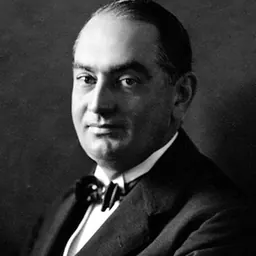

Contemporaries
People whose lives overlapped Robert Minor's

Frequently asked questions
Who was Robert Minor?
American journalist, political cartoonist
When was Robert Minor born?
Robert Minor was born on 15 July 1884 in San Antonio.
When did Robert Minor die?
Robert Minor died in 1952 in Ossining.
What was Robert Minor's occupation?
Robert Minor was a journalist, editorial cartoonist, draftsperson, caricaturist and visual artist.
What nationality was Robert Minor?
Robert Minor was American.
Sources & further reading
Cite this page
APA: Biography.guide. (2026). Robert Minor. https://biography.guide/robert-minor/
MLA: "Robert Minor." Biography.guide, https://biography.guide/robert-minor/.
Chicago: "Robert Minor." Biography.guide. https://biography.guide/robert-minor/.
Data last updated: 2026-09-20 · Spot an error? Report a correction.
Page generated 2026-09-27 05:20 UTC