
About Robert McGowan Littlejohn
Lived 1890 – 1982 (aged 91–92). Robert McGowan Littlejohn was an American military personnel and war Assets Administration.
Robert McGowan Littlejohn (23 October 1890 – 6 May 1982) was a major general in the United States Army who graduated from the United States Military Academy at West Point, New York, in 1912. He served with the Pancho Villa Expedition and on the Western Front during the First World War, and was Chief Quartermaster for the European Theater of Operations during the Second World War. For this service, he received the Distinguished Service Medal. Upon retirement from the Army in 1946, then President of the United States Harry S. Truman appointed him head of the War Assets Administration.
Early life and World War I
Robert McGowan Littlejohn was born in Jonesville, South Carolina, on 23 October 1890. He attended Clemson Agricultural College for a year, before entering the United States Military Academy at West Point, New York, on 2 March 1908. He played right tackle on the 1912 Army Cadets football team.
On 12 June 1912, Littlejohn graduated 36th in the West Point class of 1912 (just ahead of Wade H. Haislip). Several of his fellow graduates would, like Littlejohn himself, eventually attain general officer rank, such as Walter M. Robertson, William H. Wilbur, Walton Walker, John Shirley Wood, Franklin C. Sibert, Harry J. Malony, Stephen J. Chamberlin, Raymond O. Barton and Gilbert R. Cook. He was commissioned into the Cavalry Branchas a second lieutenant in the 8th Cavalry Regiment and posted to Fort William McKinley in the Philippines. The 8th Cavalry Regiment returned to the United States in August 1915, and moved to Fort Bliss, Texas. From January to March 1916, it served on the Texas border during the Pancho Villa Expedition. On 1 July 1916, he was promoted to first lieutenant, and posted to the newly constituted 17th Cavalry Regiment at Fort Bliss as commander of the regiment's machine gun detachment. He was promoted to captain on 15 May 1917, almost six weeks after the American entry into World War I. Two days later the regiment moved to Douglas, Arizona, and was involved in strike duty in July and August during the miners' strike in Globe, Arizona. He played polo on the 8th and 17th Cavalry teams.
Littlejohn returned to West Point on 24 August 1917 as an instructor, first in the English department for ten days, then in the Chemistry department, and finally, in March 1918, in the Engineering department. On 5 May 1918, he was posted to the 18th Machine Gun Battalion of the 6th Division at Camp Wadsworth, South Carolina, with the rank of major from 7 June 1918. He assumed command of the 332nd Machine Gun Battalion at Camp Grant, Illinois, on 11 June. This battalion was part of the 86th Division. On 27 July 1918, he married Mary Lambert from Glastonbury, Connecticut. They had no children. This ended on 31 January 1938, and he was sent for a second tour of duty in the Philippines, this time as executive officer of the Quartermaster Depot, and then, from 30 May 1939, as Quartermaster of the Philippine Department. His tour of duty there ended on 20 May 1940, and he returned to the US in June. the Bronze Star Medal, His later Oak Leaf Cluster citation noted that he "not only maintained anticipated requirements, but exceeded them". However Littlejohn was severely criticised when winter clothing was not delivered in a timely manner, resulting in thousands of cases of trench foot and frostbite.
Later life Littlejohn hoped to become the next Quartermaster General, but was passed over in favor of Major General Thomas B. Larkin, a United States Army Corps of Engineers officer that Littlejohn considered a "carpetbagger". Both had served in the ETO in the Services of Supply (later the Communications Zone) under Lt. Gen. John C. H. Lee beginning in May 1942. Larkin had served as Lee's deputy until he was spun off at the request of Eisenhower to command the SOS in the Mediterranean Theater of Operations invasions of North Africa, Sicily, and Italy, and so had a wider command experience. Littlejohn retired with a disability discharge on 31 July 1946. President of the United States Harry S. Truman appointed him head of the War Assets Administration (WAA), which had the responsibility for the disposal of some $34 billion worth of surplus government property. He left the WAA in 1948.
Dates of rank
Don’t just read it —
keep it.
Full-length biographies made to live with: read them, listen on the way to work, watch them tonight.
- E-book
- Audio
- Video
Instant download · yours to keep · every purchase keeps this site free
Important facts
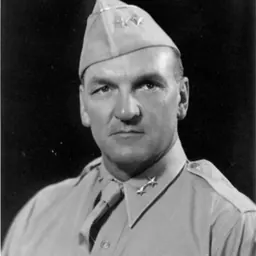
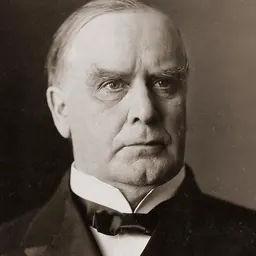
People in Robert McGowan Littlejohn's life
Named in this biography and alive at the same time



Related people
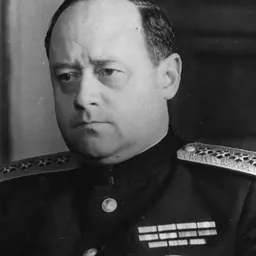
Same field, nearest in time




Contemporaries
People whose lives overlapped Robert McGowan Littlejohn's



Frequently asked questions
Who was Robert McGowan Littlejohn?
American general (1890-1982)
When was Robert McGowan Littlejohn born?
Robert McGowan Littlejohn was born on 23 October 1890 in Jonesville.
When did Robert McGowan Littlejohn die?
Robert McGowan Littlejohn died in 1982 in Washington, D.C..
What was Robert McGowan Littlejohn's occupation?
Robert McGowan Littlejohn was a military personnel and war Assets Administration.
What nationality was Robert McGowan Littlejohn?
Robert McGowan Littlejohn was American.
Sources & further reading
· Wikipedia: Robert McGowan Littlejohn
· DBpedia: Robert McGowan Littlejohn
Cite this page
APA: Biography.guide. (2026). Robert McGowan Littlejohn. https://biography.guide/robert-mcgowan-littlejohn/
MLA: "Robert McGowan Littlejohn." Biography.guide, https://biography.guide/robert-mcgowan-littlejohn/.
Chicago: "Robert McGowan Littlejohn." Biography.guide. https://biography.guide/robert-mcgowan-littlejohn/.
Data last updated: 2026-09-20 · Spot an error? Report a correction.
Page generated 2026-09-27 05:18 UTC