
About Mary Lambert
Born 1951. Mary Lambert is an American film director, screenwriter and television director.
Mary Martha Lambert (born October 13, 1951) is an American director. She has directed music videos, television episodes and feature films, mainly in the horror genre.
Life and career Lambert was born in Helena, Arkansas, the daughter of Martha Kelly and Jordan Bennett Lambert III, a rice and cotton farmer. Her younger sister is former U.S. Senator Blanche Lincoln of Arkansas. Lambert graduated from the Rhode Island School of Design with a B.F.A.
Music videos Chris Isaak music video and MTV Award nominations
Lambert directed Chris Isaak‘s first music video, “Dancin’,” which earned two nominations at the 1985 MTV Music Video Awards for Most Experimental Video and Best Direction. That same year, she received a third nomination for directing Lone Justice‘s “Ways to Be Wicked,” also in the Most Experimental Video category. Lambert was the only woman nominated at the ceremony and accounted for half of the nominations in that category.
Music videos for Madonna
Mary Lambert directed several of Madonna's most iconic music videos during the 1980s, contributing significantly to the singer's visual identity and artistic evolution.
Lambert's collaboration with Madonna began by directing the video for "Borderline" (1984), which depicted Madonna torn between love and ambition in Los Angeles. "Borderline" was filmed on location in Los Angeles, California, from January 30 to February 2, 1984. The video, which juxtaposed colorful scenes in the barrio with black-and-white shots in a photography studio, tells the story of a young woman torn between her Hispanic boyfriend and a British photographer.
Lambert described the process as highly improvisational, stating there was "no formula" and that they were "inventing it as we went along”. In describing the video's narrative, Lambert told Rolling Stone: " boy and girl enjoy simple pleasures of barrio love; girl is tempted by fame, boy gets huffy, girl gets famous, but her new beau's out-of-line reaction to a behavioral trifle (all she did was spray-paint his expensive sports car) drives her back to her true love".
"Borderline" premiered on MTV in March 1984 and became one of the videos that helped establish Madonna's early image. Years later, it was included in Madonna's video compilations The Immaculate Collection (1990) and Celebration: The Video Collection (2009).
Lambert went on to direct "Like a Virgin" (1984), filmed in Venice, Italy, and New York. The video, featuring Madonna in a gondola and wearing a wedding dress, incorporated symbolic imagery such as a lion, reflecting Lambert's vision of combining fantasy and reality. The video received 3 MTV Video Music Award Nominations for Best Cinematography, Best Choreography, and Best Art Direction.
In 1985, Lambert directed the "Material Girl" video, paying homage to Marilyn Monroe's performance of "Diamonds Are a Girl's Best Friend" from "Gentlemen Prefer Blondes (1953 film)". The video blended commentary on fame and materialism, becoming one of Madonna's most recognizable works. The Video received two MTV Video Music Award Nominations; Best Female Video and Best Cinematography for Kenny Ortega.
Lambert's direction of "La Isla Bonita" (1987) featured Madonna portraying both a devout Catholic woman and a vibrant Flamenco dancer, exploring Latin influences and religious symbolism.
In 1989, Lambert directed "Like a Prayer," which became one of Madonna's most controversial videos due to its use of religious imagery, including burning crosses and references to stigmata. Lambert aimed to explore themes of sexual and religious ecstasy, sparking widespread debate and cementing Madonna's reputation as a provocative artist. The Video Won the MTV Video Music Award for Viewers Choice, and was Nominated for Video of the Year.
Through these videos, Lambert played a key role in shaping the visual narratives during a time that Madonna was being propelled to global stardom.
Music videos for Janet Jackson
Mary Lambert directed Janet Jackson‘s iconic music videos for “Nasty” and “Control.” The “Control” video, known for its storyline of Jackson asserting independence from her parents, was filmed at the Grand Olympic Auditorium in Los Angeles – but behind the scenes, the production was fraught with challenges.
Both Lambert and producer Sharon Oreck recall it as a difficult and trying experience; Oreck said in 2011 that it was her "worst nightmare" of the many videos she had produced. The crowd, which had been told that they would see Janet Jackson perform, had expected a free concert. The audience, expecting a free Janet Jackson concert, instead endured 50 takes of Jackson lip-syncing “Control.”
Live: Lambert directed the videos for "Turn My Head", "Overcome", and "Forever May Not Be Long Enough" featuring the band's intense performance, mirroring the song's passionate lyrics.
Mötley Crüe: She directed the videos for "Don't Go Away Mad, Just Go Away" and "Without You".
Queensrÿche: Lambert directed the video for "Another Rainy Night, Without You"
Sting: She directed the video for "We'll Be Together, in which Lambert paid homage to Jean Cocteau's Orpheus. The Video Won the MTV Video Music Award for Best Cinematography, and was Nominated for Best Choreography
Debbie Harry: Lambert directed the video for "I Want That Man," showcasing Harry in a stylized, futuristic setting, reflecting the song's pop sensibilities.
Tom Tom Club: She directed the video for "As Above So Below," featuring vibrant, animated sequences that match the song's eclectic style.
Films
Lambert was intended to make her directorial debut with Under the Cherry Moon, starring Prince and Kristen Scott Thomas. She was demoted to an advisory role after just four days of filming, and shortly thereafter left the production. Prince replaced her as director. After leaving the production, Lambert released a statement saying she had left under "totally amicable circumstances", and that "Prince has such a strong vision of what this movie should be... that it makes no sense for me to stand between him and the film anymore."
More recently, Lambert directed 2005's Urban Legends: Bloody Mary and the 2011 Syfy horror film Mega Python vs. Gatoroid. She also directed the 1993 Digital Pictures FMV video game Double Switch.
Pet Sematary (1989) In 1989, Mary Lambert directed Pet Sematary, a supernatural horror film based on Stephen King's 1983 novel of the same name, with King himself penning the screenplay. Starring Dale Midkiff, Denise Crosby, Blaze Berdahl, Fred Gwynne, and Miko Hughes as Gage Creed, the film's title uses a sensational spelling of "pet cemetery".
Development for the film began in 1984 when the rights were initially sold to George A. Romero for $10,000. However, Romero was unable to proceed with the project due to scheduling conflicts with Monkey Shines. The project languished until the 1988 Writers Guild of America strike, when Paramount Pictures faced a potential shortage of films for 1989. King's screenplay for Pet Sematary was complete, prompting Paramount to greenlight the project.
When it came to selecting a director, King retained creative control and personally chose Mary Lambert. She won him over with her passion for his work and her dedication to staying true to the novel's tone and themes.
Filming took place on location in Maine, honoring King's stipulation that the film be shot in the same state where the novel is set. Locations included Ellsworth, Bangor, and Mount Hope Cemetery, with King actively involved throughout production. He regularly consulted with Lambert, offering input and collaborating on key decisions to ensure the adaptation preserved the essence of his novel. She also fought to cast Fred Gwynne as Jud Crandall, despite concerns that his previous role as Herman Munster would prevent audiences from taking him seriously.
The film's conclusion was changed at Paramount's request. Lambert originally filmed a more ambiguous ending, in which Rachel Creed returns as an undead figure, leaving her husband's fate uncertain. However, the studio wanted a more graphic climax, resulting in reshoots to depict Rachel attacking Louis Creed.
The film's soundtrack included music by the Ramones, one of King's favorite bands. Lambert, having a personal friendship with the band through her work directing music videos, requested they write and perform the track "Pet Sematary," which plays over the closing credits.
Filmography Short film
Film
Television
TV movie Dragstrip Girl (1994) Face of Evil (1996) Love Is Strange (1996) My Stepson, My Lover (1997) (a.k.a. Love, Murder and Deceit) Mega Python vs. Gatoroid (2011)
TV special VH1 Divas 2012 (2012)
Documentary works Bobby Brown: His Prerogative (1989) (Video)
Short films
Film
TV series appearances
TV movies
Music videos
Video game Director Double Switch (1993)
Don’t just read it —
keep it.
Full-length biographies made to live with: read them, listen on the way to work, watch them tonight.
- E-book
- Audio
- Video
Instant download · yours to keep · every purchase keeps this site free
Important facts
People in Mary Lambert's life
Named in this biography and alive at the same time






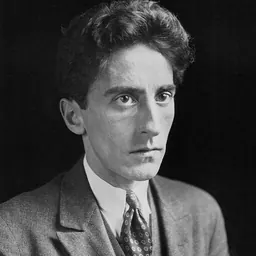

Related people
Same field, nearest in time
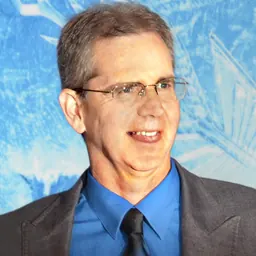

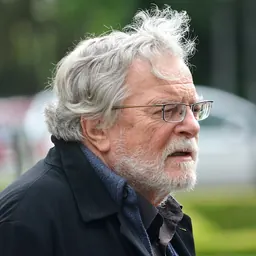
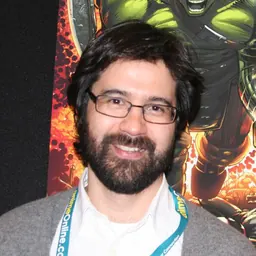

Contemporaries
People whose lives overlapped Mary Lambert's


Frequently asked questions
Who is Mary Lambert?
American film director
When was Mary Lambert born?
Mary Lambert was born on 13 October 1951 in Helena.
What is Mary Lambert's occupation?
Mary Lambert is a film director, screenwriter and television director.
What nationality is Mary Lambert?
Mary Lambert is American.
Sources & further reading
· DBpedia: Mary Lambert (director)
Cite this page
APA: Biography.guide. (2026). Mary Lambert. https://biography.guide/mary-lambert/
MLA: "Mary Lambert." Biography.guide, https://biography.guide/mary-lambert/.
Chicago: "Mary Lambert." Biography.guide. https://biography.guide/mary-lambert/.
Data last updated: 2026-09-22 · Spot an error? Report a correction.
Page generated 2026-09-27 05:13 UTC