
About Robert Macfarlan
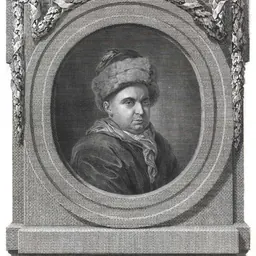
Lived 1734 – 1804 (aged 69–70). Robert Macfarlan was a British journalist, historian, translator and writer.
Robert Macfarlan (also Macfarlane) (1734–1804) was a Scottish schoolmaster, notable as a writer, journalist and translator.
Life Macfarlan was educated at the University of Edinburgh, where he proceeded M.A. He settled in London, and for some years kept a successful school at Walthamstow, Essex. It was at Shern Lodge, also called Shernhall House, and he ran it from about 1770 to about 1795, when he left Walthamstow. His pupils included Robert Plumer Ward.
At one time Macfarlane was editor of the Morning Chronicle and London Packet. He reported, from memory, some of the major speeches in parliament during Lord North's administration, in particular from those delivered in the debates on the American War of Independence.
On the evening of 8 August 1804, during the Brentford election, Macfarlan was killed by an accidental fall under a carriage, at Hammersmith.
Macfarlan translated the poems of Ossian into Latin verse, publishing in 1769 the first book of Temora. At the time of his death he had in the press a major Ossian edition. It was later issued by the Highland Society of London as The Poems of Ossian in Gaelic, 3 vols. London, 1807. With a literal translation into Latin, there were: a dissertation on the authenticity of the poems by Sir John Sinclair; and a translation from the Italian of Melchiore Cesarotti's Dissertation on the Controversy respecting Ossian, with notes, by John McArthur.
In 1797 Macfarlan published An Address to the People of the British Empire on Public Affairs. In 1799 his translation from Latin of George Buchanan's Dialogue concerning the Rights of the Crown of Scotland appeared. It had two dissertations prefixed to it: one on the supposed identity of the Getae and Scythians and the Goths and Scots; and the other vindicating the character of Buchanan as an historian. The Buchanan translation's relevance, however, was just as much to the politics of the French Revolution; and Macfarlan saw Buchanan as "the father of politics in modern Europe". The British Critic in 1801 found the translation "of a dangerous tendency".
Don’t just read it —
keep it.
Full-length biographies made to live with: read them, listen on the way to work, watch them tonight.
- E-book
- Audio
- Video
Instant download · yours to keep · every purchase keeps this site free
Important facts
People in Robert Macfarlan's life
Named in this biography and alive at the same time


Related people
Same field, nearest in time



Contemporaries
People whose lives overlapped Robert Macfarlan's





Frequently asked questions
Who was Robert Macfarlan?
British schoolmaster
When was Robert Macfarlan born?
Robert Macfarlan was born in 1734.
When did Robert Macfarlan die?
Robert Macfarlan died in 1804.
What was Robert Macfarlan's occupation?
Robert Macfarlan was a journalist, historian, translator and writer.
What nationality was Robert Macfarlan?
Robert Macfarlan was British.
Sources & further reading
· DBpedia: Robert Macfarlan (schoolmaster)
Cite this page
APA: Biography.guide. (2026). Robert Macfarlan. https://biography.guide/robert-macfarlan-journalist/
MLA: "Robert Macfarlan." Biography.guide, https://biography.guide/robert-macfarlan-journalist/.
Chicago: "Robert Macfarlan." Biography.guide. https://biography.guide/robert-macfarlan-journalist/.
Data last updated: 2026-09-20 · Spot an error? Report a correction.
Page generated 2026-09-27 05:33 UTC