
About Robert M. Garrels
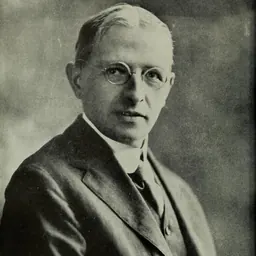
Lived 1916 – 1988 (aged 71). Robert M. Garrels was an American chemist, university teacher, geologist and geochemist.
Robert Minard Garrels (August 24, 1916 – March 8, 1988) was an American geochemist. Garrels applied experimental physical chemistry data and techniques to geology and geochemistry problems. The book Solutions, Minerals, and Equilibria co-authored in 1965 by Garrels and Charles L. Christ revolutionized aqueous geochemistry.
Garrels earned a bachelor's degree in geology from the University of Michigan in 1937. He went on to earn an M.S. degree from Northwestern University in 1939, his thesis work was on iron ores of Newfoundland in 1938. His Ph.D. was awarded in 1941 based on lab studies of complex formation between lead and chloride ions in aqueous solution.
Life and career Garrels worked for the United States Geological Survey during World War II and returned to teach at Northwestern until 1952. Also in 1952, he published a technical paper, "Origin and Classification of Chemical Sediments in Terms of pH and Oxidation-Reduction Potentials" with William C. Krumbein, which was to become a classic study of sedimentary rocks from a physical chemistry viewpoint. This and following works revolutionized sedimentary and aqueous geochemistry.
He joined the United States Geological Survey again for a time, but returned to academia at Harvard University in 1955. He became a full professor in 1957 and later department chair. His work and the lab he supervised at Harvard produced many classic works, including the Solutions, Minerals, and Equilibria text. Here, between 1960 and 1962, he, along with his colleagues, published the classic studies:
He moved to the University of South Florida at St. Petersburg in 1979, holding the St. Petersburg Progress Chair in Marine Science, and spent summers at the Université Louis Pasteur, Strasbourg; the Université Libre, Brussels; and Yale, where he held an adjunct professorship. During this time he published "The Carbonate–Silicate Geochemical Cycle and Its Effect on Atmospheric Carbon Dioxide over the Past 100 Million Years" in 1983. This concerned the BLAG model, named for the collaborators including Tony Lasaga and Robert Berner. He continued to be active while fighting cancer, publishing "Modeling Atmospheric O2 in the Global Sedimentary Redox Cycle" (1986) and "A Model for the Deposition of the Microbanded Precambrian Iron Formations." (1987)
Awards and honors Source: 1961 – Election to the National Academy of Sciences 1962 – President of the Geochemical Society 1966 – Received the Arthur L. Day Medal of the Geological Society of America 1969 – Honorary doctorate from the Université Libre de Bruxelles 1973 – Received the V. M. Goldschmidt Award of the Geochemical Society 1976 – Honorary doctorate from the Université Louis Pasteur, Strasbourg, France 1978 – Received the Penrose Medal of the Geological Society of America 1980 – Honorary doctorate from the University of Michigan, Ann Arbor, Michigan, US 1981 – Received the Wollaston Medal of the Geological Society of London 1981 – Received the Roebling Medal of the Mineralogical Society of America
Selected publications A Textbook of Geology, Harper's Geoscience Series (1951) Behavior of Colorado Plateau uranium minerals during oxidation U.S. Geological Survey Trace Elements Investigations Report No. 588 (1956) Mineral Equilibria at Low Temperature and Pressure, Harper (1960) Solutions, Minerals, and Equilibria with Charles L. Christ (1965) (2nd ed. Freeman Cooper Co, 1982 and revised ed 1990) (1990 ed.) Evolution of Sedimentary Rocks with Fred Mackenzie; Norton, (1971) Water the Web of Life with Cynthia Garrels; Norton (1972) Chemical cycles and the global environment: Assessing human influences with Cynthia Garrels and F. T. Mackenzie W.; Kaufmann (1975) Thermodynamic Values at Low Temperature for Natural Inorganic Materials: An Uncritical Summary, with Terri L. Woods; Oxford University Press (1986)
Don’t just read it —
keep it.
Full-length biographies made to live with: read them, listen on the way to work, watch them tonight.
- E-book
- Audio
- Video
Instant download · yours to keep · every purchase keeps this site free
Important facts
People in Robert M. Garrels's life
Named in this biography and alive at the same time

Related people
Same field, nearest in time




Contemporaries
People whose lives overlapped Robert M. Garrels's




Frequently asked questions
Who was Robert M. Garrels?
American geochemist (1916–1988)
When was Robert M. Garrels born?
Robert M. Garrels was born on 24 August 1916 in Detroit.
When did Robert M. Garrels die?
Robert M. Garrels died on 8 March 1988 in St. Petersburg.
What was Robert M. Garrels's occupation?
Robert M. Garrels was a chemist, university teacher, geologist and geochemist.
What nationality was Robert M. Garrels?
Robert M. Garrels was American.
Sources & further reading
· Wikipedia: Robert M. Garrels
Cite this page
APA: Biography.guide. (2026). Robert M. Garrels. https://biography.guide/robert-m-garrels/
MLA: "Robert M. Garrels." Biography.guide, https://biography.guide/robert-m-garrels/.
Chicago: "Robert M. Garrels." Biography.guide. https://biography.guide/robert-m-garrels/.
Data last updated: 2026-09-20 · Spot an error? Report a correction.
Page generated 2026-09-27 05:09 UTC