
Robert LeFevre
American libertarian businessman
About Robert LeFevre
Lived 1911 – 1986 (aged 74). Robert LeFevre was an American businessperson, radio personality, activists, business and radio, known for Anarcho-capitalism, Autarchism and Freedom School.
Robert LeFevre (October 13, 1911 – May 13, 1986) was an American libertarian and conservative businessman, radio personality, and primary theorist of autarchism. He also supported classical liberalism. He is considered by the Mises Institute to be a "right-wing Tolstoyan" and a pacifist libertarian.
Early life
LeFevre was born in Gooding, Idaho, on October 13, 1911, but when he was a child LeFevre's family moved to Minneapolis, Minnesota. LeFevre attended Hamline University studying English and drama. He then worked at a variety of jobs during the Great Depression, such as acting and radio announcing. For a short time, LeFevre was a Shakespearean actor.
LeFevre was a follower of the "I AM" movement from 1936 to 1940 or so. He and one Pearl Diehl wrote a book in 1940 of their experiences in the organization called "I AM" – America's Destiny (Twin City House, St. Paul, Minnesota). LeFevre told how one day, when he was in the radio station studio, he was struck by the Great I AM presence, who spoke to him personally. LeFevre also claimed a number of supernatural experiences: driving a car while asleep for over twenty miles without an accident (this was accomplished with the help of his "Higher Mental Body"), leaving his physical body for a trip through the air to Mount Shasta, and seeing Jesus.
A few years later he became vice-president of Merwin K. Hart's National Economic Council; a director of the Congress of Freedom; a director of the U.S. (sometimes United States) Day Committee—whose purpose it was to diminish in importance the observation of October 23 as United Nations Day—and an adviser to Harry Everingham's "We, The People!". The U.S. Day Committee made headlines in 1954 when LeFevre led an attack on the Girl Scout Handbook as having too many references to the United Nations. The Scouts retreated, reporting that more than forty changes had been made—about half of which were due to LeFevre's protests.
After Rampart College's closure in 1975, LeFevre carried on his work in South Carolina under the patronage of business giant Roger Milliken, and he also published Lefevre's Journal from 1974 to 1978. In 1979, LeFevre selected Freedom School graduate Kevin Cullinane to take over the teaching of Freedom School Seminars, including the Milliken Contract. Cullinane, who taught the principles of LeFevre's philosophy to students at Academy of the Rockies, which he had founded in 1972, taught Freedom School from 1979 until 2005 as part of Milliken's management training. He expanded its reach to include Sherman College, Wofford College, and individual seminars from coast to coast. Cullinane then left Freedom School behind in 2000, establishing his own school, Freedom Mountain Academy, in Tennessee, which ran until 2017, when it was shut down.
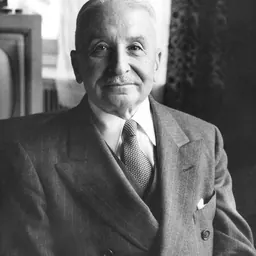
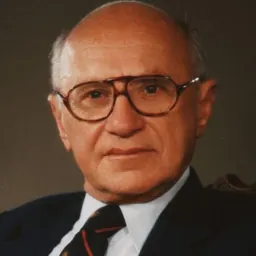
Notable teachers at the Freedom School or Rampart College include Rose Wilder Lane, Milton Friedman, F.A. Harper, Frank Chodorov, Leonard Read, Gordon Tullock, G. Warren Nutter, Bruno Leoni, James J. Martin, and Ludwig von Mises.
Notable graduates include Roy Childs, Kerry Thornley, and Roger MacBride.
Rampart Institute In the late 1970s, LeFevre became involved with the Rampart Institute in Santa Ana, California. Along with Lawrence Samuels and Richard Deyo, LeFevre was one of the driving forces to found the institution, presenting two speeches that were turned into booklets: "Good Government: Hope or Illusion?" and "Does Government Protection Protect?" Not long after receiving its non-profit, tax-deductible status, Rampart Institute was officially launched at The Future of Freedom Conference banquet on April 19, 1980, at Cypress College. From that event came the "Liberty Book Project," which sought to edit and publish LeFevre's 52-week audio home study-course called "The Fundamentals of Liberty". The hardback book was published posthumously in 1988, two years after LeFevre's death.
Views
LeFevre believed that natural law is above the law of the state and that for American society to prosper economically, free-market reforms were essential. He also believed that attributing the good deeds of society to its government was no different from rewarding criminals for abstaining from illegal activity. All government consists of and that control our lives by stealing our property, restricting our freedom, and endangering our lives with the rationale of protecting us from ourselves.
To this end, he adopted the term Autarchism to represent the idea of ruling over your own life, being responsible for yourself, your needs, and the consequences of your choices and actions. In a speech in 1977 and published the next year in the book Good Government: Hope or Illusion?, he said:
Pacifism LeFevre was also famously a pacifist, and taught his brand of libertarianism during the 1960s at the Freedom School, later Rampart College. Given his dedication to pacifism, LeFevre also spoke out against war as a product of the state. He once gave a speech called "Prelude to Hell" to a local Lions Club about what it would be like for a typical American city to get nuked as a result of "those mighty, terrible, pointless conflicts that the modern state inevitably creates."
In popular culture Some such as Brian Doherty claim that LeFevre's movement was a basis for Robert A. Heinlein's book The Moon Is a Harsh Mistress and that LeFevre was the basis for the character Professor Bernardo de la Paz, organizer of the Lunar revolution. In the alternate history novel The Probability Broach by L. Neil Smith as part of the North American Confederacy Series in which the United States becomes a libertarian state in 1794 after a successful Whiskey Rebellion and the overthrowing and execution of George Washington by firing squad for treason, LeFevre served as the 23rd President of the North American Confederacy from 1960 to 1968.
Don’t just read it —
keep it.
Full-length biographies made to live with: read them, listen on the way to work, watch them tonight.
- E-book
- Audio
- Video
Instant download · yours to keep · every purchase keeps this site free
Important facts
People in Robert LeFevre's life
Named in this biography and alive at the same time





Related people
Same field, nearest in time
Contemporaries
People whose lives overlapped Robert LeFevre's





Frequently asked questions
Who was Robert LeFevre?
American libertarian businessman (1911–1986)
When was Robert LeFevre born?
Robert LeFevre was born on 13 October 1911 in Gooding.
When did Robert LeFevre die?
Robert LeFevre died on 13 May 1986 in United States.
What was Robert LeFevre's occupation?
Robert LeFevre was a businessperson, radio personality, activists, business and radio.
What was Robert LeFevre known for?
Robert LeFevre was known for Anarcho-capitalism, Autarchism and Freedom School.
What nationality was Robert LeFevre?
Robert LeFevre was American.
Sources & further reading
Cite this page
APA: Biography.guide. (2026). Robert LeFevre. https://biography.guide/robert-lefevre/
MLA: "Robert LeFevre." Biography.guide, https://biography.guide/robert-lefevre/.
Chicago: "Robert LeFevre." Biography.guide. https://biography.guide/robert-lefevre/.
Data last updated: 2026-09-25 · Spot an error? Report a correction.
Page generated 2026-09-27 05:08 UTC