
About Robert Keayne
Lived 1595 – 1656 (aged 60–61). Robert Keayne was an American politician.
Robert Keayne (1595 – March 23, 1656) was a prominent public figure in 17th-century Boston, Massachusetts. He co-founded the Ancient and Honorable Artillery Company of Massachusetts and served as speaker of the House of the Massachusetts General Court. Keayne was a prosperous London merchant who joined his fellow Puritans in Boston where he built a fortune. He was accused of unfair business practices, and brought before the legislature, the Massachusetts General Court. It found Keayne guilty, fined him, and compelled him to confess his "sins." He proclaimed his innocence, and justified his actions in elaborate detail in his will. It bequeathed £2500 to Boston, to upgrade the infrastructure with an aqueduct, relieve the city's poor, and fund the First Town-House, a grand public meeting place. He attached a condition to the effect that the bequest would become void if there were any legal actions against his estate; there were none.
Family life, career and Boston's First Church
Keayne was born in Windsor, England in 1595. His father, John Keayne, worked as a butcher. While living in London, Keayne held membership in the Honourable Artillery Company and the Merchant Taylor's Company. In 1617 Keayne married Anne Mansfield;
Keayne and his family arrived in Boston from London in 1635 on the ship Defence.
A member of the First Church congregation, Keayne kept notes in his private journal of sermons preached by Reverends John Wilson, Thomas Cobbett, and John Cotton, who had moved to Boston in 1633. Notes were also kept on Hugh Peters and John Davenport. By 1640, members of the church included Cobbett's assistant, the Rev. William Skipper (1597–1650) whose son, Theophilus (c.1633–c.1647), was later an apprentice of Keayne's son Benjamin (1618–1682). Like Keayne, Skepper was close to Cotton and Corbett, nominating both men as Theophilus's guardians. Records of the First Church state that on the 10th May 1642, Benjamin Keayne left the church to attend the church in Lynn where Skepper was living by 1646, "having come of age".
In 1638, he helped to establish the Ancient and Honorable Artillery Company of Massachusetts, serving as first captain.
He served as town Selectman for several years; and as a representative to the Massachusetts General Court, Remarking on the need for a covered market, he wrote:
I having long thought and considered the want of some necessary things of public concernment which may not be only comodious, but very profitable and useful for the Town of Boston, as a market place ... useful for the country people that come with their provisions for the supply of the towne, that they may have a place to sett dry in and warme, both in cold raine and durty weather, and may have a place to leave their corne or any other things safe that they cannot sell, till they come again, which would be both an encouragement to come in and a great means to increase trading in the Towne also.
Divorce in colony Some considerable pain entered Robert Keayne's last years as the marriage of his son Benjamin and his wife Sarah necessitated one of the colony's earliest divorces. Benjamin married Sarah, the daughter of Governor Thomas Dudley and a cousin of Stephen Winthrop (the son of John Winthrop) who proudly wrote about his cousin in a letter from London 27 March 1646: "My she [female] Cosin Keane is growne a great preacher".
However, in a letter dated London 18 March 1646/7, Benjamin Keayne writes to Thomas Dudley: Honored Sir, That you and myself are made sorry by your daughter's enormous and continued crimes, is the greatest cause of grief that ever befell me". He added: "I do plainly declare my resolution never again to live with her as a husband. What maintenance yourself expects I know not. This I know (to my cost and danger) she has unwived herself and how she or you can expect a wife's maintenance is to me a wonder...". Mr and Mrs Benjamin Keayne divorced in 1647.
Death Robert Keayne died in 1656 and is buried in the King's Chapel Burying Ground where a plaque has been affixed to his brick burial vault. Another memorial plaque, placed in 1925, honors Keayne in downtown Boston, on the corner of State and Washington Streets. Each year on the first Monday in June the Ancient and Honorable Artillery Company leads a procession to the gravesite, laying a wreath in Keayne's memory.
Don’t just read it —
keep it.
Full-length biographies made to live with: read them, listen on the way to work, watch them tonight.
- E-book
- Audio
- Video
Instant download · yours to keep · every purchase keeps this site free
Important facts
People in Robert Keayne's life
Named in this biography and alive at the same time

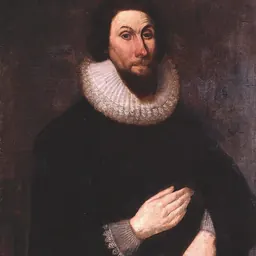
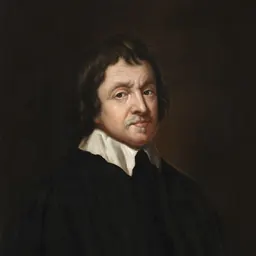

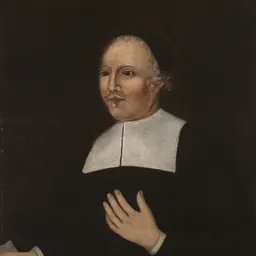
Related people
Same field, nearest in time
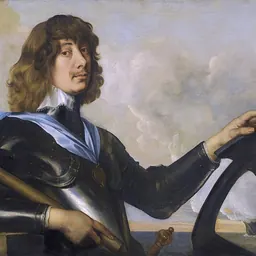

Contemporaries
People whose lives overlapped Robert Keayne's





Frequently asked questions
Who was Robert Keayne?
American politician
When was Robert Keayne born?
Robert Keayne was born in 1595 in Windsor.
When did Robert Keayne die?
Robert Keayne died on 23 March 1656 in Boston.
What was Robert Keayne's occupation?
Robert Keayne was a politician.
What nationality was Robert Keayne?
Robert Keayne was American.
Sources & further reading
Cite this page
APA: Biography.guide. (2026). Robert Keayne. https://biography.guide/robert-keayne/
MLA: "Robert Keayne." Biography.guide, https://biography.guide/robert-keayne/.
Chicago: "Robert Keayne." Biography.guide. https://biography.guide/robert-keayne/.
Data last updated: 2026-09-20 · Spot an error? Report a correction.
Page generated 2026-09-27 05:26 UTC