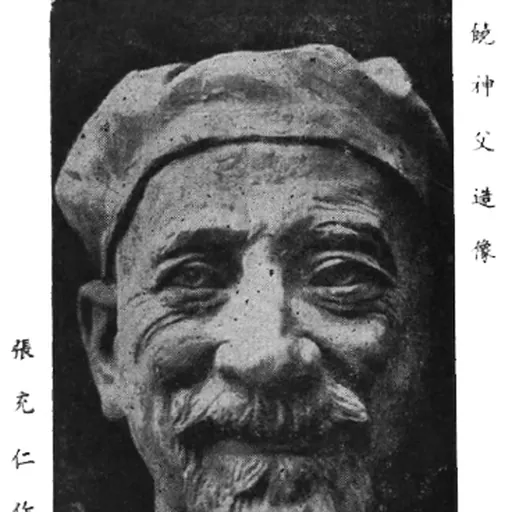
About Robert Jacquinot de Besange
Lived 1878 – 1946 (aged 68). Robert Jacquinot de Besange was a French catholic priest, missionary, teacher and cleric.
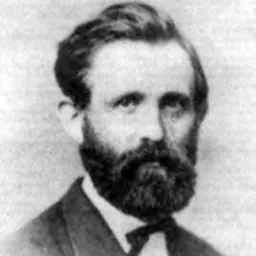
Robert Charles Joseph Emile Jacquinot de Besange, SJ (15 March 1878 – 10 September 1946), known in China as Rao Jiaju , was a French Jesuit priest, missionary, educator and humanitarian. He spent twenty-seven years in China, principally in Shanghai, from 1913 until 1940. During the Battle of Shanghai in 1937 he negotiated the establishment of a demilitarised refuge for Chinese civilians in the northern part of Nanshi. Formally opened on 9 November 1937, the Nanshi Safety Zone, commonly known as the Jacquinot Zone, remained in operation until June 1940.
Contemporary and later estimates of the number of people protected by the zone vary according to date and method of calculation. In 1938 an International Committee of the Red Cross (ICRC) delegate reported about 100,000 refugees within the Jacquinot Zone at the time of his visit, while approximately 300,000 people were being supported in refugee camps throughout Shanghai. Historian Marcia R. Ristaino estimates that at least 300,000 people benefited from the Shanghai zone over its existence and that adaptations of Jacquinot's model elsewhere in China protected more than half a million civilians in total. The experience of protected areas at Shanghai was subsequently among the practical precedents considered in the development of the neutralised-zone provisions of the Fourth Geneva Convention. Jacquinot was nominated for the Nobel Peace Prize in 1939.
Early life and Jesuit formation
Jacquinot was born on 15 March 1878 at Saintes, in western France, into an aristocratic family whose roots were associated with Lorraine.
Missionary and educational work in Shanghai
In Shanghai Jacquinot taught English language and literature at the Jesuit-run Aurora University and also undertook educational work at St. Ignatius School. He served the largely Portuguese Catholic congregation of the Church of the Sacred Heart of Jesus in Hongkou and became a Catholic chaplain, later senior chaplain, to the Shanghai Volunteer Corps.
Humanitarian work before 1937
Jacquinot's involvement in large-scale civilian relief predated the Second Sino-Japanese War. During fighting associated with the Northern Expedition in 1927, he secured access to the Holy Family Convent and School in Zhabei and assisted the evacuation of approximately 600 nuns and children from the fighting.
On 12 February 1932 a four-hour truce, from 8 a.m. until noon, allowed a Red Cross relief party to enter the battle area and evacuate wounded people and civilians. A contemporary telegram from United States consul-general Edwin S. Cunningham stated that Cunningham and the British consul-general had arranged the truce at the request of Major F. Hayley Bell of the Shanghai Volunteer Corps and Jacquinot.
The episode provided Jacquinot with practical experience of using his position as a neutral intermediary to secure limited humanitarian concessions from opposing military authorities.
The supervisory committee formally declared the zone open at 5 p.m. on 9 November 1937.
The zone was divided into sectors with Chinese officials and refugee representatives responsible for matters including accommodation, food, water, sanitation, medical services, schooling, registration and eventual repatriation. Schools and vocational activities were established within the zone as the emergency became prolonged.
On 26 May 1938 he visited the White House and briefed President Franklin D. Roosevelt on the plight of Chinese refugees. The contemporary Library of Congress photograph record states that Jacquinot was in the United States to raise relief funds and was accompanied to the White House by the French ambassador, René Doynel de Saint-Quentin.
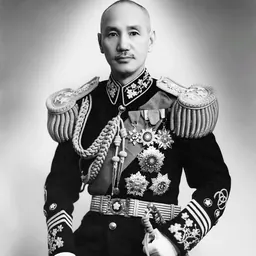
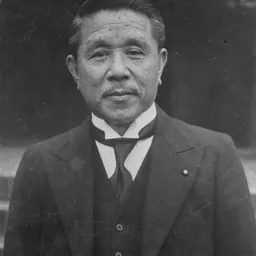
The Library of Congress has subsequently noted that Jacquinot sought backing from figures including Roosevelt, Chinese leader Chiang Kai-shek and Japanese foreign minister Kōki Hirota.
In 1939 Jacquinot was nominated for the Nobel Peace Prize by Jules Basdevant, professor of international law at the University of Paris.
In November 1937 foreign residents remaining in Nanjing organised the International Committee for the Nanking Safety Zone, chaired by German businessman John Rabe. Their proposal drew upon the Shanghai example.
The ICRC's revised 2025 commentary gives a more detailed account of the legislative history. It states that experiences with protected zones at Madrid in 1936, Shanghai in 1937 and Jerusalem in 1948 demonstrated the usefulness of temporary protected areas close to fighting. The ICRC consequently prepared a draft provision for such "neutralized zones"; it was adopted by the International Conference of the Red Cross in Stockholm in 1948 and, without fundamental alteration, became Article 15 of the Fourth Geneva Convention in 1949.
After the Second World War he continued humanitarian work among refugees and displaced people. In 1945 he went to Berlin as head of the Vatican delegation for assistance to refugees and displaced persons.
His health deteriorated during 1946. He suffered from leukaemia and died in a French military hospital in Berlin on 10 September 1946, aged 68.
On 10 September 2013 a memorial stone to Jacquinot was inaugurated beside the French burial section at Heiligensee Cemetery in Berlin.
A further Chinese biographical study, Rao Jiaju: Bei yiwang de yingxiong (《饶家驹:被遗忘的英雄》; "Jacquinot: The Forgotten Hero"), by Su Zhiliang and Wang Haiou, was published by Xuelin Press in July 2025. The Shanghai municipal government's English-language service described it as a systematic new account drawing renewed attention to Jacquinot's life and the Shanghai zone.
In his native Saintes, the diocesan centre is named the Maison diocésaine Robert Jacquinot.
Don’t just read it —
keep it.
Full-length biographies made to live with: read them, listen on the way to work, watch them tonight.
- E-book
- Audio
- Video
Instant download · yours to keep · every purchase keeps this site free
Important facts
People in Robert Jacquinot de Besange's life
Named in this biography and alive at the same time



Related people
Same field, nearest in time

Contemporaries
People whose lives overlapped Robert Jacquinot de Besange's




Frequently asked questions
Who was Robert Jacquinot de Besange?
French missionary (1878–1946)
When was Robert Jacquinot de Besange born?
Robert Jacquinot de Besange was born on 15 March 1878 in Saintes.
When did Robert Jacquinot de Besange die?
Robert Jacquinot de Besange died on 10 September 1946 in West Berlin.
What was Robert Jacquinot de Besange's occupation?
Robert Jacquinot de Besange was a catholic priest, missionary, teacher and cleric.
What nationality was Robert Jacquinot de Besange?
Robert Jacquinot de Besange was French.
Sources & further reading
· Wikipedia: Robert Jacquinot de Besange
· DBpedia: Robert Jacquinot de Besange
Cite this page
APA: Biography.guide. (2026). Robert Jacquinot de Besange. https://biography.guide/robert-jacquinot-de-besange/
MLA: "Robert Jacquinot de Besange." Biography.guide, https://biography.guide/robert-jacquinot-de-besange/.
Chicago: "Robert Jacquinot de Besange." Biography.guide. https://biography.guide/robert-jacquinot-de-besange/.
Data last updated: 2026-09-21 · Spot an error? Report a correction.
Portrait: Wikimedia Commons · author & licence
Page generated 2026-09-27 04:59 UTC