
About Robert Hughes
Lived 1938 – 2012 (aged 74). Robert Hughes was an Australian art historian, writer, art critic, television presenter, narrator and screenwriter.
Robert Studley Forrest Hughes (28 July 19386 August 2012) was an Australian art critic, writer and producer of television documentaries. He was described in 1997 by Robert Boynton of The New York Times as "the most famous art critic in the world".
Hughes earned widespread recognition for his book and television series on modern art, The Shock of the New, and for his longstanding position as art critic with TIME magazine. He is also known for his best seller The Fatal Shore (1986), a study of the British convict system in early Australian history. Known for his contentious critiques of art and artists, Hughes was generally conservative in his tastes, although he did not belong to a particular philosophical camp. His writing was noted for its power and elegance. the father of former Sydney Lord Mayor Lucy Turnbull, the wife of former Australian prime minister Malcolm Turnbull. He had another brother, Geoffrey, and a sister, Constance.
Growing up in Rose Bay, Sydney, Hughes was educated at Saint Ignatius' College, Riverview, before studying arts and then architecture at the University of Sydney.
Career
As an art critic Hughes, an aspiring artist and poet, abandoned his university endeavours to become first a cartoonist and then an art critic for the Sydney periodical The Observer, edited by Donald Horne. Hughes was briefly involved in the original Sydney version of Oz magazine and wrote art criticism for Nation and the Sunday Mirror.
In 1961, while still a student, Hughes was caught up in controversy when a number of his classmates demonstrated in a student newspaper article that he had published plagiarised poetry by Terence Tiller and others, and a drawing by Leonard Baskin.
Hughes left Australia for Europe in 1964, living for a time in Italy before settling in London in 1965,
Hughes wrote and narrated the BBC eight-part series The Shock of the New (1980) on the development of modern art since the Impressionists. It was accompanied by a book with the same title. John O'Connor of The New York Times said, "Agree or disagree, you will not be bored. Mr. Hughes has a disarming way of being provocative."
Hughes's TV series American Visions (1997) reviewed the history of American art since the Revolution. He created a one-hour update to The Shock of the New, titled The New Shock of the New, which first aired in 2004. He published the first volume of his memoirs, Things I Didn’t Know, in 2006.
Following his death, Jonathan Jones wrote in The Guardian that Hughes "was simply the greatest art critic of our time and it will be a long while before we see his like again. He made criticism look like literature. He also made it look morally worthwhile. He lent a nobility to what can often seem a petty way to spend your life. Hughes could be savage, but he was never petty. There was purpose to his lightning bolts of condemnation".
As a journalist and historian Hughes and Harold Hayes were recruited in 1978 to anchor the new ABC News (US) newsmagazine 20/20. Their only broadcast, on 6 June 1978, proved so controversial that, less than a week later, ABC News president Roone Arledge terminated the contracts of both men, replacing them with veteran TV host Hugh Downs. Australia: Beyond the Fatal Shore (2000) was a series musing on modern Australia and Hughes's relationship with it. During production, Hughes was involved in a near-fatal road accident. They divorced in 1981; she died of a brain tumour in 2003. Their son, Danton, Hughes's only child, Danton Hughes, a sculptor, committed suicide in April 2001; he was found by his partner, fashion designer Jenny Kee, with whom he had been in a long-term relationship. Robert Hughes later wrote: "I miss Danton and always will, although we had been miserably estranged for years and the pain of his loss has been somewhat blunted by the passage of time".
Hughes was married to his second wife, Victoria Whistler, from 1981 until their divorce in 1996. Hughes was in a coma for five weeks after the crash. In 2003 Hughes pleaded guilty to dangerous driving causing bodily harm and was fined A$2,500. Hughes recounts the story of the accident and his recovery in the first chapter of his 2006 memoir Things I Didn't Know.
In 2001, Hughes wed his third wife, the American artist and art director Doris Downes. "Apart from being a talented painter, she saved my life, my emotional stability, such as it is", he said.
Death After a long illness, reportedly exacerbated by some 50 years of alcohol consumption, Hughes died at Calvary Hospital in The Bronx, New York City, on 6 August 2012, with his wife at his bedside. He was also survived by two stepsons from his wife's previous marriage, Freeborn Garrettson Jewett IV and Fielder Douglas Jewett; his brothers, Tom and Geoffrey Hughes; a sister, Constance Crisp; and many nieces and nephews. The Shock of the New proved to be a popular and critical success: it has been assessed "much the best synoptic introduction to modern art ever written", taking as its premise the vitality gained by modern art when it ceded the need to replicate nature in favour of a more direct expression of human experience and emotion. Hughes's explanations of modern art benefited from the coherence of his judgments, and were marked by his ability to summarise the essential qualities of his subject. By contrast Hughes was dismissive of much postmodernism and neo-expressionism, of painters like Julian Schnabel and David Salle, as well as the vicissitudes of a money-fuelled art market. He distrusted novelty in art for its own sake, yet he was also disdainful of a conservative aesthetic that avoided risk. He famously labelled contemporary Australian indigenous art as "the last great art movement of the 20th century". Hughes, according to Adam Gopnik, was drawn to work that was rough-hewn, "craft attempted with passion."
Don’t just read it —
keep it.
Full-length biographies made to live with: read them, listen on the way to work, watch them tonight.
- E-book
- Audio
- Video
Instant download · yours to keep · every purchase keeps this site free
Important facts
Family & relationships
People in Robert Hughes's life
Named in this biography and alive at the same time




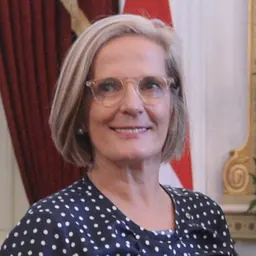


Related people
Same field, nearest in time
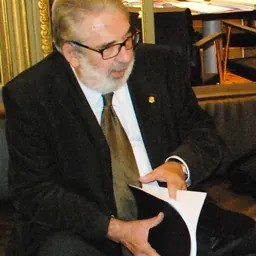
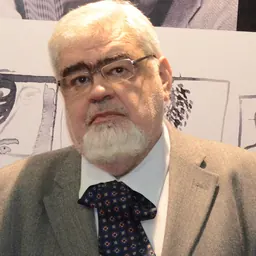
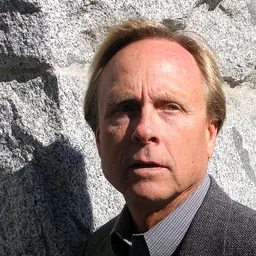
Contemporaries
People whose lives overlapped Robert Hughes's
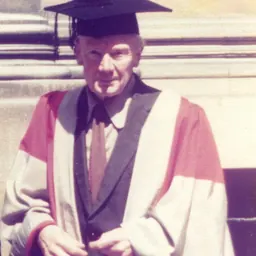



Frequently asked questions
Who was Robert Hughes?
Australian critic, historian, and writer (1938–2012)
When was Robert Hughes born?
Robert Hughes was born on 28 July 1938 in Sydney.
When did Robert Hughes die?
Robert Hughes died on 6 August 2012 in The Bronx.
What was Robert Hughes's occupation?
Robert Hughes was an art historian, writer, art critic, television presenter, narrator and screenwriter.
What nationality was Robert Hughes?
Robert Hughes was Australian.
Sources & further reading
· DBpedia: Robert Hughes (critic)
Cite this page
APA: Biography.guide. (2026). Robert Hughes. https://biography.guide/robert-hughes-art-historian/
MLA: "Robert Hughes." Biography.guide, https://biography.guide/robert-hughes-art-historian/.
Chicago: "Robert Hughes." Biography.guide. https://biography.guide/robert-hughes-art-historian/.
Data last updated: 2026-09-26 · Spot an error? Report a correction.
Page generated 2026-09-27 05:13 UTC