
About Donald Horne
Lived 1921 – 2005 (aged 83). Donald Horne was an Australian historian, journalist, opinion journalist, university teacher, author and social critic.
Donald Richmond Horne (26 December 1921 – 8 September 2005) was an Australian journalist, writer, social critic, and academic who became one of Australia's best known public intellectuals, from the 1960s until his death.
Horne was a prolific author who published four novels and more than twenty volumes of history, memoir and political and cultural analysis. He also edited The Bulletin, The Observer and Quadrant. His best known work was The Lucky Country (1964), an evaluation of Australian society that questioned many traditional attitudes: "Australia is a lucky country, run by second-rate people who share its luck."
Background and early years
Donald Horne's early life was recounted in the first volume of his memoirs The Education of Young Donald (1967). He was born in Kogarah, New South Wales and raised in Muswellbrook (where his father was a teacher at the local school) and Sydney.
Career Horne began his career in journalism and worked for a number of Frank Packer's publications, first as a journalist for The Telegraph, then editor of the magazine Weekend, and later the fortnightly intellectual periodical The Observer (1958–61). As editor of the flagship magazine The Bulletin (1961–62 and 1967–72), he removed the magazine's long standing motto "Australia for the White Man". He was co-editor of Quadrant magazine (1964–66).
He also worked on writing, arts and citizenship boards and was an executive member of the Australian Constitutional Commission.
Honours and legacy
In 1982, Professor Horne was appointed an Officer of the Order of Australia (AO) for service to literature; and in 2001 was presented with the Centenary Medal for service to the Centenary of Federation celebrations in New South Wales.
He was named as one of Australia's Living National Treasures in 1997, the year of the list's inauguration, by the National Trust.
Horne was conferred with degrees honoris causa by a number of Australian academic institutions, including Griffith University (Doctor of the University), University of New South Wales (Doctor of Letters), University of Canberra (Doctor of the University), the Australian Academy of the Humanities (Fellow), and the University of Sydney (Honorary Doctorate: 2005).
In 2008, the University of Canberra announced the establishment of the Donald Horne Institute for Cultural Heritage.
In 2017 La Trobe University Press published Donald Horne: Selected Writings, edited by his son Nick.
Selected bibliography
Social commentary
Political history
Autobiography
Fiction
Travel
Don’t just read it —
keep it.
Full-length biographies made to live with: read them, listen on the way to work, watch them tonight.
- E-book
- Audio
- Video
Instant download · yours to keep · every purchase keeps this site free
Important facts
Family & relationships
People in Donald Horne's life
Named in this biography and alive at the same time
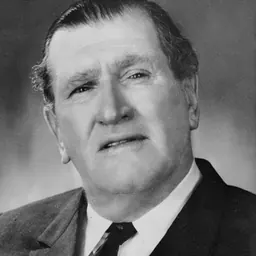
Related people
Same field, nearest in time
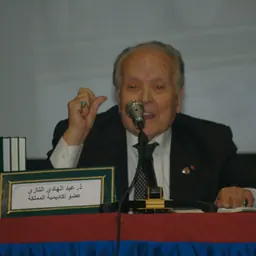



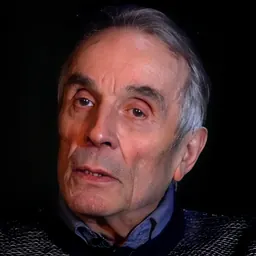
Contemporaries
People whose lives overlapped Donald Horne's




Frequently asked questions
Who was Donald Horne?
Australian journalist and academic (1921-2005)
When was Donald Horne born?
Donald Horne was born on 26 December 1921 in Kogarah.
When did Donald Horne die?
Donald Horne died on 8 September 2005 in Sydney.
What was Donald Horne's occupation?
Donald Horne was a historian, journalist, opinion journalist, university teacher, author and social critic.
What nationality was Donald Horne?
Donald Horne was Australian.
Sources & further reading
Cite this page
APA: Biography.guide. (2026). Donald Horne. https://biography.guide/donald-horne-historian/
MLA: "Donald Horne." Biography.guide, https://biography.guide/donald-horne-historian/.
Chicago: "Donald Horne." Biography.guide. https://biography.guide/donald-horne-historian/.
Data last updated: 2026-09-20 · Spot an error? Report a correction.
Page generated 2026-09-27 05:25 UTC