
About Robert Hayden
Lived 1913 – 1980 (aged 66). Robert Hayden was an American poet, performing artist, lighting designer, dancer, university teacher and writer.
Robert Hayden (August 4, 1913 – February 25, 1980) was an American poet, essayist, and educator. He served as Consultant in Poetry to the Library of Congress from 1976 to 1978, a role today known as U.S. Poet Laureate. He was the first African-American writer to hold the office.
Biography Robert Hayden was born in Detroit, Michigan, to Ruth and Asa Sheffey, who separated before his birth. He was taken in by a foster family next door, Sue Ellen Westerfield and William Hayden, and grew up in the Detroit neighborhood of Paradise Valley.
His childhood traumas resulted in debilitating bouts of depression that he later called "my dark nights of the soul". Because he was nearsighted and slight of stature, he was often ostracized by his peers. In response, Hayden read voraciously, developing both an ear and an eye for transformative qualities in literature. He attended Detroit City College (later called Wayne State University) with a major in Spanish and minor in English and left in 1936 during the Great Depression, one credit short of finishing his degree, to go to work for the Works Progress Administration Federal Writers' Project, where he researched black history and folk culture.
Leaving the Federal Writers' Project in 1938, Hayden married Erma Morris in 1940 and published his first volume, Heart-Shape in the Dust (1940). He enrolled at the University of Michigan in 1941 and won a Hopwood Award there. Raised as a Baptist, he followed his wife into the Bahá'í Faith during the early 1940s, and raised a daughter, Maia, in the religion. Hayden became one of the best-known Bahá'í poets. Erma Hayden was a pianist and composer and served as supervisor of music for Nashville public schools. Concurrent with his teaching responsibilities at Fisk, he served as poet-in-residence at Indiana State University in 1967 and visiting poet at the University of Washington in 1969, the University of Connecticut in 1971, Dennison University in 1972, and Connecticut College in 1974.
As a supporter of his religion's teaching of the unity of humanity, Hayden could never embrace Black separatism. Thus, the title poem of Words in the Mourning Time ends in a stirring plea in the name of all humanity: Reclaim now, now renew the vision of a human world where godliness is possible and man is neither gook nigger honkey wop or kike but man
permitted to be man.
In 2012 the U.S. Postal Service issued a pane of stamps featuring ten great Twentieth Century American Poets, including Hayden.
Career By the 1960s and the rise of the Black Arts Movement, when a more youthful era of Afro-American artists composed politically and emotionally charged protest poetry overwhelmingly coordinated to a black audience, Hayden's philosophy about the function of poetry and the way he characterized himself as an author were settled. His refusal to revamp himself as indicated by the pictures of the 1960s earned him feedback from a few scholars and analysts. Hayden stayed consistent with his idea of poetry as an artistic frame instead of a polemical demonstration and to his conviction that poetry ought to, in addition to other things, address the qualities shared by mankind, including social injustice. Hayden's beliefs about the relationship of the artist to his poems likewise had an impact in his refusal to compose emotionally determined protest sonnets. Hayden's practice was to make separation between the speaker and the movement of the poem.
His work often addressed the plight of African Americans, usually using his former home of Paradise Valley slum as a backdrop, as he does in the poem "Heart-Shape in the Dust". He made ready use of black vernacular and folk speech, and he wrote political poetry as well, including a sequence on the Vietnam War.
On the first poem of the sequence, he said: "I was trying to convey the idea that the horrors of the war became a kind of presence, and they were with you in the most personal and intimate activity, having your meals and so on. Everything was touched by the horror and the brutality and criminality of war. I feel that's one of the best of the poems."
The impact of Euro-American innovation on Hayden's poetry and also his continuous assertions that he needed to be viewed as an "American poet" as opposed to a "black poet" prompted much feedback of him as an abstract "Uncle Tom" by Afro-American critics during the 1960s. However, Afro-American history, contemporary black figures, for example, Malcolm X, and Afro-American communities, especially Hayden's native Paradise Valley, were the subjects of a significant number of his poems. The poem "Night-Blooming Cereus" is another example of Hayden's depiction of the natural world. The poem presents a series of haiku-like stanzas. Hayden said that he was inspired by a trip to Duluth, Minnesota during the smelt fishing season. He describes how the poem "[...]turned into a haiku, where you get it all by suggestion and implication".
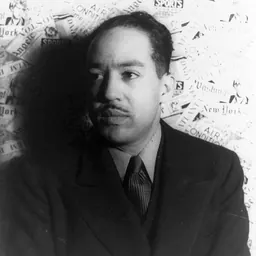
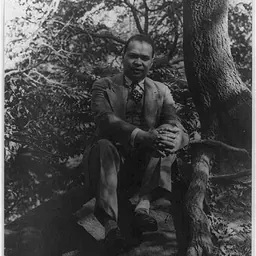
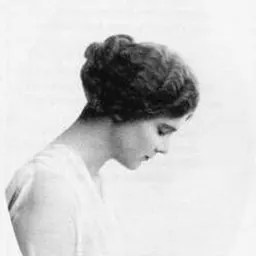
Poetic influences Robert Hayden has been praised for his work crafting poems, the unique perspectives in his work, his exact language, and his absolute command of traditional poetic techniques and structures. Hayden's influences included Elinor Wylie, Countee Cullen, Paul Laurence Dunbar, Langston Hughes, Arna Bontemps, John Keats, W. H. Auden and W. B. Yeats.
As he became a well-known poet, he influenced society in a way that enforced the many ideas that were created during the 1900s. Some of his influential poems are, "Angle of Ascent", "Elegies for Paradise Valley", "Night, Death, Mississippi", and "Those Winter Sundays".
Legacy Although Robert Hayden is widely recognized as a prominent poet today, he did not achieve the same level of recognition during his lifetime. His work was often overlooked due to the racial discrimination and prejudice prevalent in the 20th century. However, in contemporary times, his poetry is highly regarded for its literary significance and contributions to social discourse.
Hayden was elected to the American Academy of Poets in 1975. His most famous poem is "Those Winter Sundays", He served for a decade as an editor of the Bahá'í journal World Order.
Other famed poems include "The Whipping" (about a small boy being severely punished for some undetermined offense), "Middle Passage" (inspired by the events surrounding the United States v. The Amistad affair), "Runagate, Runagate", and "Frederick Douglass". A Ballad of Remembrance. London: Paul Breman, 1962. Selected Poems. NY: October House 1966. Words in the Mourning Time. NY: October House, 1970. The Night-Blooming Cereus. London: Paul Breman, 1972. Angle of Ascent: New and Selected Poems. NY: Liveright, 1975. American Journal. MA: Effendi Press, 1978. American Journal (expanded): NY: Liveright, 1982. Collected Prose: Robert Hayden. Ed. Frederick Glaysher. Ann Arbor: University of Michigan, 1984. Collected Poems: Robert Hayden. Ed. Frederick Glaysher. NY: Liveright, 1985.
Don’t just read it —
keep it.
Full-length biographies made to live with: read them, listen on the way to work, watch them tonight.
- E-book
- Audio
- Video
Instant download · yours to keep · every purchase keeps this site free
Important facts
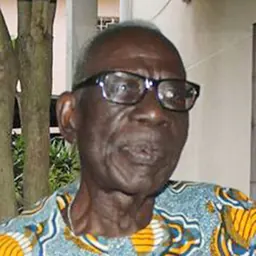
People in Robert Hayden's life
Named in this biography and alive at the same time




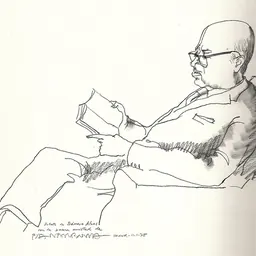
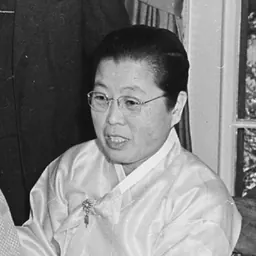
Related people
Same field, nearest in time

Contemporaries
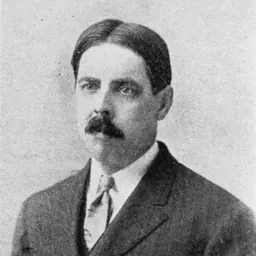
People whose lives overlapped Robert Hayden's



Frequently asked questions
Who was Robert Hayden?
American writer and academic (1913–1980)
When was Robert Hayden born?
Robert Hayden was born on 4 August 1913 in Detroit.
When did Robert Hayden die?
Robert Hayden died on 25 February 1980 in Ann Arbor.
What was Robert Hayden's occupation?
Robert Hayden was a poet, performing artist, lighting designer, dancer, university teacher and writer.
What nationality was Robert Hayden?
Robert Hayden was American.
Sources & further reading
Cite this page
APA: Biography.guide. (2026). Robert Hayden. https://biography.guide/robert-hayden/
MLA: "Robert Hayden." Biography.guide, https://biography.guide/robert-hayden/.
Chicago: "Robert Hayden." Biography.guide. https://biography.guide/robert-hayden/.
Data last updated: 2026-09-20 · Spot an error? Report a correction.
Page generated 2026-09-27 05:03 UTC