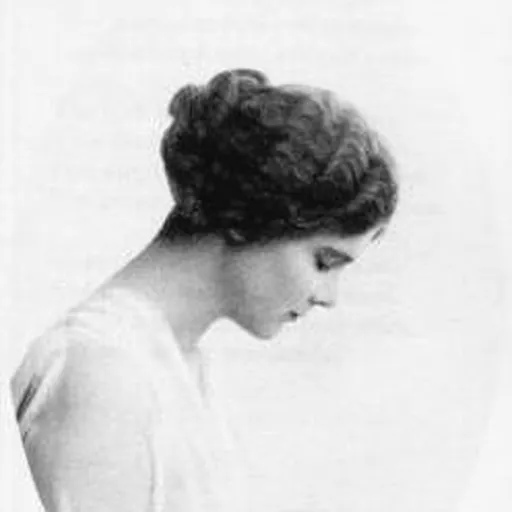
About Elinor Wylie
Lived 1885 – 1928 (aged 43). Elinor Wylie was an American poet, novelist and writer.
Elinor Morton Wylie (September 7, 1885 – December 16, 1928) was an American poet and novelist popular in the 1920s and 1930s. "She was famous during her life almost as much for her ethereal beauty and personality as for her melodious, sensuous poetry."
Because of her father's political aspirations, Elinor spent much of her youth in Washington, DC. She was educated at Miss Baldwin's School (1893–97), Mrs. Flint's School (1897–1901), and finally Holton-Arms School (1901–04). In particular, from age 12 to 20, she lived in Washington again where she made her debut in the midst of the "city's most prominent social élite,"
Following the death in November 1910 of Elinor's father, and unable to secure a divorce from Hichborn, where they lived "under the assumed name of Waring; this event caused a scandal in the Washington, D.C., social circles Elinor Wylie had frequented".
Between 1914 and 1916, Elinor tried to have a second child, but "suffered several miscarriages ... as well as a stillbirth and ... a premature child who died after one week." was to William Rose Benét (February 2, 1886 – May 4, 1950), who was part of her literary circle and brother of Stephen Vincent Benét. By the time Wylie's third book of poetry, Trivial Breath in 1928 appeared, her marriage with Benét was also in trouble, and they had agreed to live apart. She moved to England and fell in love with the husband of a friend, Henry de Clifford Woodhouse, to whom she wrote a series of 19 sonnets which she published privately in 1928 as Angels and Earthly Creatures (also included in her 1929 book of the same name).
1923 also saw the publication of Wylie's first novel, Jennifer Lorn, to considerable fanfare. Van Vechten "organized a torchlight parade through Manhattan to celebrate its publication". such as John Donne, George Herbert, and Andrew Marvell. If her poetry is derivative of anyone, though, that would be "of the British Romantic poets, and particularly of Shelley," whom she admired "to a degree that some critics have seen as abnormal."
Trivial Breath (1928) "is the work of a poet in transition. At times the craftsman is uppermost; at times the creative genius."
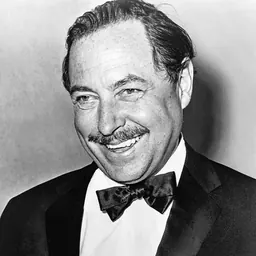
The title of Tennessee Williams' play, In Masks Outrageous and Austere, is taken from the last stanza of Wylie's poem "Let No Charitable Hope:" "In masks outrageous and austere / The years go by in single file; / But none has merited my fear, / And none has quite escaped my smile."
In the 2003 film American Splendor, the characters Mr Boats and Harvey have a brief discourse surrounding Wylie’s poem The Eagle and the Mole.
In her verse collection Huntsman, What Quarry? (1939), her friend Edna St. Vincent Millay (1892-1950) paid tribute to Wylie with a sequence of poems.
Publications
Poetry [Anonymous], Incidental Numbers. London: private, 1912. Nets to Catch the Wind. New York: Harcourt, Brace, 1921. Black Armour. New York: Doran, 1923. Trivial Breath. New York, London: Knopf, 1928. Angels and Earthly Creatures: A Sequence of Sonnets Henley on Thames, UK: Borough Press, 1928. (also known as One Person). Angels and Earthly Creatures. New York, London: Alfred A. Knopf, 1929. (includes Angels and Earthly Creatures: A Sequence of Sonnets). Birthday Sonnet. New York: Random House, 1929. Collected Poems of Elinor Wylie. New York: Alfred A. Knopf, 1932. Last Poems of Elinor Wylie, transcribed by Jane D. Wise, foreword by William Rose Benet, tribute by Edith Olivier. New York: Knopf, 1943. Chicago: Academy, 1982. Selected Works of Elinor Wylie. Evelyn Helmick Hively ed. Kent State U Press, 2005. The Bowling Green - An Anthology of Verse selected by Christopher Morley (New York: Doubleday, Page and Company, 1924), 175-180.
Novels Jennifer Lorn: A Sedate Extravaganza. New York: Doran, 1923. London: Richards, 1924. The Venetian Glass Nephew. New York: Doran, 1925. Chicago: Academy, 1984. The Orphan Angel. New York: Knopf, 1926. Also published as Mortal Image. London: Heinemann, 1927. Mr. Hodge & Mr. Hazard. New York. Knopf, 1928. London: Heinemann, 1928. Chicago: Academy, 1984. Collected Prose of Elinor Wylie. New York: Knopf, 1933.
Personal papers Her personal papers reside in the Elinor Wylie Archive, Beinecke Rare Book Room and Manuscript Library, Yale University, New Haven, CT, and in the Berg Collection, New York Public Library.
Don’t just read it —
keep it.
Full-length biographies made to live with: read them, listen on the way to work, watch them tonight.
- E-book
- Audio
- Video
Instant download · yours to keep · every purchase keeps this site free
Important facts
Family & relationships
People in Elinor Wylie's life
Named in this biography and alive at the same time




Related people
Same field, nearest in time

Contemporaries
People whose lives overlapped Elinor Wylie's


Frequently asked questions
Who was Elinor Wylie?
American poet (1885-1928)
When was Elinor Wylie born?
Elinor Wylie was born on 7 September 1885 in Somerville.
When did Elinor Wylie die?
Elinor Wylie died on 16 December 1928 in New York City.
What was Elinor Wylie's occupation?
Elinor Wylie was a poet, novelist and writer.
What nationality was Elinor Wylie?
Elinor Wylie was American.
Sources & further reading
Cite this page
APA: Biography.guide. (2026). Elinor Wylie. https://biography.guide/elinor-wylie/
MLA: "Elinor Wylie." Biography.guide, https://biography.guide/elinor-wylie/.
Chicago: "Elinor Wylie." Biography.guide. https://biography.guide/elinor-wylie/.
Data last updated: 2026-09-23 · Spot an error? Report a correction.
Portrait: Wikimedia Commons · author & licence
Page generated 2026-09-27 05:07 UTC