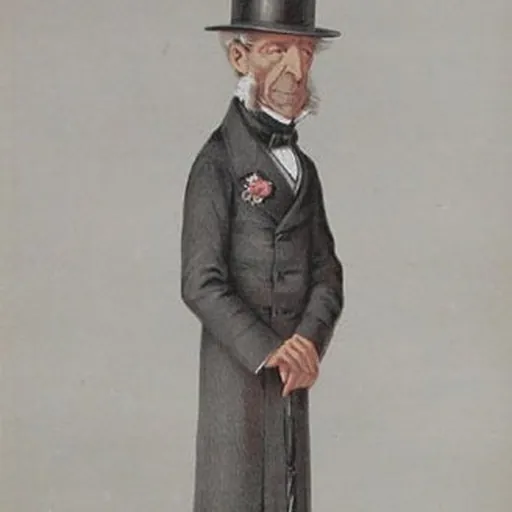
About Robert Grosvenor, 1st Baron Ebury
Lived 1801 – 1893 (aged 92). Robert Grosvenor, 1st Baron Ebury was a British politician.
Robert Grosvenor, 1st Baron Ebury PC (24 April 1801 – 18 November 1893), styled Lord Robert Grosvenor from 1831 to 1857, was a British courtier and Whig politician. He served as Comptroller of the Household between 1830 and 1834 and as Treasurer of the Household between 1846 and 1847. In 1857 he was ennobled as Baron Ebury.
Background and education Grosvenor was the third son of Robert Grosvenor, 1st Marquess of Westminster, and his wife Eleanora, daughter of Thomas Egerton, 1st Earl of Wilton. He was the younger brother of Richard Grosvenor, 2nd Marquess of Westminster, and of Thomas Egerton, 2nd Earl of Wilton, while Hugh Lupus Grosvenor, 1st Duke of Westminster, and Richard Grosvenor, 1st Baron Stalbridge, were his nephews.
He was educated at Westminster School and Christ Church, Oxford.
Political career In 1821 Grosvenor was returned to Parliament for Shaftesbury, a seat he held until 1826, and then sat for Chester until 1847. When the Whigs came to power in November 1830 under Lord Grey, Grosvenor was appointed Comptroller of the Household and admitted to the Privy Council. He retained this office also when Lord Melbourne became Prime Minister in July 1834. The Whig government fell in November the same year. Grosvenor did not serve in Melbourne's second administration which lasted from 1835 to 1841. However, when the Whigs returned to office in 1846 under Lord John Russell he was made Treasurer of the Household, which he remained until his resignation in July 1847. In the latter year Grosvenor was returned to Parliament for Middlesex, a seat he held until 1857. However, he never returned to office. In September 1857 he was raised to the peerage as Baron Ebury, of Ebury Manor in the County of Middlesex.
Interests Apart from his political career, Lord Ebury was an active campaigner for Protestantism in the Church of England and was the founder and President of the society for the "revision of the prayer-book". He was also involved in the movement led by Anthony Ashley Cooper, 7th Earl of Shaftesbury, for the improvement of factory working hours. In later life he came to oppose William Ewart Gladstone on the issue of Irish Home Rule. In September 1893, at the age of 92, Lord Ebury voted against the Second Home Rule Bill, by far the oldest peer to vote in the matter.
Lord Ebury was also a fervent supporter of homeopathy, the medical doctrine introduced by the German physician Samuel Hahnemann. He was a patron of both Dr. Curie's short-lived Homoeopathic Hospital in Bloomsbury Square and Dr Quin's London Homoeopathic Hospital. Lord Ebury served as chairman and president of the London Homoeopathic Hospital from its foundation in 1849, and during that time even defended the doctrine and the institution against its opponents in Parliament.
Personal life
On 17 May 1831, Lord Ebury was married to the Hon. Charlotte Arbuthnot Wellesley, eldest daughter of the diplomat Henry Wellesley, 1st Baron Cowley (younger brother of Arthur Wellesley, 1st Duke of Wellington). They had a London home at 29 Upper Grosvenor Street, Mayfair. Together, they had five sons and two daughters including:
Robert Wellesley Grosvenor, 2nd Baron Ebury (1834–1918), who married Hon. Emilie White, the second daughter of Henry White, 1st Baron Annaly.
Don’t just read it —
keep it.
Full-length biographies made to live with: read them, listen on the way to work, watch them tonight.
- E-book
- Audio
- Video
Instant download · yours to keep · every purchase keeps this site free
Important facts
People in Robert Grosvenor, 1st Baron Ebury's life
Named in this biography and alive at the same time




Related people
Same field, nearest in time




Contemporaries
People whose lives overlapped Robert Grosvenor, 1st Baron Ebury's





Frequently asked questions
Who was Robert Grosvenor, 1st Baron Ebury?
British courtier and Whig politician
When was Robert Grosvenor, 1st Baron Ebury born?
Robert Grosvenor, 1st Baron Ebury was born on 24 April 1801.
When did Robert Grosvenor, 1st Baron Ebury die?
Robert Grosvenor, 1st Baron Ebury died on 18 November 1893.
What was Robert Grosvenor, 1st Baron Ebury's occupation?
Robert Grosvenor, 1st Baron Ebury was a politician.
What nationality was Robert Grosvenor, 1st Baron Ebury?
Robert Grosvenor, 1st Baron Ebury was British.
Sources & further reading
· Wikipedia: Robert Grosvenor, 1st Baron Ebury
· DBpedia: Robert Grosvenor, 1st Baron Ebury
Cite this page
APA: Biography.guide. (2026). Robert Grosvenor, 1st Baron Ebury. https://biography.guide/robert-grosvenor-1st-baron-ebury/
MLA: "Robert Grosvenor, 1st Baron Ebury." Biography.guide, https://biography.guide/robert-grosvenor-1st-baron-ebury/.
Chicago: "Robert Grosvenor, 1st Baron Ebury." Biography.guide. https://biography.guide/robert-grosvenor-1st-baron-ebury/.
Data last updated: 2026-09-23 · Spot an error? Report a correction.
Portrait: Wikimedia Commons · author & licence
Page generated 2026-09-27 05:05 UTC