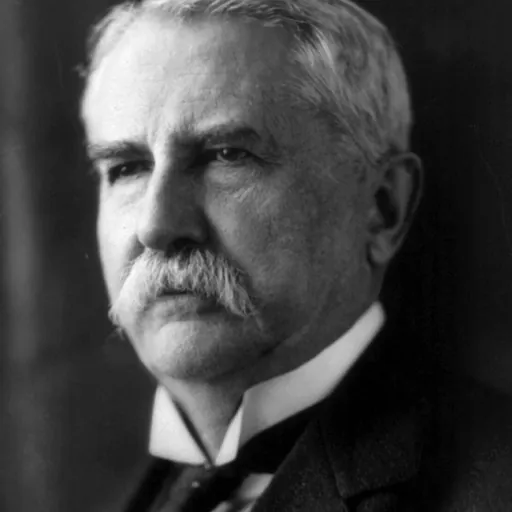
About Henry White
Lived 1850 – 1927 (aged 77). Henry White was an American diplomat.
Henry White (March 29, 1850 – July 15, 1927) was a prominent American diplomat during the 1890s and 1900s, and one of the signers of the Treaty of Versailles.
Theodore Roosevelt, who was president during the peak of White's career, described White as "the most useful man in the entire diplomatic service, during my Presidency and for many years before." Colonel House, the chief aide to Woodrow Wilson, called White "the most accomplished diplomatist this country has ever produced."
Early life A native of Baltimore, White was born into a wealthy and socially well-connected Maryland family, the son of John Campbell White and his wife Eliza Ridgely, and the grandson of another Eliza Ridgely. (As a boy, White was taken by his grandfather to meet then-President Franklin Pierce.) White spent much of his childhood at Hampton, the Maryland estate of his grandparents, today run by the National Park Service.
During the Civil War, the family's sympathies were with the Confederacy. After the war ended in 1865 with a Confederate defeat, White's family moved to France, where White finished his education in Paris. Five years later, war once again set the Whites to flight, moving to Britain after the fall of Napoleon III during the Franco-Prussian War.
Because White showed signs of ill health after the move to Britain, he was ordered by his doctor to maintain a vigorous athletic regimen outdoors. These orders led White to become an avid fox hunter; an avocation that in turn allowed him to meet many of the leading figures in Victorian Britain. He continued to hunt until his marriage, in 1879, to Margaret "Daisy" Stuyvesant Rutherfurd.
Career Early diplomatic career White's new wife was an ambitious and hard-working woman who encouraged her husband to pursue the career in diplomacy in which his years in Europe had interested him.
After his marriage, White moved back to the United States after 14 years living overseas. Using the relationships he developed fox hunting, as well as the contacts possessed by his and his wife's families, he expressed his interest in getting a diplomatic post.
After three years of networking, White's efforts were rewarded in the summer of 1883 with the secretaryship of the U.S. legation in Vienna, working under minister Alphonso Taft.
Ambassadorial years On March 6, 1905, He stayed in that position until President Taft took office in 1909 and requested his resignation. The house, located off 16th Street, was near many of the city's foreign embassies, and White actively socialized with ambassadors from around the world.
World War I White's daughter had married Graf (Ernst Hans Christoph Roger) Hermann von Seherr-Thoss, a German aristocrat, in 1909, and White was in Germany visiting them when World War I started in 1914. He and his wife were sequestered in Berlin for two weeks, and then were able to leave for home via the Netherlands with their daughter's two children, who spent the first two years of the war in the United States.
Because White had strong ties to both Britain and Germany, he remained neutral in his sympathies during the early years of the war, an attitude which gradually made him a supporter of President Woodrow Wilson, who also advocated neutrality and peace.
In 1914, the Wilson administration asked White first to head the American delegation to the 1914 Pan-American Conference and later to serve as Minister to Haiti. White declined both offers, though, and stayed out of diplomacy during these years because of the rapidly declining health of his wife, who died on September 2, 1916.
When Germany declared that it would conduct unrestricted submarine warfare against U.S. ships, White realized that U.S. entry into the war was inevitable, and he supported it wholeheartedly. When the French sent a special military mission, headed by Marshal Joffre, to the United States after the declaration of war, White hosted the mission in his mansion.
American Peace Commissioner On November 19, 1918, shortly after the declaration of the Armistice, White received a surprise invitation from President Wilson to serve as one of the five American Peace Commissioners, who would go to France to work on the peace treaty with Germany. Wilson extended the invitation because White was a Republican yet still a supporter of Wilson's peace aims. Wilson also valued White as being the most experienced American diplomat of the time, and a man who knew most of the European leaders with whom the commission would deal.
The Commission arrived in Paris on December 14. White talked with dignitaries from across Europe to learn what various groups wanted and what they would accept. He also sought unsuccessfully to find a common ground between Wilson and the Senate Republicans (led by Lodge) who would be in a position to reject the treaty Wilson was negotiating.
After the peace treaty with Germany was signed (the U.S. Senate later refused to ratify it), Wilson and Secretary of State Robert Lansing returned to the United States, leaving White to lead the delegation in drafting the peace treaties with Austria-Hungary and Bulgaria until he could be relieved of command by the Assistant Secretary of State. After five more months of work, White and the remainder of the delegation left Paris on December 9, 1919.
Upon his return to the United States, White continued to try to bring Wilson and Lodge together to compromise and get the treaty approved by the Senate. On March 19, 1920, however, the Senate rejected the treaty.
Retirement The rejection of the treaty ended White's diplomatic career, though he continued to be active in public life, as a trustee for the National Geographic Society, the Corcoran Gallery, and the Smithsonian Institution, among other organizations. White also continued to correspond and host friends from the diplomatic and political worlds.
White was a member of the Knickerbocker Club from 1876 until his death. Before his wife's eventual death in 1916, they had two children together:
On November 3, 1920, White remarried, to Emily Vanderbilt Sloane, the widow of William D. Sloane. Emily was the daughter of William Henry Vanderbilt (1821–1885) and Maria Louisa Kissam (1821–1896), and the granddaughter of Cornelius Vanderbilt (1794–1877).
In 1926, White's health began to fail, and he spent much of his time confined to bed. He died a few hours after undergoing an operation. His widow died on July 29, 1946, in Lenox, Massachusetts.
White's body was buried in the National Cathedral in Washington, D.C., near the tomb of Woodrow Wilson.
Don’t just read it —
keep it.
Full-length biographies made to live with: read them, listen on the way to work, watch them tonight.
- E-book
- Audio
- Video
Instant download · yours to keep · every purchase keeps this site free
Important facts
Family & relationships
People in Henry White's life
Named in this biography and alive at the same time



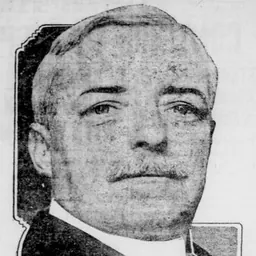
Related people
Same field, nearest in time

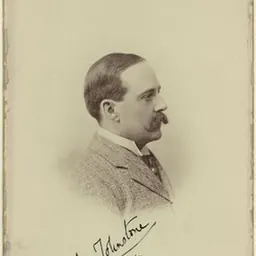
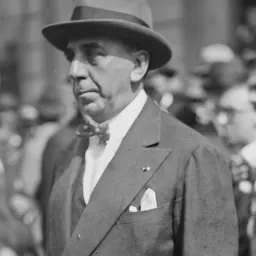
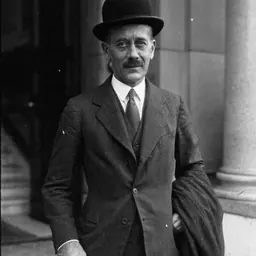
Contemporaries
People whose lives overlapped Henry White's





Frequently asked questions
Who was Henry White?
American diplomat (1850-1927)
When was Henry White born?
Henry White was born on 29 March 1850 in Baltimore.
When did Henry White die?
Henry White died on 15 July 1927.
What was Henry White's occupation?
Henry White was a diplomat.
What nationality was Henry White?
Henry White was American.
Sources & further reading
· DBpedia: Henry White (diplomat)
Cite this page
APA: Biography.guide. (2026). Henry White. https://biography.guide/henry-white-diplomat/
MLA: "Henry White." Biography.guide, https://biography.guide/henry-white-diplomat/.
Chicago: "Henry White." Biography.guide. https://biography.guide/henry-white-diplomat/.
Data last updated: 2026-09-23 · Spot an error? Report a correction.
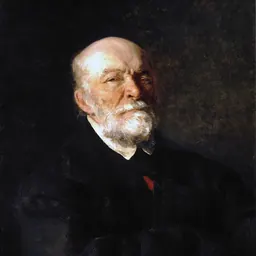
Portrait: Wikimedia Commons · author & licence
Page generated 2026-09-27 05:07 UTC