
About Robert Goff, Baron Goff of Chieveley
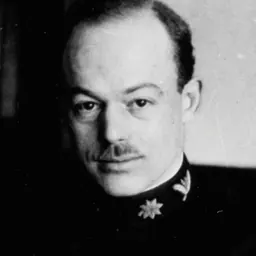
Lived 1926 – 2016 (aged 89). Robert Goff, Baron Goff of Chieveley was a British politician, judge and jurist.
Robert Lionel Archibald Goff, Baron Goff of Chieveley, (12 November 1926 – 14 August 2016) was an English barrister and judge who was Senior Lord of Appeal in Ordinary, the equivalent of today's President of the Supreme Court. Best known for establishing unjust enrichment as a branch of English law, he has been described by Andrew Burrows as "the greatest judge of modern times". Lionel studied at Eton College and the Royal Military Academy, Woolwich, and was commissioned in the Royal Artillery in 1897. He trained for battle in the Far East, having been told that he would be deployed there in September 1945. Following the surrender of Japan in August 1945, these plans were cancelled. Goff had continued drafting the textbook after leaving academia for the Commercial Bar. At the time, work for junior barristers was limited, and so he spent considerable time working on the book at the Inner Temple library. During this period, Maudsley spent long stretches of time in the United States, and did not respond to Goff's communications. Goff wrote to Maudsley once again, but upon not receiving a reply, concluded that Maudsley "was signing off and didn't feel able to tell me". Goff would later describe Jones as "the ideal co-author" and "beyond doubt, one of the finest teachers in the common law world".
Upon its release, the book was quickly recognised as a significant work, and was largely favourably reviewed. Lord Denning reflected positively on it, calling it "a creative work" and comparing it to Sir Frederick Pollock's treatise on torts and the seminal textbook Anson's Law of Contract. Edmund Davies, then a judge of the High Court of Justice, described it as "admirable". The book's propositions caused some confusion in academic circles. Not knowing where it fitted, a university library classified it as Criminal Law, and a library of one of the Inns of Court refused to take the book in at all.
Goff submitted the textbook to the University of Oxford for the consideration of a higher degree, and he was awarded a Doctor of Civil Law in 1971. After this, his practice grew significantly. and The Brimnes. His choice of junior was Brian Davenport, a close friend whom he described as "exceptionally gifted", but who was diagnosed with multiple sclerosis in his early thirties.
Judicial career
In 1974, Goff was appointed Recorder of the Crown Court. Over those 12 years, he participated in over 300 cases at the House of Lords and 160 cases at the Privy Council. Upon his appointment to the House of Lords, he was appalled to find poor library and research facilities available, and wrote a paper to the House of Lords authorities, arguing for the provision of a better equipped library for the Law Lords' use. In Spiliada Maritime Corp v Cansulex Ltd in 1986, Goff used elevated language, describing jurists as “pilgrims with [judges] on the endless road to unattainable perfection”. In 1987, Goff wrote an article titled Judge, Jurist and Legislature, in which he detailed his views on the roles of these players in the legal system. In 1999, he said that he did not know how far he had succeeded in promoting an appropriate recognition of academia's contribution to the development of English law, but that, if he had, "that alone will give me great satisfaction." and lectures given by then President of the Supreme Court David Neuberger and Lord Justice of Appeal Jack Beatson.
Goff was a strong believer in the common law as a legal system. This came with a preference for the common law's characteristic incremental development of the law by judges, Nevertheless, he supported the work of the Law Commission enthusiastically. nevertheless described it as "probably the most important dictum in the modern law of restitution".
Over the course of his judicial career, he presided over a number of other key cases, including:
Leading cases of national significance BP Exploration Co (Libya) Ltd v Hunt (No 2)
This case caught national attention as part of the litigation flowing from Libya's nationalisation of its oilfields. Two years after BP had purchased a half-share of the Sarir oilfield from Nelson Bunker Hunt, Libya nationalised it. BP claimed that the contract had been frustrated, which would entitle it to compensation under the Law Reform (Frustrated Contracts) Act 1943. The legal historian John Baker described the case as legally complex, "involving such vast fortunes that millions of dollars turned upon every nuance of meaning in the 1943 Act". Goff presided over the case in the High Court, holding that the contract had been frustrated and that BP was entitled to damages. Notably, Goff wrote the headnote himself, setting a precedent in law reporting. He also reworked parts of Goff and Jones on the Law of Unjust Enrichment to accommodate the judgment. Airedale NHS Trust v Bland
Anthony Bland was a 17-year-old Liverpool supporter who had travelled with two friends to Hillsborough Stadium for an FA Cup semi-final between Liverpool and Nottingham Forest on 15 April 1989. A fatal human crush occurred, causing Bland serious injury and leaving him in a persistent vegetative state. Goff issued a legal ruling allowing doctors to withdraw his treatment at the request of his family, since there had been no sign of improvement in his condition, there was no reasonable possibility that he would ever emerge from his persistent vegetative state, and was unlikely to survive more than five years. The case provoked significant public discussion over the moral, social and ethical issues of withdrawing life support from an insensate patient. The Spycatcher case
In 1985, former spy Peter Wright attempted to publish Spycatcher, a memoir detailing his work in British intelligence, in violation of the Official Secrets Act 1911. Following the Government of the United Kingdom's attempts to ban it, it saw a dramatic increase in popularity, selling nearly two million copies worldwide by October 1988. The case in the House of Lords raised important questions relating to the law on breach of confidence, public policy and freedom of expression. Hunter v Canary Wharf Ltd
Several hundred people filed a claim against the builders of the skyscraper One Canada Square in the tort of private nuisance, because it interfered with their television signal. The court held, controversially, that the plaintiffs did not have a legal right to television signal. Re Pinochet (No. 3)
A Spanish court requested the extradition of the former president of Chile, Augusto Pinochet, who was accused of murder, torture and conspiracy to murder. Although Goff had retired by the time this case was heard, he returned on an ad-hoc basis to hear it. The case gained attention because of its implications for the law on immunities and extradition. Attorney General v Blake
This case concerned the MI5 double agent George Blake. Following his escape from prison and flight to the Soviet Union, he wrote a book about his experiences and work in British intelligence, which was published by Jonathan Cape. The government sought to force the publishers to give up all earnings from the sale of the book, arguing that it had harmed the public interest and that the author and publisher should not be allowed to profit from it. Goff joined the majority opinion, ruling in favour of the government.
Leading cases of legal importance
Barclays Bank Ltd v W J Simms, Son and Cooke (Southern) Ltd Collins v Wilcock Spiliada Maritime Corp v Cansulex Ltd Société Nationale Industrielle Aérospatiale v Lee Kui Jak Lipkin Gorman v Karpnale Ltd Cambridge Water Co Ltd v Eastern Counties Leather plc Henderson v Merrett Syndicates Ltd White v Jones Westdeutsche Landesbank Girozentrale v Islington LBC Hunter v Canary Wharf Ltd Kleinwort Benson Ltd v Lincoln CC
Public service and engagement
Fostering links with foreign jurisdictions
Goff gave many public lectures around the world, partly motivated by his belief that the common law was a uniquely adaptable system which deserved better understanding in civil law jurisdictions. where he remarked that the difference between Germany and England was that in Germany, "the Professor is God, but in England, the Judge is God". He delivered lectures in Jerusalem, Chicago and Stockholm.
Appointments
Goff's other appointments included: High Steward of the University of Oxford (1991–2001) Chairman of the Council of Legal Education, which oversaw the teaching and examination of the Bar Final examinations.
Goff was an accomplished pianist; he began his days with a Mozart sonata and spent considerable time transposing and arranging pieces of music for the family collection of instruments. His love of music remained with him into the later years of his life, when his health was failing. He described music as what "fed his soul and relaxed him". He was particularly fond of the countryside and gardening.
Don’t just read it —
keep it.
Full-length biographies made to live with: read them, listen on the way to work, watch them tonight.
- E-book
- Audio
- Video
Instant download · yours to keep · every purchase keeps this site free
Important facts
People in Robert Goff, Baron Goff of Chieveley's life
Named in this biography and alive at the same time





Related people
Same field, nearest in time






Contemporaries
People whose lives overlapped Robert Goff, Baron Goff of Chieveley's

Frequently asked questions
Who was Robert Goff, Baron Goff of Chieveley?
English barrister and judge (1926–2016)
When was Robert Goff, Baron Goff of Chieveley born?
Robert Goff, Baron Goff of Chieveley was born on 12 November 1926 in Perthshire.
When did Robert Goff, Baron Goff of Chieveley die?
Robert Goff, Baron Goff of Chieveley died on 14 August 2016 in Cambridge.
What was Robert Goff, Baron Goff of Chieveley's occupation?
Robert Goff, Baron Goff of Chieveley was a politician, judge and jurist.
What nationality was Robert Goff, Baron Goff of Chieveley?
Robert Goff, Baron Goff of Chieveley was British.
Sources & further reading
· Wikipedia: Robert Goff, Baron Goff of Chieveley
· DBpedia: Robert Goff, Baron Goff of Chieveley
Cite this page
APA: Biography.guide. (2026). Robert Goff, Baron Goff of Chieveley. https://biography.guide/robert-goff-baron-goff-of-chieveley/
MLA: "Robert Goff, Baron Goff of Chieveley." Biography.guide, https://biography.guide/robert-goff-baron-goff-of-chieveley/.
Chicago: "Robert Goff, Baron Goff of Chieveley." Biography.guide. https://biography.guide/robert-goff-baron-goff-of-chieveley/.
Data last updated: 2026-09-20 · Spot an error? Report a correction.
Page generated 2026-09-27 05:29 UTC