
About Robert Glynn
Lived 1719 – 1800 (aged 80). Robert Glynn was a physician.
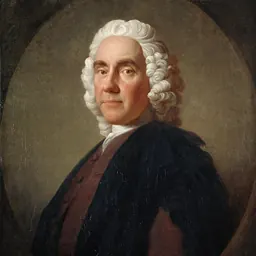
Robert Glynn, afterwards Clobery (5 August 17196 February 1800) was an English physician, known as a generous eccentric.
Life Glynn was the eldest and only surviving son of Robert Glynn of Brodes in Helland parish, near Bodmin, Cornwall, who married Lucy, daughter of John Clobery of Bradstone, Devon, was born at Brodes on 5 August and baptised at Helland Church on 16 September 1719. After some teaching from a curate named Whiston, he was placed on the foundation at Eton College. In 1737 he was elected scholar of King's College, Cambridge, where he took the degrees of B.A. 1741, M.A. 1745, and M.D. 1752, and became a Fellow. His medical tutor at Cambridge was the elder William Heberden of St John's College. Glynn himself announced in March 1751 a course of lectures at King's College on the medical institutes, and next year gave a second course on anatomy. For a short time he practised at Richmond, Surrey, but soon returned to Cambridge, and never again left the university.
On 5 April 1762 he was admitted a candidate, and on 28 March 1763 became a fellow, of the College of Physicians in London. William Pitt the Younger, whom he had attended in the autumn of 1773, offered him in 1793 the professorial chair of medicine at Cambridge, which Glynn refused. He was at the close of his life the acknowledged local head of his profession, and his medical services were in great repute at Ely, where he attended every week. Richard Watson was one of his patients in 1781, when he gave his opinion that recovery was hopeless; Watson lived on to 1816. He gave free advice to patients from the Fens, and would take no fees from Cornishmen or Etonians. His kindness to one of his poor patients was celebrated by a younger son of Henry Plumptre, president of Queens' College, in verses called Benevolus and the Magpie. An anecdote imputing inhumanity to him is in Samuel Parr's Works.
Glynn is said to have given scholarly input to the essay by Thomas James Mathias in the Chatterton controversy, and he is referred to with respect in Mathias's Pursuits of Literature. Gilbert Wakefield used to say (according to Samuel Rogers) that both Thomas Rennell and Glynn assisted Mathias in this satire.
Don’t just read it —
keep it.
Full-length biographies made to live with: read them, listen on the way to work, watch them tonight.
- E-book
- Audio
- Video
Instant download · yours to keep · every purchase keeps this site free
Important facts
People in Robert Glynn's life
Named in this biography and alive at the same time




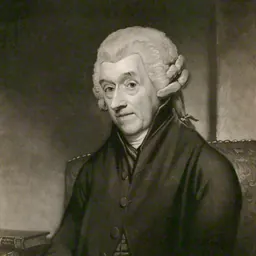
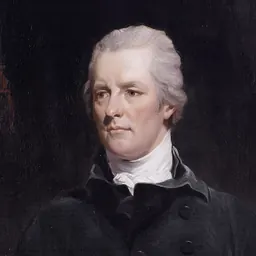
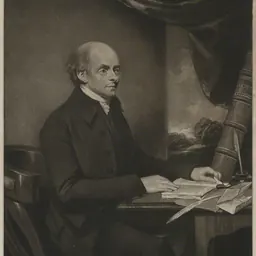
Related people
Same field, nearest in time
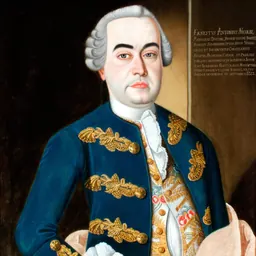



Contemporaries
People whose lives overlapped Robert Glynn's



Frequently asked questions
Who was Robert Glynn?
British doctor
When was Robert Glynn born?
Robert Glynn was born on 5 August 1719 in Bodmin.
When did Robert Glynn die?
Robert Glynn died on 6 February 1800.
What was Robert Glynn's occupation?
Robert Glynn was a physician.
Sources & further reading
Cite this page
APA: Biography.guide. (2026). Robert Glynn. https://biography.guide/robert-glynn/
MLA: "Robert Glynn." Biography.guide, https://biography.guide/robert-glynn/.
Chicago: "Robert Glynn." Biography.guide. https://biography.guide/robert-glynn/.
Data last updated: 2026-09-26 · Spot an error? Report a correction.
Page generated 2026-09-27 05:16 UTC