
About Robert F. Stephens
Lived 1927 – 2002 (aged 74). Robert F. Stephens was an American judge.
Robert Francis Stephens Jr. (August 16, 1927 – April 13, 2002) was an American politician, lawyer, and judge.
Early life Robert Francis Stephens Jr. was born August 26, 1928, in Covington, Kentucky, to Robert Francis and his first wife, Helen Macke. He was the only child of this marriage, which ended in divorce, but his father would marry twice more, and each marriage brought Stephens a step-sibling. He joined the United States Navy for a year and served in World War II before completing a pre-law curriculum at Indiana University in 1948 and receiving his law degree from the University of Kentucky College of Law in 1951. After graduation, he worked as a law clerk for future Kentucky Governor Bert T. Combs, then a justice of the Kentucky Court of Appeals. They separated in 1983 and later divorced.
Stephens married his second wife, Pattie White McLellan, on November 26, 1985. The couple separated on September 1, 1990, and Stephens filed for divorce on June 1, 1992. When the case was assigned to one of Stephens' former political opponents, his lawyer, State Senator Michael Maloney, withdrew the divorce petition and re-filed it the next day.
Political career In 1964, Stephens become the county attorney for Fayette County. Running as a Democrat in 1969, he defeated incumbent county judge Joe E. Johnson III. In this position, he acquired several acres of park land for the city, including the Shillito Park. He won the general election over Republican Joe Whittle. As attorney general, he strengthened consumer protection measures and unified the state's Commonwealth's attorneys offices under the office of the attorney general to provide them with more support in their duties. The following year, he was chosen in a special election to fill the remainder of Reed's unexpired term, defeating N. Mitchell Meade.
Lexington lawyer Julian Reid Gabbard challenged Stephens for his seat representing the 5th Appellate District in the 1984 election. While Stephens had worked to increase the number of judgeships in the state to mitigate judges' workloads, Gabbard maintained that, "I've never seen a judge overworked. I've only seen them overpaid."
Late in the contest, Gabbard asked to have the seat declared vacant until 1986 because the 1984 General Assembly had changed the district's make-up, moving Powell, Lee, Estill and Garrard counties to other districts while adding Anderson, Spencer and Washington counties to the 5th District. Although both Stephens and Gabbard lived in Fayette County, which was not moved, Gabbard argued that no candidate could meet the two-year residency requirement for the district because the district, as reconstituted, had not existed that long.
Stephens raised about $93,000 in the race, which he used in a multimedia ad campaign. Gabbard, who refused contributions from lawyers, raised almost $6,000 and did relatively little campaigning. In 1986, the court sat in Louisville, and in May 1987, it sat in both Owensboro and Paducah in the western part of the state.
The court's most notable decision during Stephens' tenure was the 1989 case of Rose v. Council for Better Education, which found Kentucky's entire public education system unconstitutional because of the inherent inequity between funding for poorer districts and more affluent ones. He also presided over decisions that ended legal immunity for Kentucky cities and found legal the economic incentives offered by the state to Toyota to entice the construction of the Toyota Motor Manufacturing Kentucky assembly plant. As chief justice, Stephens instituted advances such as videotaping the court's proceedings and keeping electronic court records. Later that year, he announced he would reconsider his longstanding decision to retire at the end of his term in 1992, but said his re-election as chief justice was not a factor in the decision. In July 1997, Stephens was in the minority in a 5–2 decision against Harold McQueen Jr., who sought a stay of execution in the electric chair on grounds that it constituted cruel and unusual punishment.
Stephens continued as chief justice until October 1998, making him the longest-serving chief justice in the court's history. The Kentucky Bar Association named him its Outstanding Judge of the Year in 1986.
Just before the expiration of her term in December 1987, Governor Martha Layne Collins appointed Stephens to a seat on the University of Kentucky Board of Trustees. Before assuming the position, Stephens requested a non-binding opinion from the Ethics Committee of the Kentucky Judiciary on the legality of his simultaneously serving as a Supreme Court Justice and a university trustee. The panel advised Stephens not to provide legal counsel to the board, not to raise funds for the university, not to vote as a trustee on any matter likely to result in a lawsuit, and to recuse himself as a justice from any case involving the university.
In 1991, Stephens received a Justice Award from the Kentucky Women's Advocates "for creating the Gender Bias Task Force to investigate the fairness of the judicial system for women and for making records regarding domestic violence public." The organization gave Stephens a second Justice Award in 1995 for "his support of the adoption of gender fairness into state judicial language and his continued support of equal justice for women".
Stephens was elected president of the Conference of Chief Justices in 1992. The book was mailed to every state's chief justice and to every judge in Kentucky.
Stephens was inducted into the University of Kentucky Law Alumni Association Hall of Fame in 1996. The Robert F. Stephens Justice Center, which opened in 2001, houses the district and circuit courts for Fayette County.
Don’t just read it —
keep it.
Full-length biographies made to live with: read them, listen on the way to work, watch them tonight.
- E-book
- Audio
- Video
Instant download · yours to keep · every purchase keeps this site free
Important facts
People in Robert F. Stephens's life
Named in this biography and alive at the same time





Related people
Same field, nearest in time
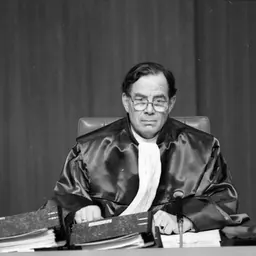

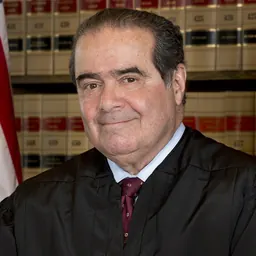
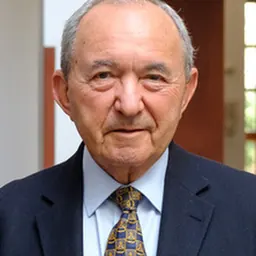


Contemporaries
People whose lives overlapped Robert F. Stephens's
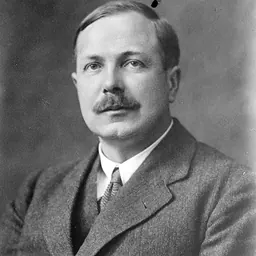


Frequently asked questions
Who was Robert F. Stephens?
American judge (1927-2002)
When was Robert F. Stephens born?
Robert F. Stephens was born on 16 August 1927 in Covington.
When did Robert F. Stephens die?
Robert F. Stephens died on 13 April 2002 in Lexington.
What was Robert F. Stephens's occupation?
Robert F. Stephens was a judge.
What nationality was Robert F. Stephens?
Robert F. Stephens was American.
Sources & further reading
· Wikipedia: Robert F. Stephens
Cite this page
APA: Biography.guide. (2026). Robert F. Stephens. https://biography.guide/robert-f-stephens/
MLA: "Robert F. Stephens." Biography.guide, https://biography.guide/robert-f-stephens/.
Chicago: "Robert F. Stephens." Biography.guide. https://biography.guide/robert-f-stephens/.
Data last updated: 2026-09-20 · Spot an error? Report a correction.
Page generated 2026-09-27 05:28 UTC