
About Robert Dundas
Lived 1685 – 1753 (aged 67). Robert Dundas was a Scottish jurist, judge and politician.
Robert Dundas of Arniston, the elder, 2nd Lord Arniston (1685–1753) was a Scottish lawyer, and Tory politician who sat in the House of Commons from 1722 to 1737. In 1728 he reintroduced into Scottish juries the possible verdicts of guilty or not guilty as against proven or not proven. He was Lord President of the Court of Session from 1748 to 1753.
Early life Dundas was born on 9 December 1685, the second son of Robert Dundas, Lord Arniston, a judge of the court of session, and his wife Margaret Sinclair, daughter of Sir Robert Sinclair of Stevenson. The family's Edinburgh house was at the head of Old Fishmarket Close on the Royal Mile. The house was later destroyed in the Great Fire of Edinburgh.
He was educated at Utrecht in about 1700 and was admitted a member of the Faculty of Advocates on 26 July 1709, and became a profound lawyer through his Interest and talent.
Career
In about 1717 Dundas was appointed Assessor to city of Edinburgh and was also appointed in 1717 Solicitor General for Scotland by the secretary of state, the Duke of Roxburghe, the head of the Squadrone. He found this an irksome position, and in 1718 applied to succeed Eliot of Minto on the bench, but the place was already given to Sir Walter Pringle. However, he was promoted in 1720 by the Duke of Roxburghe to be Lord Advocate, in succession to Sir David Dalrymple . On 9 December 1721 he became dean of the Faculty of Advocates. On 11 July 1721 he resigned the post of assessor to the city of Edinburgh and an acrimonious correspondence took place between him and the magistrates of Edinburgh.
At the 1722 British general election Dundas was returned as Member of Parliament for Edinburghshire.
At the 1727 British general election Dundas was returned unopposed as MP for Edinburghshire and continued in opposition. He spoke against the Government in the Dunkirk debate on 12 February 1730 and also in 1730 promoted a bill to give the court of session the power of adjourning. After his return unopposed at the 1734 British general election, he was the chief adviser of the opposition formed of representative peers and members of parliament against the administration of Scotch affairs adopted by Lord Ilay. With Erskine of Grange, he joined with the opposition in an attack in both Houses on the methods which the Government had used in the recent election of Scottish representative peers. This opposition movement was, however, unsuccessful. On 5 May 1735 the Commons passed a bill drafted by Erskine and introduced by Dundas to prevent the wrongful imprisonment of persons coming to vote in elections, but the bill was thrown out by the House of Lords. On 10 June 1737, Dundas was appointed a judge of the court of session, in succession to Sir Walter Pringle of Newhall, and vacated his seat in the House of Commons.
Dundas dies at Abbey Hill, Edinburgh, on 26 August 1753. He was buried on 31 August in the family tomb in the Arniston aisle of Borthwick Parish Church.
Most famous case Dunas's most famous case was his defence of James Carnegie of Finhaven in 1728 on his trial for the murder of Charles, earl of Strathmore, whom he killed in after being assaulted by John Lyon of Bridgeton. Finhaven, mortaly drunk stumbled after Bridgeton, sword drawn, the 6th Earl stood in the way to break it up and Finhaven accidentally ran him through. The original practice was to allow the jury to find the prisoner generally guilty or not guilty; about the time of Charles II this was altered to a finding upon the facts of proven or not proven. In this case it was clear that Carnegie killed Strathmore. If the jury were to find the fact proven, leaving the court to pronounce the legal effect of that finding, Carnegie was a dead man. Dundas forced the court to return to the older course, and the jury found Carnegie not guilty, and this practice was adopted in subsequent cases.
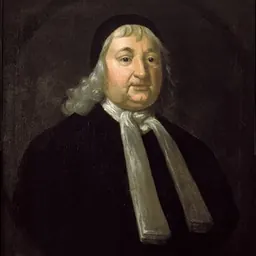
Assessment As an advocate he was both eloquent and ingenious; in private life idle and convivial. Dundas's appearance was forbidding and his voice harsh; his portrait is preserved at Arniston, and is engraved in the Arniston Memoirs.
Family Dundas married, twice. In 1712, Elizabeth, eldest daughter of Robert Watson of Muirhouse, who, with four of his children, died in January 1734 of smallpox, and by her he had a son, Robert, afterwards lord president, and other children.
On 3 June 1734, he married Anne, daughter of Sir William Gordon, bart., of Invergordon, by whom he had five sons and a daughter. One of these sons, Henry, was Treasurer of the Navy and 1st Viscount Melville, whereas one of his daughters was the wife to Adam Duncan, 1st Viscount Duncan.
Don’t just read it —
keep it.
Full-length biographies made to live with: read them, listen on the way to work, watch them tonight.
- E-book
- Audio
- Video
Instant download · yours to keep · every purchase keeps this site free
Important facts
Family & relationships
People in Robert Dundas's life
Named in this biography and alive at the same time


Related people
Same field, nearest in time

Contemporaries
People whose lives overlapped Robert Dundas's


Frequently asked questions
Who was Robert Dundas?
Scottish judge (1685-1753)
When was Robert Dundas born?
Robert Dundas was born on 9 December 1685 in Scotland.
When did Robert Dundas die?
Robert Dundas died on 26 August 1753 in Edinburgh.
What was Robert Dundas's occupation?
Robert Dundas was a jurist, judge and politician.
What nationality was Robert Dundas?
Robert Dundas was Scottish.
Sources & further reading
· DBpedia: Robert Dundas of Arniston, the Elder
Cite this page
APA: Biography.guide. (2026). Robert Dundas. https://biography.guide/robert-dundas/
MLA: "Robert Dundas." Biography.guide, https://biography.guide/robert-dundas/.
Chicago: "Robert Dundas." Biography.guide. https://biography.guide/robert-dundas/.
Data last updated: 2026-09-20 · Spot an error? Report a correction.
Page generated 2026-09-27 05:18 UTC