
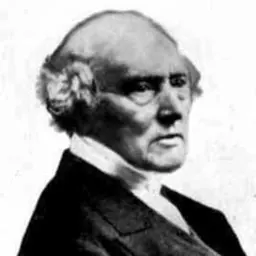
Robert Dudley Beeston
Government official in British North Borneo
About Robert Dudley Beeston
Lived 1844 – 1895 (aged 51).
Robert Dudley Beeston was the first European to discover alluvial gold in North Borneo (present day Sabah), sparking the short-lived North Borneo Gold Rush. He also held many high-ranking government positions in the country, serving as the Commandant of the British North Borneo Constabulary, Superintendent of Gaols, and the Chief magistrate of the Sandakan District Court. He was also the founding editor of the British North Borneo Herald.
Biography From 1857 to 1873, he served in the Bengal Army. His service in the Army was "wide and varried."
In 1867, he married Alice Stable in Sussex.
Australia After his service in the Army, having heard rumors of the Australian gold rushes, Beeston made his way to Gympie and its famous goldfields to prospect. He became well known in Gympie and Queensland, where he served in minor government roles as a clerk in various district offices. By 1876, he had become the Register of the Central District Court of Queensland, District Receiver of Insolvency, and the High Bailiff of Queensland. During the 1870s, he also wrote a regular column for the Telegraph and Examiner.
North Borneo Gold Rush
In 1883, the North Borneo Chartered Company brought Beeston to their new country of North Borneo for the specific purpose of searching for gold and other minerals.
In June 1883, upriver on the Segama, he discovered gold in North Borneo, in an area which would become known as the Segama Gold Fields. In a series of articles on North Borneo he later wrote for the Melbourne Leader, Beeston wrote: "There is a legend that the inhabitants of the upper waters of the river had known of the existence of gold in the country for years; but I lay claim to be the first European who reported it to actually exist."
This claim has even been reiterated by certain historians, such as Owen Rutter, despite the fact that in 1812, an English merchant and trader named John Hunt wrote in a report to Stamford Raffles entitled Sketch of Borneo or Pulo Kalamantan that there were active gold mines throughout Borneo, including in the Tempasuk area, and a rich gold-field in Darvel Bay. Hunt, however, in the same report to Raffles, admits that "Not having had an opportunity to inspect any of the gold mines personally, I know not if the ores readily melt of themselves ... I have... no accurate information on the subject, and can simply note the general fact." That March, Beeston went upriver along the Segama for three days, beyond Barrier Falls. He didn't find much gold on the trip, only a few flecks, but he did write: "Beyond any question the Darvel Bay district will ere long prove to be one large goldfield."
On behalf of the company, however, he was still employed as a minerals prospector. It was a little over a year after his appointment as Commandant that Beeston went out again far upriver into the Segama, this time for an eighteen-day expedition with four European miners. They spent twelve days camped at a place they called "Starvation Camp," and found little gold. Sufficient quantities of gold were never found in North Borneo to indicate the source of the alluvial gold that Beeston had discovered on the surface.
Padas Damit War
Beeston's lack as a trainer of police made itself evident on 7 December 1888, when Dominick Daniel Daly, the Assistant Resident of Province Dent, launched an expedition into the Padas Damit against Pengiran Shabandar, beginning the first battles of the Padas Damit War. He brought Beeston with him, who, as the Commandant of the Constabulary was in charge of the fighting contingent of 100 men. His service here lasted until the summer of 1891, when he was made Chief magistrate of the country. His own son-in-law, Alexander Cook, served as the Attorney general.
Don’t just read it —
keep it.
Full-length biographies made to live with: read them, listen on the way to work, watch them tonight.
- E-book
- Audio
- Video
Instant download · yours to keep · every purchase keeps this site free
Important facts
People in Robert Dudley Beeston's life
Named in this biography and alive at the same time





Contemporaries
People whose lives overlapped Robert Dudley Beeston's

Frequently asked questions
Who was Robert Dudley Beeston?
government official in British North Borneo (1844–1895)
When was Robert Dudley Beeston born?
Robert Dudley Beeston was born on 10 January 1844.
When did Robert Dudley Beeston die?
Robert Dudley Beeston died on 7 March 1895.
Sources & further reading
· Wikipedia: Robert Dudley Beeston
· DBpedia: Robert Dudley Beeston
Cite this page
APA: Biography.guide. (2026). Robert Dudley Beeston. https://biography.guide/robert-dudley-beeston/
MLA: "Robert Dudley Beeston." Biography.guide, https://biography.guide/robert-dudley-beeston/.
Chicago: "Robert Dudley Beeston." Biography.guide. https://biography.guide/robert-dudley-beeston/.
Data last updated: 2026-09-20 · Spot an error? Report a correction.
Page generated 2026-09-27 05:19 UTC