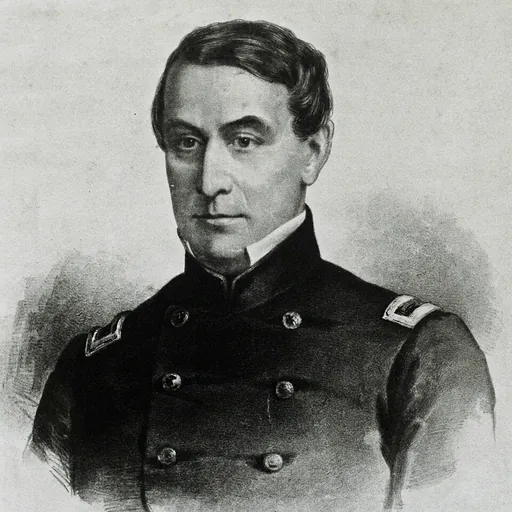
About Robert Anderson
Lived 1805 – 1871 (aged 66). Robert Anderson was an American military officer and major general.
Robert Anderson (June 14, 1805 – October 26, 1871) was a United States Army officer during the American Civil War. He was the Union commander in the first battle of the American Civil War at Fort Sumter in April 1861 when the Confederates bombarded the fort and forced its surrender, starting the war. Anderson was celebrated as a hero in the North and promoted to brigadier general and given command of Union forces in Kentucky. He was removed late in 1861 and reassigned to Rhode Island, before retiring from military service in 1863. In 1865, he returned to Fort Sumter to again raise the American flag that he had lowered during the 1861 surrender.
Early life and career Anderson was born at "Soldier's Retreat," the Anderson family estate near Louisville, Kentucky. His father, Richard Clough Anderson Sr. (1750–1826) was of Scots-Irish ancestry from Antrim, Northern Ireland. He served in the Continental Army as an aide-de-camp to the Marquis de Lafayette during the American Revolutionary War. He was a charter member of the Society of the Cincinnati. Anderson's mother, Sarah Marshall (1779–1854), was a cousin of John Marshall, the fourth Chief Justice of the United States.
Anderson graduated from the United States Military Academy (West Point) in 1825, and received a commission as a second lieutenant in the 3rd Regiment of Artillery.
A few months after graduation, he became a private secretary to his older brother Richard Clough Anderson, Jr., who was serving as the US Minister to Gran Colombia. He served in the Black Hawk War of 1832 as a colonel of Illinois volunteers, where he had the distinction of twice mustering Abraham Lincoln in and once out of army service. He also was in charge of transporting Black Hawk to Jefferson Barracks after his capture, assisted by Jefferson Davis.
Returning to regular Army service as a first lieutenant in 1833, he served in the Second Seminole War as an assistant adjutant general on the staff of Winfield Scott, and was promoted to captain in October 1841.
Anderson was the author of Instruction for Field Artillery, Horse and Foot, published in 1839.
In the Mexican–American War in 1847, he participated in the Siege of Veracruz (March 9–29), the Battle of Cerro Gordo (April 17–18), the Skirmish of Amazoque, (May 14), and the Battle of Molino del Rey (September 8), during which he was severely wounded while assaulting enemy fortifications, for which he received a brevet promotion to major.
Due to his wounds, Anderson was on sick leave during 1847–48. He was then in garrison at Fort Preble, Maine, from 1848 to 1849. He served from 1849 to 1851 as a member of the Board of Officers to devise "A Complete System of Instruction for Siege, Garrison, Seacoast, and Mountain Artillery," which was adopted on May 10, 1851. He then returned to garrison duty at Fort Preble from 1850 to 1853.
From 1855 to 1859, in view of his precarious health and probably also due to his connections to General Winfield Scott, Anderson was assigned to the light duty of inspecting the iron beams produced in a mill in Trenton, New Jersey for Federal construction projects. He eventually received a permanent promotion to major of the 1st Regiment of Artillery in the Regular Army on October 5, 1857.
While residing in Trenton, Anderson became a Freemason, and was a member of Mercer Lodge No. 50
Civil War Fort Sumter
In November 1860, Anderson was assigned to command of U.S. forces in and around Charleston, South Carolina, replacing Colonel John L. Gardner. With South Carolina headed for secession in December 1860, Gardner, feeling that the small garrison at Fort Moultrie was under-armed, had attempted to draw arms and ammunition from the Federal arsenal in the city, but was prevented from doing so by a crowd of civilians. His attempt sparked local protests, and Secretary of the Army John B. Floyd decided that Gardner, a Massachusetts native, should be replaced by a Southerner. Anderson, a former slave owner from Kentucky and generally sympathetic to the South, was selected.
Anderson moved the garrison from Fort Moultrie, which was indefensible, to the more modern and more defensible Fort Sumter, in the middle of Charleston Harbor, an action which caused great consternation in South Carolina, which responded by taking Fort Moultrie and the other Federal assets in the harbor and the city. In the immediate aftermath of Anderson's move, President James Buchanan and War Secretary Floyd claimed that Anderson had gone against orders, until an examination of War Department files showed that he had acted within the discretion he had been given. He was promoted to brigadier general in the Regular Army, effective May 15. Anderson took the fort's 33-star flag with him to New York City, where he participated in a Union Square patriotic rally that was, at the time, the largest public gathering in North America.
Symbolism of the American flag
The modern meaning of the American flag, according to Harold Holzer in 2007 and Adam Goodheart in 2011, was forged by Anderson's stand at Fort Sumter. Holzer states that New York City:
During the war, the flag was used throughout the North to symbolize American nationalism and to reject secessionism. Goodheart explained that the flag was transformed into a sacred symbol of patriotism: Before that day, the flag had served mostly as a military ensign or a convenient marking of American territory, and displayed on special occasions like the Fourth of July. But in the weeks after Major Anderson's surprising stand, it became something different. Suddenly the Stars and Stripes flew... from houses, from storefronts, from churches; above the village greens and college quads. ... hat old flag meant something new. The abstraction of the Union cause was transfigured into a physical thing: strips of cloth that millions of people would fight for, and many thousands would die for.
Assignments Anderson then went on a highly successful recruiting tour of the North and was promoted to brigadier general as of May 15, 1861. His next assignment placed him in another sensitive political position as commander of the Department of Kentucky (subsequently renamed the Department of the Cumberland), in a border state that had officially declared neutrality between the warring parties. He began serving in that position on May 28, 1861. Historians commonly attribute failing health as the reason for his relinquishing command to Brigadier General William T. Sherman on October 7, 1861. Still, a letter from Joshua Fry Speed, Lincoln's close friend, suggests that Lincoln preferred Anderson's removal.
Speed met with Anderson and found him reluctant to implement Lincoln's wishes to distribute rifles to Unionists in Kentucky. Anderson, Speed wrote to Lincoln on October 8, "seemed grieved that [he] had to surrender his command... [but] agreed that it was necessary and gracefully yielded."
In 1862, Anderson was elected an honorary member of the New York Society of the Cincinnati in which his grandnephew, Ambassador Larz Anderson, was highly active.
Anderson's last military assignment was a brief period as commanding officer of Fort Adams in Newport, Rhode Island, in August 1863. Anderson officially retired from the Army on October 27, 1863, "for Disability resulting from Long and Faithful Service, and Wounds and disease contracted in the Line of Duty." Still, he continued to serve on the staff of the general commanding the Eastern Department, headquartered in New York City, from October 27, 1863, to January 22, 1869. On February 3, 1865, Anderson was brevetted a major general for "gallantry and meritorious service" in the defense of Fort Sumter.
Later life Major Robert Anderson is honored with his likeness inscribed in a monument atop Fort Sumter in Charleston harbor.
After Robert E. Lee's surrender at Appomattox and the effective conclusion of the war, at the behest of Secretary of War Edwin Stanton, Anderson returned to Charleston in uniform. Four years after lowering the 33-star flag in surrender, Anderson raised it in triumph over the recaptured but badly battered Fort Sumter. Hours after the ceremony of April 14, 1865, John Wilkes Booth assassinated President Lincoln.
After the war, Anderson became a companion of the Military Order of the Loyal Legion of the United States. In 1869, he discussed the future of the U.S. Army with Sylvanus Thayer. Afterward, they helped establish the Military Academy's Association of Graduates (AoG).
In 1869, Anderson was reported to have sold his library and moved to Europe, "as half pay would not support his family here". Someone questioning his need informed us that Anderson's half salary as brigadier general was $4,125 .
Anderson died in Nice, France, in 1871, seeking a cure for his ailments. He was interred at West Point Cemetery.
Family Anderson with his wife, Eliza Bayard Anderson, and son, Robert Jr. Anderson's brother, Charles Anderson, served as Governor of Ohio from 1865 to 1866. A second brother, Larz Anderson II, was the father of Nicholas Longworth Anderson, who served as a Union Army general. Nicholas' son, Larz Anderson III, was a diplomat and a leading member of the Society of the Cincinnati.
Another brother, William Marshall Anderson, was a Western explorer and Ohio attorney. A zealous Catholic and Confederate sympathizer, he briefly moved to Mexico during the reign of Emperor Maximilian in hopes of establishing a Confederate colony there. W. Marshall Anderson's son, Thomas M. Anderson, was a brigadier general who fought in the Spanish–American War and Philippine–American War.
In 1845, Anderson married Eliza Bayard Clinch (1828–1905), the daughter of Duncan Lamont Clinch. They were the parents of five children: Marie (1849–1925), Sophie (1852–1934), Eliza, Robert Jr. (1859–1879), and Duncan. Anderson was the great-grandfather of actor Montgomery Clift through his daughter Maria, although genealogical sources have not definitively established this relationship. Allegedly, the doctor who delivered Ethel Anderson Clift told her when she was an adult that she was the illegitimate daughter of Maria Anderson and Woodbury Blair. Still, no documentation exists to verify the relationship. Nonetheless, the legend continues. Virtually all sources that advance this theory reference Ethel's own statements or Clift's biographies.
Dates of rank United States Army + Date Insignia Rank Brevet promotions July 1, 1821 75px Cadet July 1, 1825 40px 75px Brevet second lieutenant Second lieutenant June 30, 1833 75px First lieutenant Bvt. Captain (1838) October 23, 1841 75px Captain Bvt. Major (1847) October 5, 1857 75px Major May 15, 1861 75px Brigadier general October 27, 1863 Placed on the retired list with the rank of brigadier general (died October 26, 1871). Bvt. Major general (1865)
Don’t just read it —
keep it.
Full-length biographies made to live with: read them, listen on the way to work, watch them tonight.
- E-book
- Audio
- Video
Instant download · yours to keep · every purchase keeps this site free
Important facts
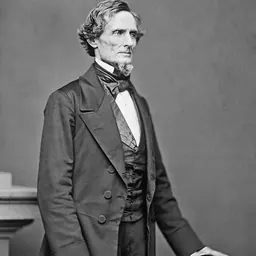
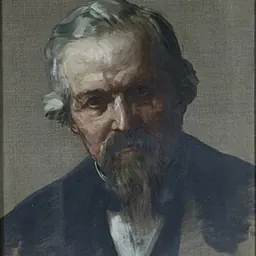
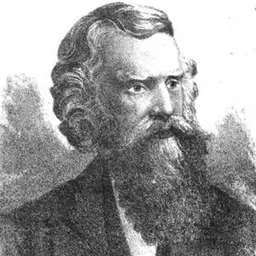
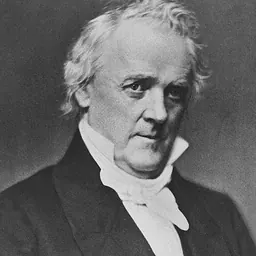
People in Robert Anderson's life
Named in this biography and alive at the same time
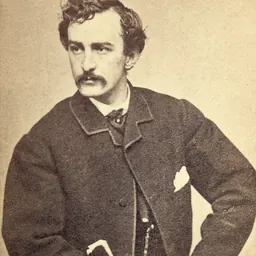
Related people
Same field, nearest in time
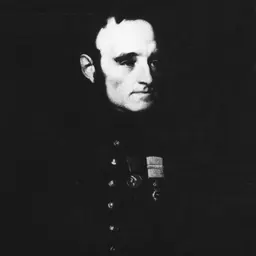
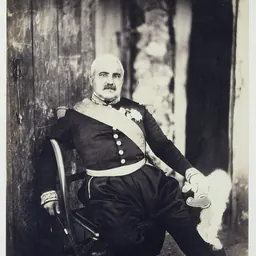
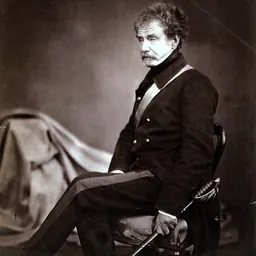
Contemporaries
People whose lives overlapped Robert Anderson's





Frequently asked questions
Who was Robert Anderson?
Union Army general (1805–1871)
When was Robert Anderson born?
Robert Anderson was born on 14 June 1805 in Louisville.
When did Robert Anderson die?
Robert Anderson died on 26 October 1871 in Nice.
What was Robert Anderson's occupation?
Robert Anderson was a military officer and major general.
What nationality was Robert Anderson?
Robert Anderson was American.
Sources & further reading
· DBpedia: Robert Anderson (Union officer)
Cite this page
APA: Biography.guide. (2026). Robert Anderson. https://biography.guide/robert-anderson-military-officer-1805/
MLA: "Robert Anderson." Biography.guide, https://biography.guide/robert-anderson-military-officer-1805/.
Chicago: "Robert Anderson." Biography.guide. https://biography.guide/robert-anderson-military-officer-1805/.
Data last updated: 2026-10-02 · Spot an error? Report a correction.
Portrait: Wikimedia Commons · author & licence
Page generated 2026-10-04 14:50 UTC