
About Rigoberta Menchú
Born 1959. Rigoberta Menchú is a Guatemalan politician, writer, autobiographer, human rights defender, resistance fighter and activist.
Rigoberta Menchú Tum (; born 9 January 1959) is a K'iche' Guatemalan human rights activist, feminist, and Nobel Peace Prize laureate. Menchú has dedicated her life to publicizing the rights of Guatemala's Indigenous peoples during and after the Guatemalan Civil War (1960–1996), and to promoting Indigenous rights internationally.
She received the Nobel Peace Prize in 1992, was named a UNESCO Goodwill Ambassador in 1996, and received the Prince of Asturias Award in 1998. She is the subject of the testimonial biography I, Rigoberta Menchú (1983), and author of the autobiographical work Crossing Borders (1998). Menchú founded the country's first indigenous political party, Winaq, and ran as its candidate for president of Guatemala in the 2007 and 2011 presidential elections.
Personal life Rigoberta Menchú was born to a poor Indigenous family of K'iche' Maya descent in Laj Chimel, a rural area in the north-central Guatemalan department of El Quiché. Her family was one of many Indigenous families who could not sustain themselves on the small pieces of land they were left with after the Spanish conquest of Guatemala. Menchú's mother began her career as a midwife at age sixteen and continued to practice using traditional medicinal plants until she was murdered at age 43. Her father was a prominent activist for the rights of Indigenous farmers in Guatemala. Menchú considers herself to be the perfect mix of both her parents. In January 2015, Pedro García Arredondo, a former police commander of the Guatemalan Army who later served as the chief of the now defunct National Police (Policía Nacional, PN), was convicted of attempted murder and crimes against humanity for his role in the embassy attack; Arrendondo was also previously convicted in 2012 of ordering the enforced disappearance of agronomy student Édgar Enrique Sáenz Calito during the country's long-running internal armed conflict.
In 1995, Menchú married Ángel Canil, a Guatemalan, in a Mayan ceremony. They had a Catholic wedding in January 1998; at that time they also buried their son Tz'unun ("hummingbird" in K’iche’ Maya), who had died after being born prematurely in December. They adopted a son, Mash Nahual Ja' ("Spirit of Water").
Menchú featured prominently in the 1983 documentary When the Mountains Tremble, directed by Newton Thomas Sigel and Pamela Yates.
She lives with her family in the municipality of San Pedro Jocopilas, Quiché Department, northwest of Guatemala City, in the heartland of the Kʼicheʼ people.
In 2025, Menchú became a Mexican citizen.
Connections to the Guatemalan civil war Following military coups that started with the CIA-orchestrated removal of President Jacobo Arbenz in Guatemala in 1954, the Cuban revolution of 1959, and the Che Guevara's commitment to create as many Vietnams as he could, the U.S. moved to condone and often support authoritarian rule in the name of national security. The Guatemalan Civil War lasted from 1962 to 1996 and was provoked by social, economic, and political inequality. An estimated 250,000 people were assassinated, including 50,000 desaparecidos, and hundreds of thousands of displaced individuals, either at the hands of the armed forces or the militarized civilians knows as Patrullas de Autodefensa Civil (Civil Defense Patrols).
Guatemalan activism From a young age, Menchú was active alongside her father. Together they advocated for the rights of Indigenous farmers through the Committee for Peasant Unity. Menchú believes that the roots of Indigenous oppression in Guatemala stem from issues of exploitation and colonial land ownership, and in Women were targets of physical and sexual violence at the hands of the military.
In 1981, Menchú was exiled and escaped to Mexico where she found refuge in the home of a Catholic bishop in Chiapas. Menchú continued to organize resistance to oppression in Guatemala and organize the struggle for Indigenous rights by co-founding the United Republic of Guatemalan Opposition. Tens of thousands of people, mostly indigenous Maya people, fled to Mexico from 1982 to 1984 at the height of Guatemala's 36-year civil war.
Menchú served as the Presidential Goodwill Ambassador for the 1996 Peace Accords in Guatemala. That same year she received the Peace Abbey Courage of Conscience Award in Boston.
After the Guatemalan Civil War ended, Menchú campaigned to have Guatemalan political and military establishment members tried in Spanish courts. On 23 December 2006, Spain called for the extradition from Guatemala of seven former members of Guatemala's government, including Efraín Ríos Montt and Óscar Mejía, on charges of genocide and torture. Spain's highest court ruled that cases of genocide committed abroad could be judged in Spain, even if no Spanish citizens were involved. Menchú faced opposition and discrimination. In April 2005, five Guatemalan politicians would be convicted for hurling racial epithets at Menchú. Court rulings would also uphold the right to wear indigenous dresses and practice Mayan spirituality. She was the first Maya, Indigenous woman to ever run in a Guatemalan election. In the 2007 election, Menchú was defeated in the first round, receiving three percent of the vote.
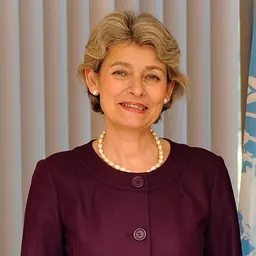
In 2009, Menchú became involved in the newly founded party Winaq. Although Menchú was not elected, Winaq succeeded in becoming the first Indigenous political party of Guatemala. The tribunal looked at evidence going back to the CIA-backed coup that ousted democratically elected president Jacobo Árbenz in 1954; although its focus was on the massacres, scorched earth policies, forced disappearances, torture, and killings taking place at the time under General Efraín Ríos Montt. Guatemala became the first Latin America country to place a former president on trial for genocide, being charged for the killing and disappearance of 70,000 people and the displacement of hundreds of thousands. In this capacity, she acted as a spokesperson for the first International Decade of the World's Indigenous Peoples (1995–2004), where she worked to improve international collaboration on issues such as environment, education, health care, and human rights for Indigenous peoples. In 2015, Menchú met with the general director of UNESCO, Irina Bokova, in order to solidify relations between Guatemala and the organization.
Since 2003, Menchú has become involved in the Indigenous pharmaceutical industry as president of "Salud para Todos" ("Health for All") and the company "Farmacias Similares," with the goal of offering low-cost generic medicines. As president of this organization, Menchú has received pushback from large pharmaceutical companies due to her desire to shorten the patent life of certain AIDS and cancer drugs to increase their availability and affordability.
Menchú is a member of PeaceJam, an organization whose mission is to use Nobel Peace Laureates as mentors and models for young people and provide a way for these Laureates to share their knowledge, passions, and experience. She travels around the world speaking to youth through PeaceJam conferences.
Menchú has continued her activism by continuing to raise awareness for issues including political and economic inequality and climate change.
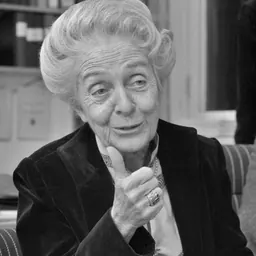
On 21 September 2002, together with Rita Levi-Montalcini, she took part in a meeting at , Rome, Italy, in the headquarters of the Masonic organization Grand Orient of Italy, to discuss science and peace in the service of mankind.
Legacy
Awards and honors The Nobel Peace Prize Medal awarded to Menchú is safeguarded in the Museo del Templo Mayor in Mexico City. 1992 Nobel Peace Prize for her advocacy and social justice work for the indigenous peoples of Latin America 1992 UNESCO Goodwill Ambassador position for her advocacy for the indigenous peoples of Guatemala Menchú was the youngest recipient of the Nobel Peace Prize at the time, and the first indigenous people recipient. 1996 Peace Abbey Courage of Conscience Award for her authorship and advocacy for the indigenous peoples of Guatemala 1998 Prince of Asturias Prize for improving the condition of women and the communities they serve. (Jointly with 6 other women.) 1999 asteroid 9481 Menchú was named in her honor 2018 Spendlove Prize for her advocacy for minority groups In 2022, the University of Bordeaux Montaigne, located in Pessac, gave her name to its newly built library in her honor.
Publications I, Rigoberta Menchú (1983) This book, also titled My Name is Rigoberta Menchú and that's how my Conscience was Born, was dictated by Menchú and transcribed by Elizabeth Burgos Crossing Borders (1998) Enkelin der Maya [Daughter of the Maya] (1999) The Girl from Chimel (2005) with Dante Liano, illustrated by Domi The Honey Jar (2006) with Dante Liano, illustrated by Domi The Secret Legacy (2008) with Dante Liano, illustrated by Domi K'aslemalil-Vivir. El caminar de Rigoberta Menchú Tum en el Tiempo (2012)
Testimony controversy More than a decade after the publication of I, Rigoberta Menchú, anthropologist David Stoll investigated Menchú's story and claimed that Menchú changed some elements about her life, family, and village to meet the publicity needs of the guerrilla movement. Stoll acknowledged the violence against the Maya civilians in his book, Rigoberta Menchu and the Story of all Poor Guatemalans, but believed the guerillas were responsible for the army's atrocities. The controversy caused by Stoll's book received widespread coverage in the US press of the time; thus the New York Times highlighted a few claims in her book contradicted by other sources:
Many authors have defended Menchú, and attributed the controversy to different interpretations of the testimonio genre. Menchú herself states, "I'd like to stress that it's not only my life, it's also the testimony of my people."
Don’t just read it —
keep it.
Full-length biographies made to live with: read them, listen on the way to work, watch them tonight.
- E-book
- Audio
- Video
Instant download · yours to keep · every purchase keeps this site free
Important facts
People in Rigoberta Menchú's life
Named in this biography and alive at the same time



Related people
Same field, nearest in time


Contemporaries
People whose lives overlapped Rigoberta Menchú's

Frequently asked questions
Who is Rigoberta Menchú?
Guatemalan human rights activist
When was Rigoberta Menchú born?
Rigoberta Menchú was born on 9 January 1959 in Laj Chimel.
What is Rigoberta Menchú's occupation?
Rigoberta Menchú is a politician, writer, autobiographer, human rights defender, resistance fighter and activist.
What nationality is Rigoberta Menchú?
Rigoberta Menchú is Guatemalan.
Sources & further reading
Cite this page
APA: Biography.guide. (2026). Rigoberta Menchú. https://biography.guide/rigoberta-menchu/
MLA: "Rigoberta Menchú." Biography.guide, https://biography.guide/rigoberta-menchu/.
Chicago: "Rigoberta Menchú." Biography.guide. https://biography.guide/rigoberta-menchu/.
Data last updated: 2026-09-20 · Spot an error? Report a correction.
Page generated 2026-09-27 05:34 UTC