
About Richard Westmacott
Lived 1775 – 1856 (aged 81). Richard Westmacott was a British painter and sculptor.
Sir Richard Westmacott (15 July 17751 September 1856) was a British sculptor.
Life and career Westmacott studied with his father, also named Richard Westmacott, at his studio in Mount Street, off Grosvenor Square in London before going to Rome in 1793 to study under Antonio Canova. Westmacott devoted all his energies to the study of classical sculpture, and throughout his life his real sympathies were with pagan rather than with Christian art. Within a year of his arrival in Rome he won the first prize for sculpture offered by the Florentine Academy of Arts, and in the following year he gained the papal gold medal awarded by the Academy of St Luke with his bas-relief of Joseph and his brothers. On returning to England in 1797, he set up a studio, where John Edward Carew and Musgrave Watson gained experience.
Westmacott had his own foundry at Pimlico, in London, where he cast both his own works, and those of other sculptors, including John Flaxman's statue of Sir John Moore for Glasgow. Late in life he was asked by the Office of Works for advice on the casting of the relief panels for Nelson's Column.
Statue of Achilles (1822) on the Wellington Monument at Hyde Park Corner, London. Westmacott exhibited at the Royal Academy between 1797 and 1839. His name is given in the catalogues as "R. Westmacott, Junr." until 1807, when the "Junr." was dropped. He was elected an associate of the Royal Academy in 1805, and a full academician in 1811. He was professor of sculpture at the academy from 1827 until his death. In 1852 when contacted by the Corporation of London about a possible sculpture commission, Westmacott replied that he had not been active as a sculptor for some years.
Works Among Westmacott's works include: the reliefs for the north side of Marble Arch; the Greek revival pedimental sculptures of figures representing The Progress of Civilisation on the British Museum; the Achilles of the Wellington Monument, London; and the Waterloo Vase, now in Buckingham Palace Gardens.
The Waterloo Vase was sculpted from a single piece of Carrara marble, earmarked by Napoleon to represent his military victories. Following the French defeat in the Napoleonic Wars, the vase was presented unfinished to George IV in 1815 by Ferdinand III, Grand Duke of Tuscany. George IV later commissioned Westmacott to complete the piece.
His statue of Horatio Nelson, Birmingham was the first statue of Nelson unveiled in Britain. There are other monuments to Nelson by Westmacott at the Bull Ring, Birmingham, in Barbados, while that at Liverpool was modelled and cast by Westmacott, to a design by Matthew Cotes Wyatt. In Liverpool there is also an equestrian statue of King George III sculpted by Westmacott, which was unveiled in 1822. He was responsible for the statue of the agriculturalist and developer Francis Russell, 5th Duke of Bedford in Russell Square, and that of the Duke of York on top of the column in Waterloo Place. to Rev. Charles Prescott (died 1820), in St. Mary's Church, Stockport, showing a seated effigy
Personal life Westmacott lived and died at 14 South Audley Street, Mayfair, London where he is commemorated by a blue plaque. Two of his brothers, George, who was active between 1799 and 1827, and Henry, (1784–1861) were also sculptors.
1810–1819
1820–1829
1830–1839
1840 and later
Public art row image = Mary Queen of Scots at Hardwick Hall - geograph.org.uk - 1175135.jpg commonscat = subject = Mary, Queen of Scots location = Hardwick Hall, Derbyshire date = type = Statue on pedestal material = Marble and stone dimensions = designation = show_wikidata= wikidata = notes = Relocated from Chatsworth House Memorial sculpture group, erected 1821, to Richard Pennant, 1st Baron Penrhyn, died 1808, Church of St Tegal, Llandygai, Wales Memorial to Rev. John Chetwynd Talbot, 1827, St Mary's Church, Ingestre, Staffordshire Memorial to Dr. John Wooll, c. 1833, Utah Memorial plaque, with portrait medallion, to Francis Bauer, 1840, St. Anne's Church, Kew,
Don’t just read it —
keep it.
Full-length biographies made to live with: read them, listen on the way to work, watch them tonight.
- E-book
- Audio
- Video
Instant download · yours to keep · every purchase keeps this site free
Important facts
more
W[estmacott], WestmacottPeople in Richard Westmacott's life
Named in this biography and alive at the same time
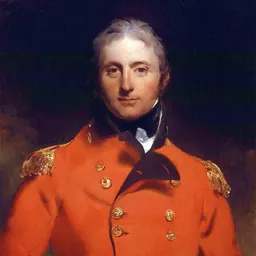
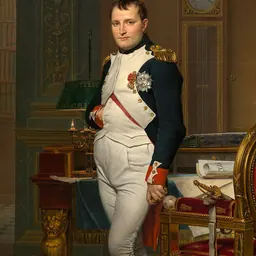
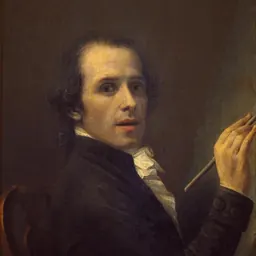
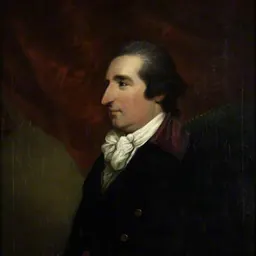


Related people
Same field, nearest in time



Contemporaries
People whose lives overlapped Richard Westmacott's



Frequently asked questions
Who was Richard Westmacott?
British sculptor (1775–1856)
When was Richard Westmacott born?
Richard Westmacott was born on 15 July 1775 in London.
When did Richard Westmacott die?
Richard Westmacott died on 1 September 1856 in London.
What was Richard Westmacott's occupation?
Richard Westmacott was a painter and sculptor.
What nationality was Richard Westmacott?
Richard Westmacott was British.
Sources & further reading
· Wikipedia: Richard Westmacott
Cite this page
APA: Biography.guide. (2026). Richard Westmacott. https://biography.guide/richard-westmacott-painter/
MLA: "Richard Westmacott." Biography.guide, https://biography.guide/richard-westmacott-painter/.
Chicago: "Richard Westmacott." Biography.guide. https://biography.guide/richard-westmacott-painter/.
Data last updated: 2026-09-20 · Spot an error? Report a correction.
Page generated 2026-09-27 05:26 UTC