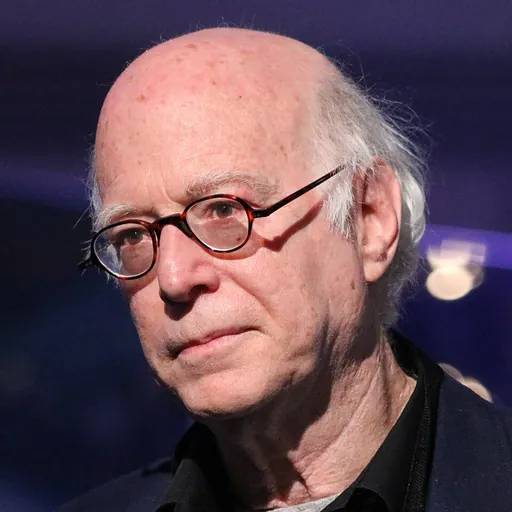
About Richard Sennett
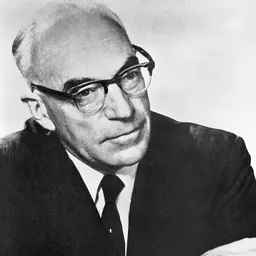
Born 1943. Richard Sennett is an American sociologist, historian, writer, musician, university teacher and literary critic.
Richard Sennett (born 1 January 1943) is an American sociologist who is the Centennial Professor of Sociology at the London School of Economics and former University Professor of the Humanities at New York University. He is currently a Senior Fellow of the Center on Capitalism and Society at Columbia University. Sennett has studied social ties in cities, and the effects of urban living on individuals in the modern world.
He has been a Fellow of The Center for Advanced Study in the Behavioral Sciences, of the American Academy of Arts and Sciences, and of the Royal Society of Literature. He is the founding director of the New York Institute for the Humanities.
Early life and education Sennett grew up in the Cabrini Green housing project in Chicago, to a Jewish family of Russian emigres. As a child he trained in music, studying the cello. When a hand injury and botched operation to fix it ended his musical career, he entered academia. He studied under David Riesman, Erik Erikson, and Oscar Handlin at Harvard, graduating with his Ph.D. in the History of American Civilization in 1969. His intellectual life as an urbanist came into focus during the time he spent as a fellow of the Joint Center for Urban Studies of Harvard and MIT.
Career Sennett's scholarly writing centers on the development of cities, the nature of work in modern society, and the sociology of culture. Families Against the City, his earliest book, examines the relationship between family and work in 19th-century Chicago. A subsequent quartet of books explores urban life more largely: The Uses of Disorder, an essay on identity formation in cities; The Fall of Public Man, a history of public culture and public space, particularly in London, Paris, and New York in the 18th and 19th centuries; The Conscience of the Eye, a study of how Renaissance urban design passed into modern city planning, and Flesh and Stone, an overview of the design of cities from ancient to modern times.
Another quartet of books is devoted to labor. The Hidden Injuries of Class is a study of class consciousness among working-class families in Boston; The Corrosion of Character explores how new forms of work are changing our communal and personal experience; Respect probes the relation of work and reforms of the welfare system; and The Culture of the New Capitalism provides an overview of these changes. Authority is an essay in political theory; it addresses the tools of interpretation by which we recast raw power into either legitimate or illegitimate authority.
Sennett is working on a project called "Homo Faber", exploring material ways of making culture. The first book in this series is The Craftsman (2008); subsequent volumes are Together: The Rituals, Pleasures, and Politics of Cooperation (2012) and Building and Dwelling: Ethics for the City (2018), on the making of the urban environment.
In the public realm, Sennett founded, and for a decade directed, the New York Institute of the Humanities at New York University. He then chaired a United Nations commission on urban development and design. As president of the American Council on Work, Sennett led a forum, sponsored by the Rockefeller Foundation, for researchers trying to understand the changing pattern of American labor. Most recently he helped create, and chaired, the LSE Cities Programme at the London School of Economics. The Urban Age project also emerged as a product of the research and ideas by Sennett and others at LSE Cities. In 2006, he chaired the jury at the Venice Biennale.
In 2024, Sennett published The Performer: Art, Life, Politics, which is intended as "the first in a trilogy of books on the fundamental DNA of human expression: performing, narrating, and imaging." The Performer examines a wide range of human roles and interactions from nightclubs to political rallies throughout history to understand the role of performance in every human life. 2006 – winner of the Hegel Prize awarded by the German city of Stuttgart, 2008 – awarded the Gerda Henkel Prize, worth 100,000 Euros, by the Gerda Henkel Foundation of Düsseldorf, Germany, 2009 – awarded the Heinrich Tessenow Medal, an honour which, until then, had been reserved for architects and designers. 2013 awarded Honorary Doctorate Cambridge University 2015 – awarded Premio Hemingway 2016 – received the Prix Européen de l'Essai awarded by the Charles Veillon Foundation in Lausanne. 2017 received the Presidential Medal of HarvardUniversity 2018 – appointed Officer of the Order of the British Empire (OBE) for services to design in the 2018 New Year Honours 2018 – elected Fellow of the British Academy (FBA).
Selected works Nineteenth Century Cities: Essays in the New Urban History, coauthor, Yale (1969) Classic Essays on the Culture of Cities, editor (1969), The Uses of Disorder: Personal Identity and City Life (1970), Families Against the City: Middle Class Homes of Industrial Chicago, 1872–1890, Harvard (1970), The Hidden Injuries of Class, with Jonathan Cobb, Knopf (1972), The Fall of Public Man, Knopf (1977), Authority (1980), The Conscience of the Eye: The design and social life of cities, Faber and Faber (1991), Flesh and Stone: The Body and the City In Western Civilization, Norton (1994), The Corrosion of Character, The Personal Consequences of Work in the New Capitalism, Norton (1998), Respect in a World of Inequality, Penguin (2003), The Culture of the New Capitalism, Yale (2006), The Craftsman, Allen Lane (2008), The Foreigner: Two Essays on Exile, Notting Hill (2011), Together: The Rituals, Pleasures, and Politics of Cooperation, Yale (2012), Building and Dwelling: Ethics for the City, Farrar, Straus and Giroux (2018), The Quito Papers and the New Urban Agenda, Routledge (2018), The Performer: Art, Life, Politics, Penguin (2024),
Fiction The Frog Who Dared to Croak (1982), An Evening of Brahms (1984) Palais-Royal (1986),
Literature on Richard Sennett Dominik Skala: Urbanität als Humanität. Anthropologie und Sozialethik im Stadtdenken Richard Sennetts. Paderborn: Schoeningh (2015), Igor Pelgreffi: "Soggetto, tecnica, scrittura. Su How I write: Sociology as Literature di Richard Sennett ", in M. Iofrida (Eds) Officine Filosofiche, 2, Mucchi, Modena 2015, pp. 95–108 Igor Pelgreffi: "Qualità artigianale del lavoro. Elementi per un'antropologia filosofica in Richard Sennett", in M. Iofrida (Eds) Officine Filosofiche, 3, Mucchi, Modena 2016, pp. 95–108
Don’t just read it —
keep it.
Full-length biographies made to live with: read them, listen on the way to work, watch them tonight.
- E-book
- Audio
- Video
Instant download · yours to keep · every purchase keeps this site free
Important facts
Family & relationships
People in Richard Sennett's life
Named in this biography and alive at the same time






Related people
Same field, nearest in time

Contemporaries
People whose lives overlapped Richard Sennett's


Frequently asked questions
Who is Richard Sennett?
American sociologist and academic
When was Richard Sennett born?
Richard Sennett was born on 1 January 1943 in Chicago.
What is Richard Sennett's occupation?
Richard Sennett is a sociologist, historian, writer, musician, university teacher and literary critic.
What nationality is Richard Sennett?
Richard Sennett is American.
Sources & further reading
Cite this page
APA: Biography.guide. (2026). Richard Sennett. https://biography.guide/richard-sennett/
MLA: "Richard Sennett." Biography.guide, https://biography.guide/richard-sennett/.
Chicago: "Richard Sennett." Biography.guide. https://biography.guide/richard-sennett/.
Data last updated: 2026-09-22 · Spot an error? Report a correction.
Portrait: Wikimedia Commons · author & licence
Page generated 2026-09-27 05:02 UTC