
About Oscar Handlin
Lived 1915 – 2011 (aged 95). Oscar Handlin was an American historian.
Oscar Handlin (September 29, 1915 – September 20, 2011) was an American historian. As a professor of history at Harvard University for over 50 years, he directed 80 PhD dissertations and helped promote social and ethnic history, virtually inventing the field of immigration history in the 1950s. Handlin won the 1952 Pulitzer Prize for History for The Uprooted. Handlin's 1965 testimony before Congress played an important role in passage of the Immigration and Nationality Act of 1965 that abolished the discriminatory immigration quota system. According to historian James Grossman, "He reoriented the whole picture of the American story from the view that America was built on the spirit of the Wild West, to the idea that we are a nation of immigrants."
Biography Handlin was born in Brooklyn, New York City, on September 29, 1915, the eldest of three children of Russian-Jewish immigrants. His mother, the former Ida Yanowitz, came to the United States in 1904 and worked in the garment industry. His father, Joseph, immigrated in 1913 after attending a commercial college in Ukraine and being stationed in Harbin, China, as a soldier during the Russo-Japanese War. Handlin's parents were passionately devoted to literature and the life of the mind. Their experience of religious persecution in Czarist Russia made them fiercely devoted to democracy and social justice (Handlin was a proto-"red diaper baby"). The couple owned a grocery store, the success of which along with real estate investments enabled them to send their children, Oscar, Nathan, and Sarah, to Harvard.
Known for his prodigious memory that allowed him to attend classes without taking notes, in 1930, Handlin entered Brooklyn College at age 15, graduating in 1934, then earning a Master of Arts degree from Harvard University in 1935, after which he won a Frederick Sheldon Fellowship for research in Europe. "'I don't know why,' Dr. Handlin joked in a 1952 [Boston] Globe interview. 'I guess they just liked my face.' Traveling in England, Ireland, Italy, and France, he began assembling material that would become his first book 'Boston's Immigrants, 1790–1865' ."
Between 1936 and 1938, Handlin taught history at Brooklyn College before reentering Harvard University.
According to Handlin, it was Arthur M. Schlesinger Sr. who "directed my attention to the subjects of social history that have since occupied much of my attention," urging Handlin to write his dissertation on immigration to Boston in the late 18th and early 19th centuries. In 1940 he received his PhD, joining the faculty in 1939 and remaining until 1986, his work centering around the topic of immigrants in the US and their influence on culture.
During his time as a graduate student at Harvard, Handlin was denied the position of vice president in the Henry Adams Club for being Jewish. He was among the first Jewish scholars appointed to a full professorship at Harvard. He also taught at the Harvard Extension School. He was a staunch anti-Communist and Vietnam War hawk in the 1960s.
Handlin was elected to the American Philosophical Society in 1999.
He died at age 95 on September 20, 2011, in Cambridge, Massachusetts. In the process, Handlin laid the ground for study of immigration by the succeeding generation of historians, even though many of them would dispute his immigrant archetype of a peasant guided primarily by religious conviction, having no familiarity with wage work or urban settings, and having experienced migration first and foremost as alienation from family, community, and tradition.
Handlin was one of the most prolific and influential American historians of the 20th century. As an American historian and educator he was noted for his in depth examination of American immigration history, ethnic history, and social history. His dissertation (1941) was published as his first book Boston's Immigrants, 1790–1865: A Study in Acculturation (1941). The book was highly regarded for its innovative research on sociological concepts and census data. In 1941 it won the prestigious John H. Dunning Prize from the American Historical Association as outstanding historical work published by a young scholar. The American Journal of Sociology described it as "the first historical case study of the impact of immigrants upon a particular society and the adjustment of the immigrants to that society. The writer has opened a new field for historical research and has also made a significant contribution to the literature of race and culture contacts."
In 1947, he and his first wife Mary Flug Handlin published Commonwealth: A Study of the Role of Government in the American Economy: Massachusetts, 1774-1861, which revealed for the first time the importance of political action in the development of the US free enterprise system.
By the late 1950s, Oscar Handlin was publishing a book nearly every year, covering the fields of civil rights, liberty, ethnicity, urban history, the history of education, foreign affairs, migration, biography, adolescence, even a book of poetry. Sometimes he wrote collaboratively with his first wife Mary Flug Handlin and, after her 1976 death, with his second wife Lilian Bombach, whom he married in 1977.
Civil Rights Movement In 1964, Handlin published Fire Bell in the Night: The Crisis in Civil Rights, which criticized white supremacists and suburban liberals, but also criticized leftists for their Communist-inspired solutions such as quotas, school busing, and affirmative action, writing: "Preferential treatment demands a departure from the ideal which judges individuals by their own merits rather than by their affiliations."
Left and Right In March 1961, Handlin signed an ACLU-organized petition of scholars demanding that the House Committee on Un-American Activities (HUAC) cease operations.
In 1961, Handlin published The Distortion of America, his critique of the attractions of Communism. The 1996 second edition covers Yugoslavia, China, and Arthur Koestler. "The study of the human past persuades me that, despite the frequent risks of failure, man has the capacity to make order and find purpose in the world in which he lives when he uses the power of his reason to do so."
His long-time colleague Bernard Bailyn noted Handlin's commitment to providing a historical perspective on policy issues:
In 1979, Handlin published Truth in History, which criticized New Left historians and the corruption of American universities with faddishness, hiring quotas, overspecialization and fragmentation in history studies, and deficiencies in graduate training.
The Vietnam War In December 1967, Handlin was one of 14 anti-Communist American scholars who co-wrote a report for the Freedom House Public Affairs Institute, which argued that disaster would strike if the US withdrew from Vietnam. In 1988, Handlin, John Silber, et al. founded the conservative National Association of Scholars.
Don’t just read it —
keep it.
Full-length biographies made to live with: read them, listen on the way to work, watch them tonight.
- E-book
- Audio
- Video
Instant download · yours to keep · every purchase keeps this site free
Important facts
People in Oscar Handlin's life
Named in this biography and alive at the same time


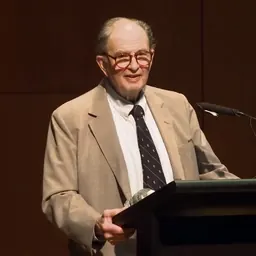

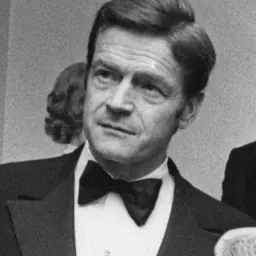


Related people
Same field, nearest in time
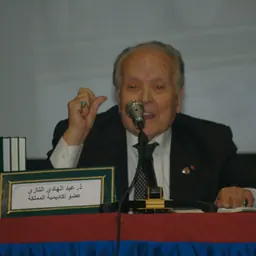
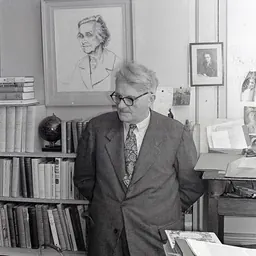


Contemporaries
People whose lives overlapped Oscar Handlin's



Frequently asked questions
Who was Oscar Handlin?
U.S. historian (1915–2011)
When was Oscar Handlin born?
Oscar Handlin was born on 29 September 1915 in Brooklyn.
When did Oscar Handlin die?
Oscar Handlin died on 20 September 2011 in Cambridge.
What was Oscar Handlin's occupation?
Oscar Handlin was a historian.
What nationality was Oscar Handlin?
Oscar Handlin was American.
Sources & further reading
Cite this page
APA: Biography.guide. (2026). Oscar Handlin. https://biography.guide/oscar-handlin/
MLA: "Oscar Handlin." Biography.guide, https://biography.guide/oscar-handlin/.
Chicago: "Oscar Handlin." Biography.guide. https://biography.guide/oscar-handlin/.
Data last updated: 2026-09-20 · Spot an error? Report a correction.
Page generated 2026-09-27 05:00 UTC