
Richard Russell Jr.
66th Governor of Georgia (1931–1933), U.S. Senator from Georgia
About Richard Russell Jr.
Lived 1897 – 1971 (aged 73). Richard Russell Jr. was an American politician and lawyer.
Richard Brevard Russell Jr. (November 2, 1897 – January 21, 1971) was an American politician. A Southern Democrat, he served as the 66th governor of Georgia from 1931 to 1933 before serving in the United States Senate for almost 40 years, from 1933 to 1971. At his death he was the most senior member of the Senate. He was a leader of Southern opposition to the civil rights movement for decades.
Born in Winder, Georgia, Russell established a legal practice in Winder after graduating from the University of Georgia School of Law. He served in the Georgia House of Representatives from 1921 to 1931 before becoming Governor of Georgia. Russell won a special election to succeed Senator William J. Harris and joined the Senate in 1933. He supported the New Deal in his Senate career and was the chief sponsor of the National School Lunch Act, which provided free or low-cost school lunches to impoverished students.
During his long tenure in the Senate, Russell served as chairman of several committees, and was the Chairman of the Senate Committee on Armed Services for most of the period between 1951 and 1969. He was a candidate for President of the United States at the 1948 Democratic National Convention and the 1952 Democratic National Convention. He was also a member of the Warren Commission.
Russell supported racial segregation and co-authored the Southern Manifesto with Strom Thurmond. Russell and 17 fellow Democratic Senators, along with one Republican, blocked the passage of civil rights legislation via the filibuster. After Russell's protégé, President Lyndon B. Johnson, signed the Civil Rights Act of 1964 into law, Russell led a Southern boycott of the 1964 Democratic National Convention. Russell served in the Senate until his death from emphysema in 1971.
Early life Richard B. Russell Jr. was born in 1897 as the first son of Georgia Supreme Court Chief Justice Richard B. Russell Sr. and Ina Dillard Russell. He eventually had a total of twelve adult siblings, as well as two who died before adolescence.
Russell's father was a well-liked state representative for Clarke County and a successful solicitor general for a seven-county circuit. However, he fared poorly in multiple attempts to become U.S. Senator for Georgia and Governor of Georgia. While at UGA, he was a member of the Phi Kappa Literary Society.
Dominated by white conservatives, Democrats controlled state government and the Congressional delegation. The Republican Party was no longer competitive, hollowed out in the state following the effective disenfranchisement of most blacks by Georgia's approval of a constitutional amendment, effective in 1908, requiring a literacy test, but providing a "grandfather clause" to create exceptions for whites.
Early political career Following his time at college, Russell briefly worked at a law firm with his father before successfully running for the Georgia House of Representatives at the earliest opportunity. Six years into his tenure, Russell ran unopposed for the Speakership at the age of 29. His popularity among his legislator colleagues came from his perceived integrity and willingness to build coalitions.
As governor, Russell reorganized the bureaucracy, reducing the number of state agencies from 102 to 18,
During Russell's governorship, World War I veteran Robert Elliot Burns released the autobiography I Am A Fugitive from a Georgia Chain Gang!, which had previously been serialized in True Detective magazine and later formed the basis for a popular Paul Muni film in November 1932. The book details the multiple stints Burns served in the Georgia penal system and his attempts to escape.
Following the release of the book and the film adaptation, Russell attempted to extradite Burns from the state of New Jersey so Burns could continue to serve his sentence in Georgia. Russell denounced Burns' depictions of the horrific hard labor in his state, calling New Jersey Governor A. Harry Moore's refusal to return Burns to Georgia "a slander on the state of Georgia and its institutions."
New Deal In 1933, when Russell came into the Senate, the Democrats had just ousted the Republicans as the majority party and thus many committee assignments became available. Russell was elected on a moderately progressive platform, and supported bailout and aid programs for local governments. Once in the Senate, he became an ardent supporter of the Roosevelt administration and New Deal programs, and expressed his support for "the fullest measure of relief that the combined resources of this commonwealth will afford." Russell continued to be an outspoken economic progressive even after World War II, and was the main sponsor of the 1946 National School Lunch Act, which was eventually named after him.
Military and foreign policy During World War II, Russell was known for his uncompromising position toward Japan and its civilian casualties. In the late months of the war, he held that the US should not treat Japan with more leniency than Germany, and that the United States should not encourage Japan to sue for peace.
Russell was a prominent supporter of a strong national defense. He used his powers as chairman of the Senate Armed Services Committee from 1951 to 1969, and then as chairman of the Senate Appropriations Committee as an institutional base to gain defense installations and jobs for Georgia. He was dubious about the Vietnam War, privately warning President Johnson repeatedly against deeper involvement, remarking to President Johnson in 1964 that "It’s a hell of a... hell of a situation. It’s a mess, and it's going to get worse."
Opposition to civil rights
Russell voted against the Civil Rights Act of 1957, the Civil Rights Act of 1960, the Civil Rights Act of 1964, and the Civil Rights Act of 1968 as well as the 24th Amendment to the U.S. Constitution and the Voting Rights Act of 1965.
Unlike Theodore Bilbo, "Cotton Ed" Smith, and James Eastland, who had reputations as ruthless, tough-talking, heavy-handed race baiters, Russell never justified hatred or acts of violence to defend segregation.
In 1952, Russell was a candidate for the Democratic presidential nomination; while he did not discuss civil rights while campaigning, his platform named "local self-government" one of the major "Jeffersonian Principles". The caucus included fellow senators such as Strom Thurmond, James Eastland, Allen Ellender, and John Stennis, the four having a commonality of being dispirited with Brown v. Board of Education, the 1954 ruling by the US Supreme Court that said that segregation in public schools was unconstitutional.
Russell was one of the strongest opponents of every desegregation measure in the Senate, but he remained loyal to the party. Although he called the 1960 Democratic Party platform a "complete surrender to the NAACP and the other extreme radicals at Los Angeles", he did agree to campaign for the Kennedy-Johnson ticket for the 1960 United States presidential election. Russell issued a statement afterward stating the commitment by Southern senators to oppose such a measure, which he called "shortsighted and disastrous," while admitting the high probability of it passing. He added that the civil rights bill's true intended effect was to intermingle races, eliminate states' rights, and abolish the checks and balances system.
After Johnson signed the Civil Rights Act of 1964, Russell (along with more than a dozen other southern Senators, including Herman Talmadge and Russell Long) boycotted the 1964 Democratic National Convention in Atlantic City.
Although he had served as a prime mentor of Johnson, Russell and Johnson disagreed over civil rights. Johnson supported this as President. Russell, a segregationist, had repeatedly blocked and defeated federal civil rights legislation via use of the filibuster.
Perception on race issues Russell was considered to be moderate in his support for segregation; in the 1950s, Russell corresponded with a black voter from Dublin, Georgia, Hercules Moore, who raised concerns that African-American children were being treated unfairly in the school lunch program, which was funded federally. Russell took the matter seriously and "later gave Moore satisfactory evidence that the program was being properly administered for children of both races.".
In June 1968, Chief Justice Earl Warren announced his decision to retire. President Johnson afterward announced the nomination of Associate Justice Abe Fortas for the position. David Greenburg wrote that when Russell "decided in early July to oppose Fortas, he brought most of his fellow Dixiecrats with him."
Anti-Communism In May 1961, President John F. Kennedy requested Russell place the Presidential wreath at the Tomb of the Unknowns during an appearance at Arlington National Cemetery for a Memorial Day ceremony.
Russell scheduled a closed door meeting for the Senate Armed Services Committee for August 31, 1961, at the time of Senator Strom Thurmond requesting the committee vote on whether to vote to investigate "a conspiracy to muzzle military anti-Communist drives."
In late February 1963, the Senate Armed Services Committee was briefed by Defense Secretary Robert McNamara on policy in the Caribbean. In response to what appeared to be an attack on an American shrimp boat by a "Russian Type Plane", Russell stated that he believed that it would be policy that American airmen would strike down any "Communist jets" in international waters that were attacking vessels, and only inquire on the aircraft's purpose there afterward.
Warren Commission From 1963 to 1964, Russell was one of the members of the Warren Commission, which was charged to investigate the assassination of President John F. Kennedy in November 1963. Originally Russell did not want to serve on the Warren Commission, telling President Lyndon B. Johnson that he did not like or have confidence in Earl Warren, who was to head the commission.
Russell's personal papers indicated that he was troubled by the Commission's single-bullet theory, the Soviet Union's failure to provide greater detail regarding Lee Harvey Oswald's period in Russia, and the lack of information regarding Oswald's Cuba-related activities. In a telephone conversation with President Johnson in September 1964 he expressed his disbelief in the single-bullet theory, to which Johnson replied that he did not believe it either.
In a January 1970 television interview, Russell stated that he accepted Oswald shot Kennedy but that he doubted he had acted alone, explaining that "too many things caused me to doubt that he planned it all by himself". Russell had written a dissenting opinion for the Warren Commission that "a number of suspicious circumstances" could not allow him to agree that there was no conspiracy to kill Kennedy and that citing a lack of evidence he believed this "preclude the conclusive determination that Oswald and Oswald alone, without the knowledge, encouragement or assistance of any other person, planned and perpetrated the assassination". With Russell's agreement this statement was not included in the final report. Russell had also made a request to Warren that "Senator Russell dissents" be placed in a footnote of the final report, although he refused to do so, insisting that there must be unanimity among the Commission.
Legacy A statue of Russell by Frederick Hart is in the rotunda of the Russell Senate Office Building.
Russell was seen as a hero by many of the pro Jim Crow South. While undoubtedly a skilled politician of immense influence, his lifelong support of white supremacy has marred his legacy. Russell publicly said that America was "a white man's country, yes, and we are going to keep it that way." He also said he was vehemently opposed to "political and social equality with the Negro." Russell also supported poll taxes across the South and called President Truman's support of civil rights for black Americans an "uncalled-for attack on our Southern civilization."
Russell has been honored by having the following named for him:
The Russell Senate Office Building, oldest of the three U.S. Senate office buildings. In 2018, Democratic Senate minority leader Charles Schumer called for the renaming of the building with the name of recently deceased Republican Senator John McCain. Russell Hall, a co-ed dormitory for first-year students at the University of Georgia in Athens, Georgia. Russell Hall, a building at the University of Georgia College of Public Health that houses nineteen classrooms within the University of Georgia in Athens, Georgia. The Russell Auditorium at Georgia College and State University in Milledgeville, Georgia. Richard B. Russell Dam and Lake, part of the Richard B. Russell Multiple Resource Area, located on the upper Savannah River between Elberton, Georgia, and Calhoun Falls, South Carolina. A Georgia state park on the shores of that lake also bears Russell's name. The Richard B. Russell Airport in Rome, Georgia, the regional general aviation airport serving Floyd County, Georgia. Senator Russell's Sweet Potatoes are a favorite southern dish around the holidays. USS Richard B. Russell (SSN-687), a Sturgeon-class attack submarine. Richard B. Russell Highway, a part of the Russell–Brasstown Scenic Byway Richard B. Russell Parkway in Warner Robins, Georgia Richard B. Russell Middle School in Winder, Georgia In 2020, former Georgia Board of Regents Chairman Sachin Shailendra and then Chancellor Steve Wrigley of the University System of Georgia tasked an advisory group to review the names of buildings and colleges across all campuses within the USG. Members of the advisory group consisted of Marion Fedrick, the tenth and current president of Albany State University in Albany, Georgia, Michael Patrick of Chick-fil-A, retired judge Herbert Phipps of the Georgia Court of Appeals, current chairman of the University of Georgia Foundation, Neal J. Quirk Sr., and Dr. Sally Wallace, the current dean of the Andrew Young School of Policy Studies of Georgia State University in Atlanta, Georgia.
Despite recommendations from the advisory group to rename all buildings associated with Russell, the Georgia Board of Regents did not move forward with any of the final recommendations from the advisory group's report.
Don’t just read it —
keep it.
Full-length biographies made to live with: read them, listen on the way to work, watch them tonight.
- E-book
- Audio
- Video
Instant download · yours to keep · every purchase keeps this site free
Important facts
Family & relationships
People in Richard Russell Jr.'s life
Named in this biography and alive at the same time

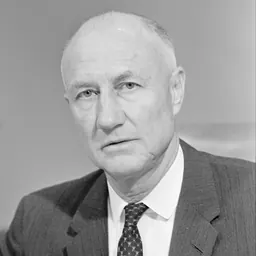

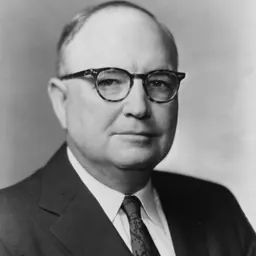

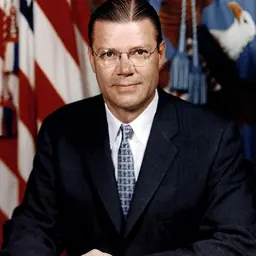
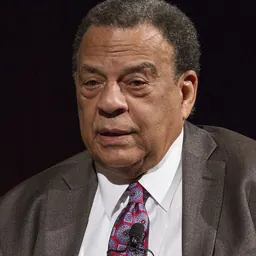
Related people
Same field, nearest in time





Contemporaries
People whose lives overlapped Richard Russell Jr.'s


Frequently asked questions
Who was Richard Russell Jr.?
66th Governor of Georgia (1931–1933), U.S. Senator from Georgia (1933–1971)
When was Richard Russell Jr. born?
Richard Russell Jr. was born on 2 November 1897 in Winder.
When did Richard Russell Jr. die?
Richard Russell Jr. died on 21 January 1971 in Washington, D.C..
What was Richard Russell Jr.'s occupation?
Richard Russell Jr. was a politician and lawyer.
What nationality was Richard Russell Jr.?
Richard Russell Jr. was American.
Sources & further reading
· Wikipedia: Richard Russell Jr.
· DBpedia: Richard Russell Jr.
Cite this page
APA: Biography.guide. (2026). Richard Russell Jr.. https://biography.guide/richard-russell-jr/
MLA: "Richard Russell Jr.." Biography.guide, https://biography.guide/richard-russell-jr/.
Chicago: "Richard Russell Jr.." Biography.guide. https://biography.guide/richard-russell-jr/.
Data last updated: 2026-09-20 · Spot an error? Report a correction.
Page generated 2026-09-27 05:22 UTC