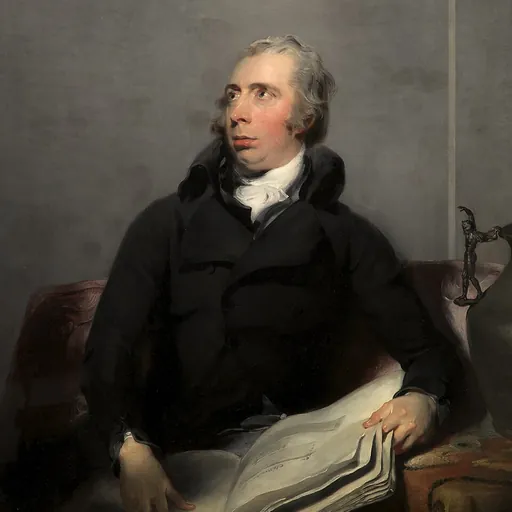
Richard Payne Knight
English classical scholar and connoisseur
About Richard Payne Knight
Lived 1750 – 1824 (aged 74). Richard Payne Knight was a British anthropologist, linguist, archaeologist, politician, writer and classical scholar.
Richard Payne Knight (11 February 1751 – 23 April 1824) of Downton Castle in Herefordshire, and of 5 Soho Square, London, England, was a classical scholar, connoisseur, archaeologist best known for his theories of picturesque beauty and for his interest in ancient phallic imagery. He served as a Member of Parliament for Leominster in Herefordshire (1780–84) and for Ludlow in Shropshire(1784–1806).
Origins He was born at Wormsley Grange in Wormsley, north-west of Hereford in Herefordshire, the eldest son of Rev. Thomas Knight (1697–1764) of Wormsley Grange, Rector of Bewdley, Worcestershire, by his wife Ursula Nash, a daughter of Frederick Nash of Dinham, Shropshire. (1659–1745) of Downton Hall, a wealthy Ironmaster of Bringewood Ironworks. His younger brother was the horticulturist Thomas Andrew Knight.
Career He was educated privately at home. Due to ill health, his years of education were few, but his inherited wealth allowed him to supplement it with travel. For several years from 1767 he made the Grand Tour to Italy and the European continent. He was a collector of ancient bronzes and coins, and an author of numerous books and articles on ancient sculpture, coins and other artefacts. As a member of the Society of Dilettanti, Knight was widely considered to be an arbiter of taste. He expended much careful study on an edition of Homer. where survives his chest tomb, now a grade II listed structure. His heir was his brother the botanist Thomas Andrew Knight, whose daughter the horticulturalist Charlotte Knight (c.1801-1843) eventually inherited Downton Castle, which passed to her descendants by her husband Sir William Edward Rouse-Boughton, 2nd and 10th Baronet (1788–1856), MP.
He bequeathed all his coins and medals to the British Museum, on condition that within one year after his decease, the next descendant in the direct male line, then living, of his grandfather, be made an hereditary trustee, "with all the privileges of the other family trustees, to be continued in perpetual succession to his next descendant, in the direct male line, so long as any shall exist; and in case of their failure, to the next in the female line".
On sculpture – typically for him, colourless form – generates in the mind the idea of shape which we must conceptualise, as with "proportion". The literary arts, like sculpture, deal with thoughts and emotions, though in a more complex form. Knight's account of these arts therefore falls under the heading of "association of ideas". Here Knight shows the influence of the contemporary cult of sensibility, arguing that these arts engage our sympathies, and in so doing demonstrate the inadequacy of 2rules and systems" in both morality and aesthetics. These teach "men to work by rule, instead of by feeling and observation." Rule-based knowledge of wrong cannot prevent wrongdoing, because it is thought not felt. Therefore, "it is impossible that tragedy should exhibit examples of pure and strict morality, without becoming dull and uninteresting."
Knight's discussion of "the passions" engages with both Classical and recent theorisations of sentiments. His discussion of the sublime is directed against Burke's emphasis on feelings of terror and powerlessness. Knight defends Longinus's original account of sublimity, which he summarises as the "energetic exertion of great and commanding power". Again he intertwines social and aesthetic reasoning, asserting that the power of a tyrant cannot be sublime if the tyrant inspires fear by mere arbitrary whim, like Nero. However, it may be sublime if his tyranny, like Napoleon's, derives from the exercise of immense personal capacities. A Nero may be feared, but would also be despised. A Napoleon may be hated, but will nevertheless inspire awe. In art, the mind experiences the sublime as it experiences the exercise of its own powers, or sympathises with the exercises of the powers of others. Fear itself can never engender the sublime.
Knight's emphasis on the roles of sensation and of emotion were constitutive of later Romantic and Victorian aesthetic thinking, as was his vexed struggle with the relation between moral feeling and sensuous pleasure. Though some contemporaries condemned the basis of his thought as an aestheticised libertinism, or devotion to physical sensation, they influenced John Ruskin's attempts to theorise the Romantic aesthetic of Turner, and to integrate political and pictorial values.
Don’t just read it —
keep it.
Full-length biographies made to live with: read them, listen on the way to work, watch them tonight.
- E-book
- Audio
- Video
Instant download · yours to keep · every purchase keeps this site free
Important facts
People in Richard Payne Knight's life
Named in this biography and alive at the same time




Related people
Same field, nearest in time
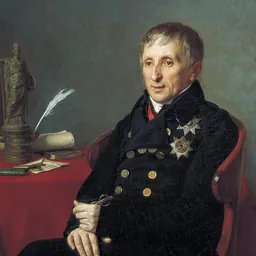
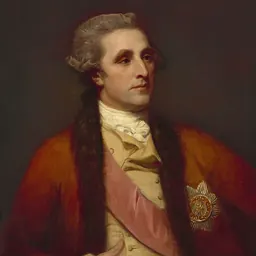
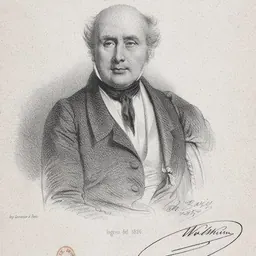
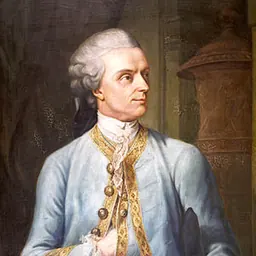
Contemporaries
People whose lives overlapped Richard Payne Knight's




Frequently asked questions
Who was Richard Payne Knight?
English classical scholar and connoisseur (1750-1824)
When was Richard Payne Knight born?
Richard Payne Knight was born on 15 February 1750 in Hereford.
When did Richard Payne Knight die?
Richard Payne Knight died on 23 April 1824 in London.
What was Richard Payne Knight's occupation?
Richard Payne Knight was an anthropologist, linguist, archaeologist, politician, writer and classical scholar.
What nationality was Richard Payne Knight?
Richard Payne Knight was British.
Sources & further reading
· Wikipedia: Richard Payne Knight
· DBpedia: Richard Payne Knight
Cite this page
APA: Biography.guide. (2026). Richard Payne Knight. https://biography.guide/richard-payne-knight/
MLA: "Richard Payne Knight." Biography.guide, https://biography.guide/richard-payne-knight/.
Chicago: "Richard Payne Knight." Biography.guide. https://biography.guide/richard-payne-knight/.
Data last updated: 2026-09-23 · Spot an error? Report a correction.
Portrait: Wikimedia Commons · author & licence
Page generated 2026-09-27 05:07 UTC