
About Richard Newport
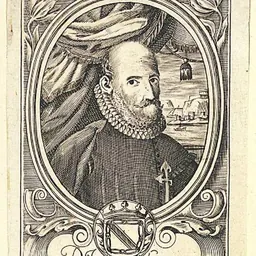
Lived 1511 – 1570 (aged 58–59). Richard Newport was an English politician.
Effigy of Sir Richard Newport, St Andrew's church, Wroxeter, Shropshire. Sir Richard Newport (by 1511–12 September 1570) was an English landowner and politician of Shropshire origin, prominent regionally during the mid-Tudor and early Elizabethan eras.
Background
Richard Newport was the eldest son of Thomas Newport of High Ercall, Shropshire, and Anne Corbet, the daughter of Sir Robert Corbet of Moreton Corbet and his wife, Elizabeth Vernon.
The Newports were one of the leading families in Shropshire, a county dominated throughout the 16th century by its landed gentry, although they had land in several other counties. Thomas Newport himself greatly expanded the Newports' wealth. John Leland observed that "This man, and Mitton of Cotton by Shrobsbyri had Syr John Boroues landes in Shropshir and Warwik." This partnership is confirmed by land records showing, for example, that Newport and Mitton, together with John Lingen, their cousin and Sir John Burgh's grandson, sold their interest in Burgh's wood at Stirchley in 1501 to another cousin, Sir Edward Leighton of Wattlesborough. Newport also inherited land in Kent from Henry Grey, 4th (7th) Baron Grey of Codnor. Richard and Reginald, were all major landowners with numerous connections at court and, at various times, MPs. Both Richard and Reginald were prominent members of the powerful Council in the Marches of Wales, and Reginald a Justice of the King's Bench: both were considerably younger than their sister Anne, and probably not older than their nephew Richard Newport.
Education
Newport was admitted to the Inner Temple by its ruling parliament on 7 May 1525. The date of Newport's admission to the Inner Temple is the main guide to his date of birth. Bromley had profited greatly both from his legal practice and from property speculation in partnership with the immensely rich merchant Sir Rowland Hill, the first known Protestant to become Lord Mayor of London. The pair had invested heavily in lands made available by the dissolution of the monasteries, especially the large estates of Shrewsbury Abbey. As Margaret was the only child and heir to Bromley's fortune, Newport had expectation of gaining lands across five counties to add to his patrimony. This was the first parliament of the reign of Edward VI and lasted until April 1552, sitting through the momentous changes of the most radical phase of the English Reformation. Blount was a friend and supporter of the avowedly-Protestant John Dudley, despite his own Catholic commitment. It is known that Blount supported and profited from further secularisation of church lands, including the chantries. However, nothing is known of Newport's parliamentary contribution. The remaining third, in addition to estates around Newport, Shropshire, he used to set up his younger sons with homes and estates for life. This still left £100 to find for Elizabeth, Richard's youngest sister. Although a considerable part of his wealth was potential rather than actual, Richard Newport was made sheriff of his native county immediately after inheriting. Hall supported the breach with the Papacy and placed great emphasis on submission to royal power, which seems to accord with Newport's own inclinations. Only occasionally, however, did he express his Protestant loyalties explicitly, as in a passage dealing with the death of William Tyndale in which he wrote with approval of the role of Martin Luther. Hall seems to have had some links with Shropshire, as he was MP for Much Wenlock and Bridgnorth. Newport's copy of his chronicle, containing annotations sometimes attributed to William Shakespeare, and Thomas Bromley, the future Lord Chancellor, at Bridgnorth. Both were members of the Inner Temple and favourites of the late chief justice. One of the county seats was taken by Newport's uncle, Richard Corbet.
Newport served at the siege of Leith, here depicted on a contemporary map. Thomas Howard, 4th Duke of Norfolk, who knighted Newport after the English intervention in support of the Scottish Reformation. Having compelled the congregation to offer distinctively Catholic prayers for the Protestant queen, Newport then went out into the market square and ordered Elizabeth's accession to be proclaimed again. This very public show of support heralded a final decade of apparently whole-hearted support for the Elizabethan Religious Settlement. In 1560, Newport, now in his 50s, served in Scotland under William Grey, 13th Baron Grey de Wilton, taking part in the Siege of Leith. He was knighted by Thomas Howard, 4th Duke of Norfolk on 21 July at Berwick-upon-Tweed, as the army returned, after the Treaty of Edinburgh secured an end to French intervention in Scotland.
In 1564, when the bishops were ordered by the Privy Council to vet the local justices, Thomas Bentham, the Bishop of Coventry and Lichfield, consulted on the Shropshire bench with Newport, his cousin Andrew Corbet and George Leigh, the Bailiff of Shrewsbury. They were able to supply a list of those "meet to continue in office," including themselves and a number of relatives. Asked to for those who were learned in the law as well as reliable Protestants, they named Reginald Corbet and George Bromley.
As an entirely reliable regional supporter of the regime, it was inevitable that Newport would be appointed to the Council in the Marches of Wales, although the date of this is uncertain. He was also selected as sheriff of the county again for 1568-9,
Newport's will begins with an exemplary Protestant declaration of faith: First and principally, I yield up my soul into the merciful hands of God the Father, the Son, and the Holy Ghost, believing assuredly to be saved only through God’s mercy purchased for me by the death and bloodshedding of Jesus Christ, God and man, my only Saviour and Redeemer, & by no other means.
Newport named his widow and eldest son, Francis as executors, while George and Thomas Bromley, described as cousins, were made supervisors. Margaret Bromley was given considerable responsibility in meeting Newport's obligations to his children as, despite his great wealth, he did not have the spare money to meet the full costs of the daughter's marriages or the sons' educations. He was forced to assign a large part of his High Ercall estate to this purpose for eight years, charging Margaret Bromley with managing the lands appropriately. He was anxious that his daughters, Isabel and Elizabeth, already married, should have their marriage money available as soon as their fathers-in-law had arranged their jointures. He was very generous to all his servants, ordering that all should receive a whole year's pay in addition to any outstanding from the current year. Some were given considerably more, including Jockey, a servant who had returned with him from the Scottish campaign, who was to receive £13 6s. 8d., and Margaret Gibbons, his maid, who was allotted £6 13s. 4d. Cash sums were given to his brothers, brothers-in-law and sons. George Bromley was given first choice of his geldings and William Gratwood, who had married his daughter Mary, was to take the best of the remainder.
Newport asked to be buried in the parish church at Wroxeter, near the tomb of his wife's parents. This request was met. He was given a large altar tomb, on the south side of the chancel, with brilliantly coloured effigies of himself, in full Elizabethan armour, and his wife, Margaret.
Marriage and family Tomb of Sir Richard Newport and Margaret Bromley, with depictions of six of their children. Two children of Margaret Bromley and Sir Richard Newport, depicted on the eastern end of their tomb. One is shrouded to represent an earlier death.
Newport's marriage to Margaret, the daughter and heiress of Sir Thomas Bromley of Eyton on Severn, Wroxeter, and Shrewsbury, produced at least the eight children who are depicted on their tomb. They had four sons, including the heir, Francis Newport (died 1623), and four daughters.
Sir Francis Newport, the eldest son and heir, married Beatrix Lacon. Their son and heir was Richard Newport, 1st Baron Newport, whose title was a reward from Charles I for his financial support at the beginning of the English Civil War. His heir was: Francis Newport, 1st Earl of Bradford, an important regional supporter of Charles II but later a Whig who sought to exclude James II and was temporarily barred from public life himself. Andrew Newport, the fourth son, was MP for Shrewsbury Mary Newport, married William Gratwood or Gratewood, nephew of Rowland Hill, the first Protestant Lord Mayor of London. The entry for the Newports in the Visitation of Shropshire features Mary twice, initially as a sister of Sir Richard, Placing her as a sister of Sir Richard seems more plausible chronologically, but there is no mention of a daughter called Mary in the will of Thomas Newport. Richard Newport's will definitely names William Gratwood as a son-in-law, which seems conclusive, but oddly never mentions Mary as Gratwood's wife, although all the other daughters are named. This is probably because Mary was considerably older and her marriage was settled well before. Green names Ralph Sneyd, uncle of Elizabeth Trentham, Countess of Oxford, as her second husband. Isabel Newport married Sir Charles Foxe, whose father of the same name was a member of the Inner Temple, MP for Ludlow and Much Wenlock and secretary to the Council in the Marches. The son bitterly and unsuccessfully contested his father's will, which provided for an illegitimate son and children of his second marriage. Elizabeth Newport married in turn two cousins: Francis Lawley and Thomas Lawley. The first marriage produced the line of Lawley baronets. Magdelen Newport, married in turn Richard Herbert (d.1596) and Sir John Danvers (c.1585-1655), and was mother of the poet George Herbert. She was a friend of poets, including John Donne.
Margaret Bromley long survived her husband. Thomas Newport had arranged, as part of her jointure, for her to receive estates in Pembrokeshire and Worcestershire, as well as at Shifnal.
Family tree: descendants of Richard Newport
The main lines of descent from Richard Newport and Margaret Bromley are shown on the following family tree.
Based on the Newport pedigree in the Visitation of Shropshire, with details from History of Parliament Online.
Don’t just read it —
keep it.
Full-length biographies made to live with: read them, listen on the way to work, watch them tonight.
- E-book
- Audio
- Video
Instant download · yours to keep · every purchase keeps this site free
Important facts
People in Richard Newport's life
Named in this biography and alive at the same time
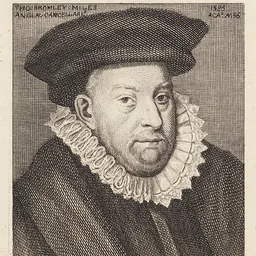



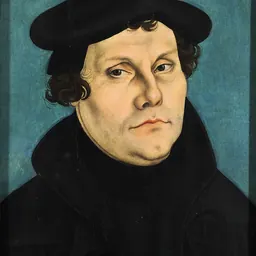


Related people
Same field, nearest in time
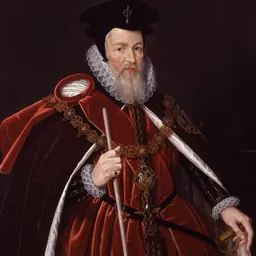
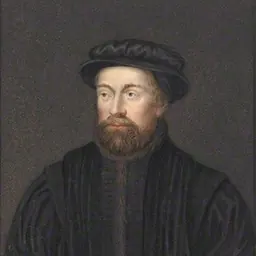

Contemporaries
People whose lives overlapped Richard Newport's


Frequently asked questions
Who was Richard Newport?
English landowner and politician
When was Richard Newport born?
Richard Newport was born in 1511.
When did Richard Newport die?
Richard Newport died on 12 September 1570.
What was Richard Newport's occupation?
Richard Newport was a politician.
What nationality was Richard Newport?
Richard Newport was English.
Sources & further reading
· DBpedia: Richard Newport (died 1570)
Cite this page
APA: Biography.guide. (2026). Richard Newport. https://biography.guide/richard-newport-politician/
MLA: "Richard Newport." Biography.guide, https://biography.guide/richard-newport-politician/.
Chicago: "Richard Newport." Biography.guide. https://biography.guide/richard-newport-politician/.
Data last updated: 2026-09-20 · Spot an error? Report a correction.
Page generated 2026-09-27 05:07 UTC