
About Richard N. Goodwin
Lived 1931 – 2018 (aged 86). Richard N. Goodwin was an American screenwriter, writer and political adviser.
Richard Naradof Goodwin (December 7, 1931 – May 20, 2018) was an American writer and presidential advisor. He was an aide and speechwriter to Presidents John F. Kennedy and Lyndon B. Johnson, and to Senator Eugene McCarthy and Senator Robert F. Kennedy. He was married to historian Doris Kearns Goodwin for 42 years until his death in 2018 after a brief diagnosis of cancer.
Early life and education Goodwin was born on December 7, 1931, in Boston, Massachusetts, the son of Belle (née Fisher) and Joseph C. Goodwin, an engineer and insurance salesman. Goodwin was raised Jewish. Goodwin graduated from Brookline High School, He was first in his class
Career Early career After clerking for Justice Felix Frankfurter of the U.S. Supreme Court, Goodwin became counsel for the House Committee on Interstate and Foreign Commerce where Goodwin was involved in investigating quiz show scandals, particularly the Twenty-One scandal. This affair provided the story for the 1994 movie Quiz Show, in which Goodwin was portrayed by actor Rob Morrow. of the group of "New Frontiersmen" who advised Kennedy; others included Fred Dutton, Ralph Dungan, Kenneth O'Donnell, and Harris Wofford, all of whom were under 37 years old.
In 1961, after Kennedy became president, Goodwin became assistant special counsel to the President and a member of the Task Force on Latin American Affairs. Later that year, Kennedy appointed him Deputy Assistant Secretary of State for Inter-American Affairs; Goodwin held this position until 1963. Goodwin reportedly opposed the Bay of Pigs invasion and unsuccessfully tried to persuade Kennedy not to order the operation. The topic under discussion was the Alliance for Progress, which was endorsed by all countries representatives excepting Cuban representative Che Guevara. However, Guevara had no intentions of going home empty handed; he noticed that Goodwin smoked cigars during the meetings, and through an intermediary challenged him, suggesting he wouldn't dare smoke a Cuban cigar. Goodwin accepted the challenge, and subsequently, a gift of cigars in an elaborate polished mahogany box arrived from Guevara. Guevara expressed his desire to talk informally with Goodwin, and Goodwin received permission from Treasury Secretary Dillon. However, during the last day of the conference, Guevara had critical words for the press concerning the Alliance for Progress, and being the only representative to do so, speaking passionately on the topic, was upstaging the business-like, pin-striped, former-Wall-Street-banker Dillon. Dillon retracted his agreement for Guevara and Goodwin's meeting. However, Guevara persevered, and Goodwin agreed to listen, but he stressed that he had no real negotiating power. While the meeting prompted a "minor political furor,"
In July 1962, Goodwin met President Kennedy and U.S. Ambassador Lincoln Gordon and began assisting in plans for the eventual 1964 Brazil coup against then-Brazil President João Goulart.
Goodwin also did significant work in the Kennedy White House to relocate ancient Egyptian monuments that were threatened with destruction in the building of the Aswan Dam, including the Abu Simbel temples.
Johnson administration Goodwin in 1965 (left), with Bill Moyers and President Johnson in the Oval Office. From 1963 to 1964, Goodwin served as the secretary-general of the International Peace Corps Secretariat.
Goodwin wrote speeches for Johnson reacting to Bloody Sunday, the violent police suppression of civil rights marchers on the Edmund Pettus Bridge (1965) The next year, Goodwin publicly joined the antiwar movement, publishing Triumph or Tragedy: Reflections on Vietnam (1966), a book critical of the war. He also published articles criticizing the Johnson administration's actions in Vietnam in The New Yorker under a pseudonym. He wrote a memoir, Remembering America: A Voice from the Sixties (1988).
His work was published in The New Yorker and he wrote numerous books, articles and plays. In 2003, the Yvonne Arnaud Theatre in Guildford, England, produced his new work The Hinge of the World, which took as its subject matter the 17th-century conflict between Galileo Galilei and the Vatican. Retitled Two Men of Florence (referring to Galileo and his adversary Pope Urban VIII, who as Cardinal Maffeo Barberini had once been Galileo's mentor), the play made its American debut at the Huntington Theatre in Boston in March 2009.
Awards and honors Goodwin received the Public Leadership Award from the Aspen Institute and the Distinguished American Award from the John F. Kennedy Library. he married writer and historian Doris Kearns, with whom he had two children: Michael and Joseph. He was 86 years old.
Don’t just read it —
keep it.
Full-length biographies made to live with: read them, listen on the way to work, watch them tonight.
- E-book
- Audio
- Video
Instant download · yours to keep · every purchase keeps this site free
Important facts
Family & relationships
People in Richard N. Goodwin's life
Named in this biography and alive at the same time




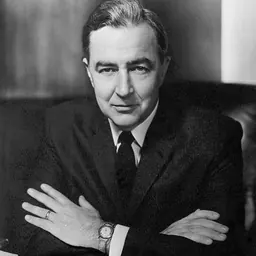
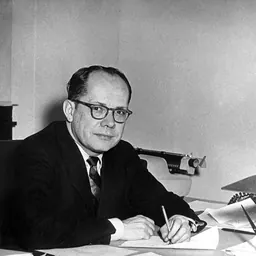

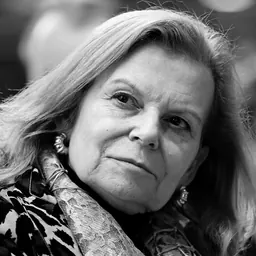
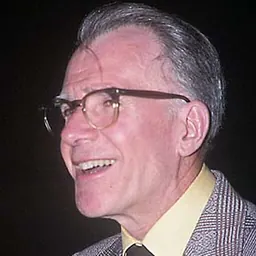
Related people
Same field, nearest in time
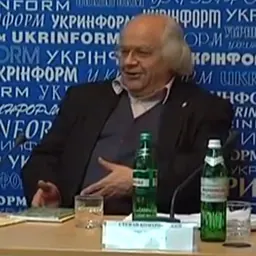
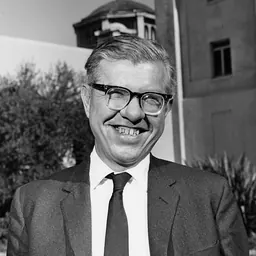

Contemporaries
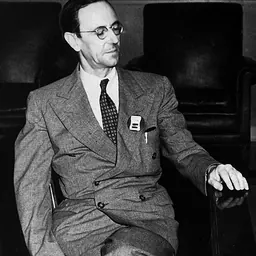
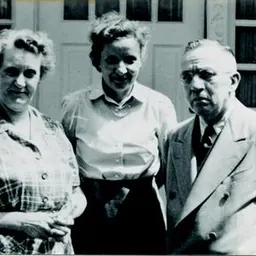
People whose lives overlapped Richard N. Goodwin's

Frequently asked questions
Who was Richard N. Goodwin?
American speechwriter (1931-2018)
When was Richard N. Goodwin born?
Richard N. Goodwin was born on 7 December 1931 in Boston.
When did Richard N. Goodwin die?
Richard N. Goodwin died on 20 May 2018 in Concord.
What was Richard N. Goodwin's occupation?
Richard N. Goodwin was a screenwriter, writer and political adviser.
What nationality was Richard N. Goodwin?
Richard N. Goodwin was American.
Sources & further reading
· Wikipedia: Richard N. Goodwin
Cite this page
APA: Biography.guide. (2026). Richard N. Goodwin. https://biography.guide/richard-n-goodwin/
MLA: "Richard N. Goodwin." Biography.guide, https://biography.guide/richard-n-goodwin/.
Chicago: "Richard N. Goodwin." Biography.guide. https://biography.guide/richard-n-goodwin/.
Data last updated: 2026-09-26 · Spot an error? Report a correction.
Page generated 2026-09-27 05:13 UTC