
About Richard Lawrence Hoffman
Lived 1927 – 2012 (aged 84). Richard Lawrence Hoffman was an American zoologist, entomologist, university teacher, myriapodologist and herpetologist.
Richard Lawrence Hoffman (September 25, 1927 – June 10, 2012) was an American zoologist known as an international expert on millipedes, and a leading authority on the natural history of Virginia and the Appalachian Mountains. He was a biology professor at Virginia's Radford College for almost thirty years, and curator of invertebrates at the Virginia Museum of Natural History for another twenty years. He co-founded the Virginia Natural History Society, described over 400 species of millipedes, and produced more than 480 scientific publications. He is commemorated in the scientific and/or common names of over 30 animal species, including the valley and ridge salamander (Plethodon hoffmani) and Hoffman's dwarf centipede (Nannarrup hoffmani).
Biography
Richard Hoffman was born in Clifton Forge, Virginia, on September 25, 1927. His father was a railroad machinist whose parents had emigrated from Germany in the late 1800s, and his mother was from a Virginia farming family. Hoffman's scientific publications began at the age of 16, and by the age of 24 he had 29 publications. He attended the University of Virginia until 1950, where he was influenced by Horton H. Hobbs, Jr. a crustacean biologist and recently hired professor. Unable to complete a freshman math class, Hoffman did not complete a degree at Virginia. Rather, in 1951 he was accepted into graduate school at Cornell University, who accepted his publication record as equivalent to passing a math class. When not working in the field or at Cornell, Hoffman worked as a chemist at the Radford Arsenal. He completed his a M.S. in entomology in 1959, and went on to earn a PhD in Zoology from Virginia Tech in 1960, during which he revised the genus Cambarincola, a group of leech-like oligochaete worms that are commensal on crayfish. His doctoral advisor at Virginia Tech was Dr. Perry C. Holt. From 1989 to 2009, Hoffman worked as Curator of Recent Invertebrates at the Virginia Museum of Natural History.
Hoffman died on June 10, 2012, at Carilion Roanoke Memorial Hospital in Roanoke, Virginia, following heart surgery.
Research In 2011 Hoffman and colleagues described Psammodesmus bryophorus, a millipede that uses moss for camouflage. Hoffman was recognized as the world's leading authority of millipedes of his time. He authored or co-authored at least 380 scientific papers on millipedes, and described over 400 species and subspecies, as well as over 200 genera. In 1958, Hoffman co-authored with Ralph V. Chamberlin a checklist of millipedes of North America, the first such work since 1893, which represented an approximate 600% increase in species recorded. Four decades later, Hoffman's 1999 "Checklist of the millipeds of North and Middle America" built upon on his previous work with Chamberlin, as well as checklists of the Caribbean and Central America by Chamberlin and Loomis respectively, to include over 2,100 species. Hoffman founded and edited the journal Myriapodologica from 1978 to 2007. He is commemorated in the names of two families, six genera, 19 species, and two subspecies of millipedes, as well as two species of centipede. and the term "ocellarium" for the patches of ocelli on each side of the head, also known as ocular fields or "eyes". He also published on fossil millipedes, describing extinct groups and producing a "classic summary" of the millipede fossil record for the Treatise on Invertebrate Paleontology. In 2007, a festschrift consisting of papers from 41 authors on four continents was assembled in honor of Hoffman's 80th birthday.
Hoffman also wrote over 70 papers on the natural history and conservation of reptiles and amphibians. The valley and ridge salamander (Plethodon hoffmani) is named in his honor. Nine insects, three crustaceans, a nematode, an annelid, and a genus of mites have been named after him. Despite working with Chamberlin early in his career, Hoffman later described the period as "under the malign influence of R.V. Chamberlin, an exemplar of minimal taxonomy", while Hoffman favored rich descriptions synthesizing previous relevant literature rather than scant, isolated descriptions. Chaleponcus vilici Enghoff, 2014
Don’t just read it —
keep it.
Full-length biographies made to live with: read them, listen on the way to work, watch them tonight.
- E-book
- Audio
- Video
Instant download · yours to keep · every purchase keeps this site free
Important facts
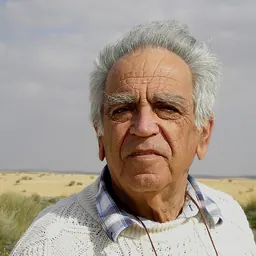
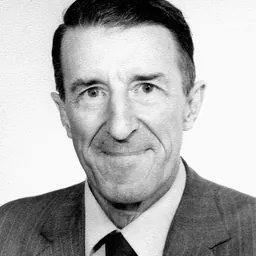
People in Richard Lawrence Hoffman's life
Named in this biography and alive at the same time

Related people
Same field, nearest in time



Contemporaries
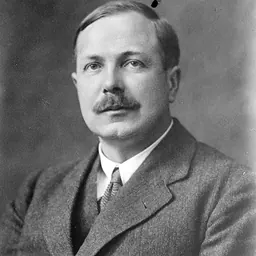
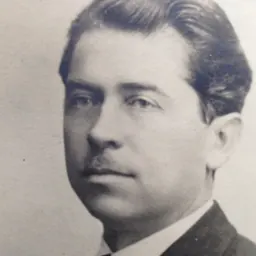
People whose lives overlapped Richard Lawrence Hoffman's


Frequently asked questions
Who was Richard Lawrence Hoffman?
U.S. zoologist (1927–2012)
When was Richard Lawrence Hoffman born?
Richard Lawrence Hoffman was born on 25 September 1927 in Clifton Forge.
When did Richard Lawrence Hoffman die?
Richard Lawrence Hoffman died on 10 June 2012 in Martinsville.
What was Richard Lawrence Hoffman's occupation?
Richard Lawrence Hoffman was a zoologist, entomologist, university teacher, myriapodologist and herpetologist.
What nationality was Richard Lawrence Hoffman?
Richard Lawrence Hoffman was American.
Sources & further reading
· Wikipedia: Richard Lawrence Hoffman
Cite this page
APA: Biography.guide. (2026). Richard Lawrence Hoffman. https://biography.guide/richard-lawrence-hoffman/
MLA: "Richard Lawrence Hoffman." Biography.guide, https://biography.guide/richard-lawrence-hoffman/.
Chicago: "Richard Lawrence Hoffman." Biography.guide. https://biography.guide/richard-lawrence-hoffman/.
Data last updated: 2026-09-20 · Spot an error? Report a correction.
Page generated 2026-09-27 05:33 UTC