
About Richard Knill
Lived 1787 – 1857 (aged 69). Richard Knill was a writer.
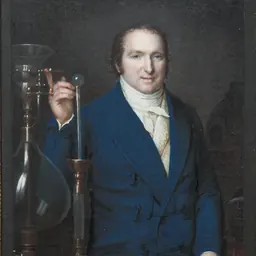
Richard Knill (14 April 1787 – 2 January 1857) was an English missionary.
Life He was born at Braunton, Devon, on 14 April 1787, the fourth child of Richard Knill, a carpenter (died 15 December 1826), and Mary Tucker (died 1826). In 1804 he enlisted as a soldier, and was shortly afterwards bought out by his friends. He became a student of the Western Academy at Axminster in 1812, and under the influence of a sermon by Dr. Alexander Waugh, volunteered for missionary work.
He was accepted by the London Missionary Society, and embarked for Madras 20 April 1816, with another missionary, Charles Mead, who was taking up a post as successor to William Tobias Ringeltaube.
There he engaged in English services for the schools, soldiers and residents, while studying the native languages. His health soon failed, and he was sent in September 1818 to Nágarkoil in Travancore; After suffering from the cholera, he returned to England on 30 November 1819. A cold climate was recommended, and he sailed on 18 October 1820 for St. Petersburg, intending to proceed to Siberia as a missionary. On the persuasion of the British and Americans, he agreed to remain there, where his work obtained the support of the emperor and the royal family. He also met various members of the Russian nobility, including several of the Golitsyn family, especially Prince Alexander Nikolaevich Golitsyn who served as President of the Russian Bible Society. He was a friend of John Venning and John Paterson who were missionaries as well as advocates of Russian prison reform.
A Protestant Bible Society was formed for supplying the Bible in their own tongues to Germans, Finns, Poles, Livonians and other persons not belonging to the Greek church. A school was opened for the children of foreigners, and a mission to the sailors at Kronstadt Knill was overjoyed to learn of Spurgeon's ministry and wrote to Spurgeon's grandfather in 1855 to express this. Spurgeon later preached for Knill in Chester.
Knill died at 28 Queen Street, Chester, England, on 2 January 1857.
Personal life On 9 January 1823 he married Sarah, daughter of James and Isabella Notman, a native of St. Petersburg, by whom he had five children.
There is a monument to Richard and Sarah in Cheshire.
Publications The Farmer and his Family, 1814 Memoir of the Life and Character of Walter Venning, 1822 The Influence of Pious Women in Promoting a Revival of Religion, 1830 Some Account of John Knill, 1830 The Happy Death-bed, 1833 A Traveller arrived at the End of the Journey, 1836 A Dialogue between a Romish Priest and R. Knill, Missionary, 1841 A Scotchman Abroad, 1841
Don’t just read it —
keep it.
Full-length biographies made to live with: read them, listen on the way to work, watch them tonight.
- E-book
- Audio
- Video
Instant download · yours to keep · every purchase keeps this site free
Important facts
People in Richard Knill's life
Named in this biography and alive at the same time


Related people
Same field, nearest in time




Contemporaries
People whose lives overlapped Richard Knill's
Frequently asked questions
Who was Richard Knill?
British minister (1787-1857)
When was Richard Knill born?
Richard Knill was born on 14 April 1787 in Braunton.
When did Richard Knill die?
Richard Knill died on 2 January 1857.
What was Richard Knill's occupation?
Richard Knill was a writer.
Sources & further reading
Cite this page
APA: Biography.guide. (2026). Richard Knill. https://biography.guide/richard-knill/
MLA: "Richard Knill." Biography.guide, https://biography.guide/richard-knill/.
Chicago: "Richard Knill." Biography.guide. https://biography.guide/richard-knill/.
Data last updated: 2026-09-20 · Spot an error? Report a correction.
Page generated 2026-09-27 05:12 UTC