
Richard Kemp
Virginia colonial governor
About Richard Kemp
Lived 1600 – 1650.
Sir Richard Kemp (c. 1600 – c. 1650) was a planter and politician in the Colony of Virginia. Kemp served as the Colony's Secretary and on the Governor's Council from 1634 to 1649. As the council's senior member, he also served as the acting Colonial Governor of Virginia from 1644 to 1645 during travels by Governor Sir William Berkeley. Kemp had also worked closely relation with Berkeley's predecessor, Sir John Harvey.
Early and family life Kemp was born around 1600 in Norfolk, England, the third son of Robert and Dorothy Kemp of Gissing. His relation with William Kempe, formerly of Howes in Leicestershire, England who had represented the "upper parts of Elizabeth City"" in the House of Burgesses in 1629-1630 is unclear.
Political career In 1634, King Charles I appointed Kemp as secretary of the Colony of Virginia, to succeed William Claiborne. Kemp also became a member of the Virginia Governor's Council, serving from 1634 to 1649. Kemp was a political ally and friend of Sir John Harvey, the first royally appointed Colonial Governor of Virginia, who served until 1639.
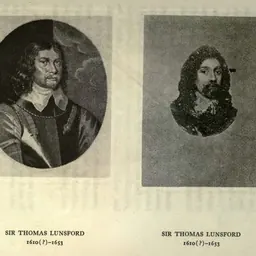
As the secretary for the Virginia colony, Kemp was responsible (and received fees) for issuing permits and grants, handling legal paperwork, and overseeing all official correspondence with the King. By 1639, Kemp had started to lose favor within the colony for siding with Sir John Harvey, in what became the Second Anglo-Powhatan War. Harvey had also incurred the wrath of Rev. Anthony Panton, who had friends in England, in part for chastising Rev. Panton's mockery of Kemp's coiffure. Kemp stowed away to England to plead his case to King Charles I to allow him to resume his duties as Secretary for the Colony of Virginia. Kemp returned to Virginia in 1642 with the colony's new appointed governor, Sir William Berkeley. Rich Neck Plantation was one of the first Virginia plantations to use an enslaved workforce, and Kemp received 100 headrights used for patenting land based on paying laborers' passage. They had one daughter, Elizabeth, who survived this man but died before marriage or bearing children. Kemp is presumed buried at Rich Neck. His widow survived their daughter, as well as her next husband, Thomas Lunsford, and married Major Robert Smith in 1658. Ultimately, the colony's secretary, Thomas Ludlow acquired Kemp's Rich Neck plantation. The Kemp (or Kempe) family's name continued through descendants of his emigrant nephew, Edmund Kemp (a justice of the peace for Lancaster County), particularly Mathew Kemp, his lawyer son who became speaker of the House of Burgesses during the 1679 session after Bacon's Rebellion.
Don’t just read it —
keep it.
Full-length biographies made to live with: read them, listen on the way to work, watch them tonight.
- E-book
- Audio
- Video
Instant download · yours to keep · every purchase keeps this site free
Important facts
People in Richard Kemp's life
Named in this biography and alive at the same time
Contemporaries
People whose lives overlapped Richard Kemp's




Frequently asked questions
Who was Richard Kemp?
Virginia colonial governor
When was Richard Kemp born?
Richard Kemp was born in 1600 in England, Norfolk, England.
When did Richard Kemp die?
Richard Kemp died in 1650 in British America, Virginia Colony.
Sources & further reading
· DBpedia: Richard Kemp (governor)
Cite this page
APA: Biography.guide. (2026). Richard Kemp. https://biography.guide/richard-kemp/
MLA: "Richard Kemp." Biography.guide, https://biography.guide/richard-kemp/.
Chicago: "Richard Kemp." Biography.guide. https://biography.guide/richard-kemp/.
Data last updated: 2026-09-20 · Spot an error? Report a correction.
Page generated 2026-09-27 05:03 UTC