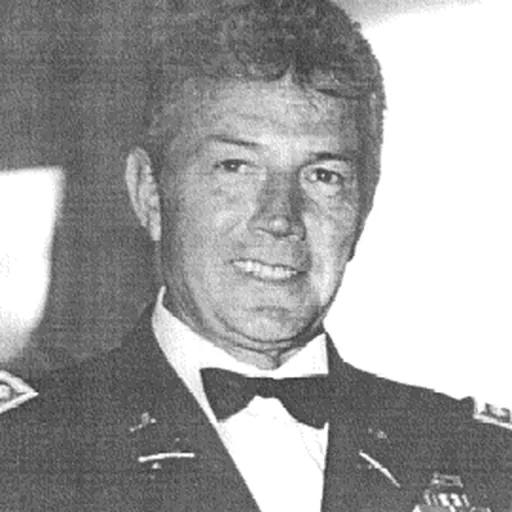
About Richard J. Meadows
Lived 1931 – 1995 (aged 64). Richard J. Meadows was an American soldier.
Richard James Meadows (June 16, 1931 – July 29, 1995) was a United States Army Special Forces officer who saw combat in Korea and Vietnam. He was a key figure in the Operation Eagle Claw in 1980, the rescue operation for the hostages of the Iran hostage crisis. He was a pivotal figure in the creation of the modern U.S. Army Special Forces.
Military career Meadows enlisted in the United States Army in 1946 at age 15. He first saw combat as a paratrooper in the Korean War with the 187th Infantry Regiment
In 1970, Captain Meadows was pulled from his position as commanding officer of Ranger School in Fort Benning to serve as a team leader for the initial assault team in the Son Tay prison camp raid. This 14-man team (plus pilots), code-named Blueboy, intentionally crash-landed an HH-3 helicopter right in the middle of the prison camp to achieve maximum surprise. One team member received a broken ankle in the landing but the remaining team members executed their mission without any further casualties. Much to Meadows' disappointment, however, the enemy had moved all its captives weeks earlier.
Meadows retired from the Army in June 1977 after 31 years of service.
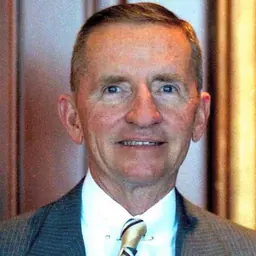
In 1979, Meadows was reportedly involved in the rescue operation of two Electronic Data Systems employees who had been imprisoned during the Iranian Revolution. Bull Simons, at the behest of Ross Perot, had headed the operation which succeeded in bringing the two home unharmed. Meadows was tasked with reconnoitering the embassy grounds, locating the hostages, and renting trucks to abet the hostage rescuers. The mission ended in a major accident at a ground refueling point in the Iran desert and was aborted. Although documents found at the crash site compromised both the mission and Meadows' cover in Iran, Meadows was able to escape Iran aboard a commercial flight with his cover intact.
In 1982, Meadows appeared on the cover of Newsweek magazine in an issue which included a feature article about his career.
He was buried in the Barrancas National Cemetery at Naval Air Station Pensacola. He also was awarded the Bull Simons Award, a lifetime special operations forces achievement award.
Awards and decorations Major Meadows' military decorations and awards include the following:
In addition to the above, Meadows received numerous foreign awards and was eligible after his retirement for the Korean War Service Medal from South Korea and the Special Forces Tab.
Just before his death, in July, 1995, Meadows was told he was to be presented with the Presidential Citizens Medal by President Clinton.
Don’t just read it —
keep it.
Full-length biographies made to live with: read them, listen on the way to work, watch them tonight.
- E-book
- Audio
- Video
Instant download · yours to keep · every purchase keeps this site free
Important facts
People in Richard J. Meadows's life
Named in this biography and alive at the same time

Related people
Same field, nearest in time





Contemporaries
People whose lives overlapped Richard J. Meadows's
Frequently asked questions
Who was Richard J. Meadows?
US Army Special Forces officer (1931–1995)
When was Richard J. Meadows born?
Richard J. Meadows was born on 16 June 1931.
When did Richard J. Meadows die?
Richard J. Meadows died on 29 July 1995.
What was Richard J. Meadows's occupation?
Richard J. Meadows was a soldier.
What nationality was Richard J. Meadows?
Richard J. Meadows was American.
Sources & further reading
· Wikipedia: Richard J. Meadows
Cite this page
APA: Biography.guide. (2026). Richard J. Meadows. https://biography.guide/richard-j-meadows/
MLA: "Richard J. Meadows." Biography.guide, https://biography.guide/richard-j-meadows/.
Chicago: "Richard J. Meadows." Biography.guide. https://biography.guide/richard-j-meadows/.
Data last updated: 2026-09-22 · Spot an error? Report a correction.
Portrait: Wikimedia Commons · author & licence
Page generated 2026-09-27 05:04 UTC