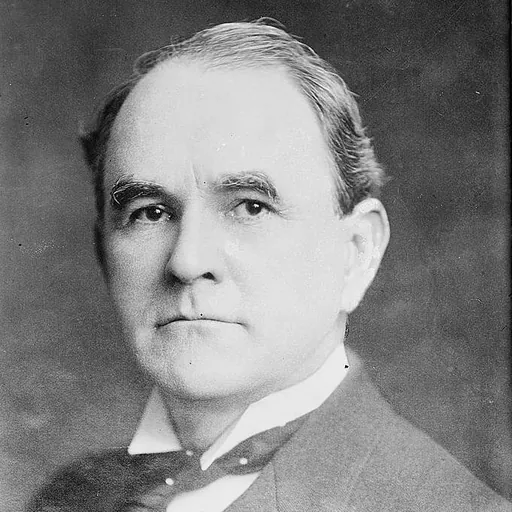
Richard Irvine Manning III
Politician from the U.S. state of South Carolina
About Richard Irvine Manning III
Lived 1859 – 1931 (aged 72). Richard Irvine Manning III was an American politician and governor.
Richard Irvine Manning III (August 15, 1859 – September 11, 1931) was an American politician from the U.S. state of South Carolina. He served as a state legislator and as the 92nd governor of South Carolina. which attended from 1877 to 1879.
Manning's political career started during the era of Ben Tillman, and Manning served in the South Carolina House of Representatives from 1892 to 1896 before moving up to the South Carolina Senate from 1898 to 1906. When he was elected to the governorship in 1914, Manning brought many Progressive Era reforms to a state that had spent four years under the demagogic leadership of Coleman Livingston Blease. During his first term in office, South Carolina prohibited alcohol, established the state's first compulsory education law, and raised the minimum age for employment to 14. South Carolinians expressed their approval of these measures by re-electing Manning to a second term in 1916.
Manning’s first term, as noted by one study,
“was especially notable for the restoration of the enforcement of the law, for the upholding of the decrees of the courts and sustaining the verdict of the juries; for the banishing of race track gambling and other forms of vice; for the broadening of popular education for town and country, mill and farm, and for the inauguration of compulsory education; for shorter hours of labor and the adoption of a child labor law; for the creation of a Tax Commission and a State Board of Arbitration and conciliation; the equalization of taxes; the reinstatement and reorganization of the National Guard of South Carolina; reorganization in the management of the State Hospital for the Insane; and Establishment of the State Board and Charities and Corrections and the Institution for the Feeble Minded.”
Other reforms were introduced during Manning's time as governor. Teaching training courses were funded while teachers’ salaries were raised by 20% and a state bureau of teacher certification was established. Financial support for education was doubled, while additional funding was secured to improve the quality of teacher training at the state-supported black college at Orangeburg. The secret ballot for all elections was established, along with an industrial school for delinquent white females and a school for mentally handicapped children. A state tuberculosis hospital was also opened. An Act of March the 30th 1916 provided for a weekly pay day in textile mills, while an Act of April the 16th 1916 provided for liability of railroad companies for injuries to employees.
An Act of February the 27th 1917 authorized all towns and cities in the State “to Regulate Markets, Hotels, Restaurants, Cafes, Lunch Counters, Etc., in the Interest of Public Health and Welfare.” An Act of February the 13th 1917 provided for Section 1778 of the civil code to be amended in order to permit persons over the age of 21 to attend night schools “Which Are Free Public Schools.” An Act of February the 27th 1917 provided for an equalizing fund “To Guarantee Adequate Facilities and Teaching Corps in Needy School Districts.” Another Act of 1917 was aimed at preventing fire waste and ensure safety of life, “Regulating the Erecting and Repairing of Buildings, Providing for Inspections of Buildings and Premises, and Fixing the Punishment for Violation Thereof.” An Act of February the 11th 1918 provided for all interurban railroads or interurban railways operating within the State to “furnish their cars, and the vestibule portions of their cars, for the carriage of passengers, with heating apparatuses or appliances necessary to the comfort of all passenger and operators using the same: Provided, This act shall not apply to any railway whose direct line is more than fifty miles long.” A similar Act dated March the 9th 1918 provided that “All electric street railway companies doing business in this state shall, after November first, nineteen hundred and eighteen, provide and furnish all their street cars or electric cars with sufficient heat for all passengers and employees.” In addition, adult education was encouraged.
In an address he made during his last month as governor, Manning spoke for the need for greater social justice, arguing that
"We must concern ourselves also with the welfare of those about us less fortunate than ourselves. Employers must awaken to a sense of the justice of more adequate pay in order that their employees may meet and solve their problems which multiply with the high cost of living, and selfish interest must give way to appreciation of faithful service. The preacher, the teacher and the clerk, all salaried men and women as well as the labourer, to be able to keep their ideals clearly before them must receive compensation based upon fairness and in proportion to the services they perform. The hardships of farm life with its isolation and drudgery for men and women must be recognized by city dwellers, that good roads may be extended throughout the rural sections, to relieve isolation and to cheapen transportation, to facilitate travel and to give opportunity for social gatherings and social pleasures. Together we must work to afford the opportunity to every boy and girl an education that they may make better and more efficient citizens. Better housing conditions for the poorest mill worker and tenant farmer must be provided. Into the isolated rural sections the doctrine of sanitary living must be introduced and the people taught to prevent disease and to treat it when it falls upon them. Our teachers must be trained to lead the people of the communities in which they live along these lines."
Death He died on September 11, 1931, at his home in Columbia, South Carolina. He had been ill for three months.
He is interred in the churchyard at Trinity Episcopal Church in Columbia, South Carolina.
Don’t just read it —
keep it.
Full-length biographies made to live with: read them, listen on the way to work, watch them tonight.
- E-book
- Audio
- Video
Instant download · yours to keep · every purchase keeps this site free
Important facts
People in Richard Irvine Manning III's life
Named in this biography and alive at the same time


Related people
Same field, nearest in time



Contemporaries
People whose lives overlapped Richard Irvine Manning III's



Frequently asked questions
Who was Richard Irvine Manning III?
politician from the U.S. state of South Carolina (1859-1931)
When was Richard Irvine Manning III born?
Richard Irvine Manning III was born on 15 August 1859 in Sumter County.
When did Richard Irvine Manning III die?
Richard Irvine Manning III died on 11 September 1931 in Columbia.
What was Richard Irvine Manning III's occupation?
Richard Irvine Manning III was a politician and governor.
What nationality was Richard Irvine Manning III?
Richard Irvine Manning III was American.
Sources & further reading
· Wikipedia: Richard Irvine Manning III
· DBpedia: Richard Irvine Manning III
Cite this page
APA: Biography.guide. (2026). Richard Irvine Manning III. https://biography.guide/richard-irvine-manning-iii/
MLA: "Richard Irvine Manning III." Biography.guide, https://biography.guide/richard-irvine-manning-iii/.
Chicago: "Richard Irvine Manning III." Biography.guide. https://biography.guide/richard-irvine-manning-iii/.
Data last updated: 2026-09-23 · Spot an error? Report a correction.
Portrait: Wikimedia Commons · author & licence
Page generated 2026-09-27 05:05 UTC