
About Richard Henry Brunton
Lived 1841 – 1901 (aged 59). Richard Henry Brunton was a civil engineer and railway engineer.
Richard Henry Brunton FRGS MICE (26 December 1841 – 24 April 1901) was a British engineer known as the "Father of Japanese lighthouses". Brunton was born in Muchalls, Kincardineshire, Scotland. He was employed by the government of Meiji period Japan as a foreign advisor (o-yatoi gaikokujin), primarily to build lighthouses.
Over a period of seven and a half years he designed and supervised the building of 26 Japanese lighthouses in the Western style, which became known as Brunton's "children". To operate the lighthouses he established a system of lighthouse keepers, based on the one used in Scotland. He also helped found Japan's first school of civil engineering. In 1871, he was received by Emperor Meiji in recognition of his efforts.
Early life Brunton was born on 26 December 1841 in the Coastguard House (now 11 Marine Terrace) at Muchalls, Fetteresso in The Mearns. His father Richard was an officer in the Coastguard Service who had married Margaret Telfor in January 1841. After training as a railway engineer he joined the Stevenson brothers (David and Thomas Stevenson) who were engaged by the British government to build lighthouses.
Career
Life in Japan Under pressure from British minister Sir Harry Parkes to fulfil its obligations to make the waters and harbors of Japan safe for shipping, the Tokugawa shogunate hired the Edinburgh-based firm of D. and T. Stevenson to chart coastal waters and to build lighthouses where appropriate. The project had already begun under French foreign advisor Léonce Verny, but was not proceeding fast enough for the British.
Brunton was sent from Edinburgh in August 1868 to head the project after being recommended to the Japanese government by the Stevensons, despite the fact that he had no experience in lighthouse building at all. He was accompanied by his wife, sister-in-law and two assistants. The party received word while docked at Aden of the fall of the Tokugawa shogunate and its replacement by the Meiji government, and decided to continue on to Japan, reasoning that the new government was still bound by the international commitments of its predecessor. Over the next seven and a half years he designed and supervised the building of 26 Japanese lighthouses in the Western style, along with two lightvessels. An obituary published in the journal of the Institution of Civil Engineers states "in ten years he had executed 50 lighthouses".
There had been Japanese lighthouses before then, but they were short and squat buildings, such as the old Shirasu lighthouse now in the grounds of Kokura Castle in Kitakyushu.
Brunton also established a system of lighthouse keepers, modeled on the Northern Lighthouse Board in Scotland.
Aside from his work on lighthouses around Japan, Brunton also surveyed and drew the first detailed maps of Yokohama, planned its sewage system, street paving and gas lights, established a telegraph system, and designed and built the settlement's first iron bridge. He also helped found Japan's first school of civil engineering. In recognition of his efforts, he was received by Emperor Meiji in an audience in 1871.
Brunton and Yokohama – the plaque next to his statue in Yokohama records all he did for the city.
Return to Britain After disagreeing with Japanese officials he left Japan in March 1876, later receiving a prize for his paper "Japan Lights".
On his return he first set up in Glasgow for Young's Paraffin Oil, before moving to south London in 1881 making architectural plasterwork, where he remained until his death. He is buried in West Norwood Cemetery, where his marble memorial there was restored by the Yokohama Chamber of Commerce in 1991.
List of Brunton's Japanese Lighthouses The names of the 26 lighthouses (Brunton's "children") constructed by Brunton, in order of north to south, and the names of their present locations after mergers of towns etc.
English Japanese Location Illuminated Nosappumisaki Lighthouse 納沙布岬灯台 Nemuro, Hokkaidō Shiriyazaki Lighthouse 尻屋埼灯台 Higashidōri, Aomori Kinkasan Lighthouse 金華山灯台 Ishinomaki, Miyagi Inubōsaki Lighthouse 犬吠埼燈台 Chōshi, Chiba Haneda Lighthouse 羽田灯台 Ōta, Tokyo (now extinguished) Tsurugisaki Lighthouse 剱埼灯台 Miura, Kanagawa Mikomotoshima Lighthouse 神子元島灯台 Shimoda, Shizuoka Irōzaki Lighthouse 石廊埼灯台 Minamiizu, Shizuoka Omaesaki Lighthouse 御前埼灯台 Omaezaki, Shizuoka Sugashima Lighthouse 菅島灯台 Toba, Mie Anorisaki Lighthouse 安乗埼灯台 Ago, Mie Tenpōzan Lighthouse 天保山灯台 Minato-ku, Osaka (now extinguished) Wadamisaki Lighthouse 和田岬灯台 Suma-ku, Kobe (now extinguished) Esaki Lighthouse 江埼燈台 Awaji, Hyōgo Kashinosaki Lighthouse 樫野埼灯台 Kushimoto, Wakayama Shionomisaki Lighthouse 潮岬灯台 Kushimoto, Wakayama Tomogashima Lighthouse 友ヶ島灯台 Wakayama, Wakayama Mutsurejima Lighthouse 六連島灯台 Shimonoseki, Yamaguchi Tsunoshima Lighthouse 角島灯台 Shimonoseki, Yamaguchi Tsurushima Lighthouse 釣島灯台 Matsuyama, Ehime Nabeshima Lighthouse 鍋島灯台 Sakaide, Kagawa (now extinguished) Hesaki Lighthouse 部埼灯台 Kitakyūshū, Fukuoka Shirasu Lighthouse 白州灯台 Kitakyūshū, Fukuoka Eboshijima Lighthouse 烏帽子島灯台 Shima, Fukuoka Iojimazaki Lighthouse 伊王島灯台 Nagasaki, Nagasaki Satamisaki Lighthouse 佐多岬灯台 Minamiōsumi, Kagoshima
Memoir
Brunton wrote a memoir of his time in Japan, titled Pioneer Engineering in Japan: A Record of Work in helping to Re-Lay the Foundations of Japanese Empire (1868–1876). However, it was not published until the 1990s, when it was printed by separate publishers under two different names: Building Japan 1868–1876 and Schoolmaster to an Empire: Richard Henry Brunton in Meiji Japan, 1868–1876. (See below.)
The former, containing the text (with some modified spellings) as edited by William Elliot Griffis at the turn of the twentieth century, contains plates with photos and illustrations. The latter however, purports to be based on a manuscript predating the heavy editing of Griffis, while retaining updated versions of Griffis's footnotes.
Building Japan 1868–1876 by Richard Henry Brunton with an introduction by Hugh Cortazzi, Japan Library Limited, 1991, Schoolmaster to an Empire by R. Henry Brunton, edited by Edward R. Beauchamp, Greenwood Press, 1991,
In his memoir, Brunton describes in some detail the burial of Frank Toovey Lake, a midshipman who was sailing with him on HMS Manilla when he was making his first survey of locations to erect the lighthouses. The grave is located on the island of Hiroshima in the Seto Inland Sea; a memorial alongside the grave also records the association with Brunton, and in 2018, the Japanese Coast Guard undertook a ceremony at the grave to celebrate both Lake and Brunton. His high regard for the care that the islanders gave to the grave was, as he admitted in his book, in contrast to his general impression of the Japanese.
Don’t just read it —
keep it.
Full-length biographies made to live with: read them, listen on the way to work, watch them tonight.
- E-book
- Audio
- Video
Instant download · yours to keep · every purchase keeps this site free
Important facts
People in Richard Henry Brunton's life
Named in this biography and alive at the same time
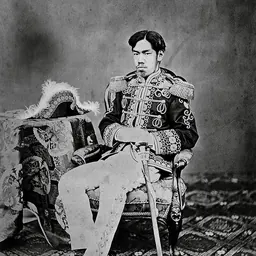





Related people
Same field, nearest in time
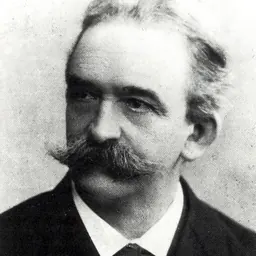

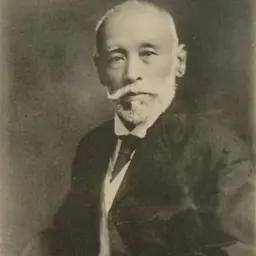

Contemporaries
People whose lives overlapped Richard Henry Brunton's
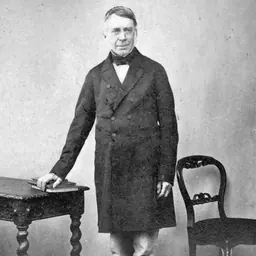
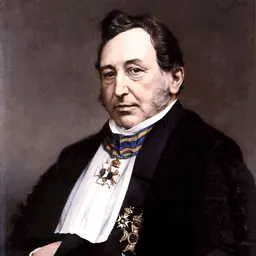

Frequently asked questions
Who was Richard Henry Brunton?
British engineer (1841-1901)
When was Richard Henry Brunton born?
Richard Henry Brunton was born on 26 December 1841 in Muchalls.
When did Richard Henry Brunton die?
Richard Henry Brunton died on 23 April 1901 in London.
What was Richard Henry Brunton's occupation?
Richard Henry Brunton was a civil engineer and railway engineer.
Sources & further reading
· Wikipedia: Richard Henry Brunton
· DBpedia: Richard Henry Brunton
Cite this page
APA: Biography.guide. (2026). Richard Henry Brunton. https://biography.guide/richard-henry-brunton/
MLA: "Richard Henry Brunton." Biography.guide, https://biography.guide/richard-henry-brunton/.
Chicago: "Richard Henry Brunton." Biography.guide. https://biography.guide/richard-henry-brunton/.
Data last updated: 2026-09-22 · Spot an error? Report a correction.
Page generated 2026-09-27 05:21 UTC