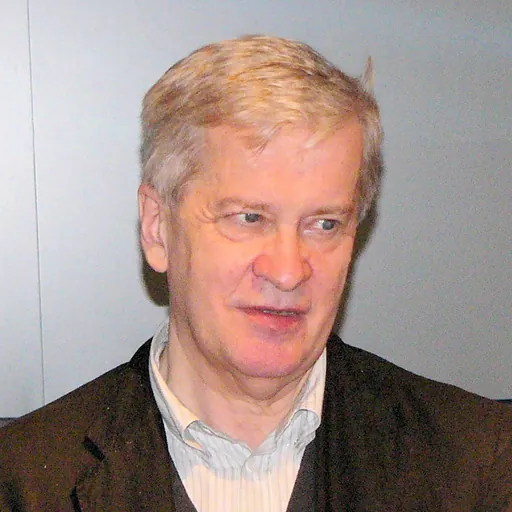
About Richard Dyer
Born 1945. Richard Dyer is a British and English journalist, film critic and film scholar.
Richard Dyer (born 1945) is an English academic who was a professor of film studies at King's College London. Specialising in Italian cinema, queer theory, and entertainment media's representations of race, he was a faculty member of the Film Studies Department at the University of Warwick for many years and has held visiting professorships in the United Kingdom, the United States, Italy, Sweden, Denmark, and Germany.
Career Born in Leeds in 1945 to a lower-middle class and raised in the suburbs of London, Dyer studied French (as well as English, German, and philosophy) at the University of St Andrews. and then during the 1980s wrote for Marxism Today. In the early 1980s he contributed to the partwork The Movie with a piece on Barbra Streisand.
Before coming to King's College London in 2006, he was a professor of film studies at the University of Warwick. He was an adjunct professor at University College Dublin in 2009 and 2010. He was also a visiting professor at the Annenberg School for Communication at the University of Pennsylvania in 1985; the University of Naples "L'Orientale" in 1987; Stockholm University in 1996, 2006, and 2010; the University of Copenhagen in 2002; New York University in 2003; the University of Bergamo in 2004; Bauhaus University, Weimar, in 2009; the University of St Andrews from 2011 to 2017; and Indiana University Bloomington in 2015. Throughout his career, he has taught courses on race and ethnicity in film, stardom, Hollywood, Italian cinema, Federico Fellini, and representation. Dyer has published widely on whiteness, film music, and queer cultures. This is understood through the lens of Christianity, race, and imperialism. Central to these three political projects is what Dyer calls "the sexual reproductive economy of race," or the way whiteness is both preserved and threatened by heterosexuality.
A central element of his argument is intra-racial boundary work among white people. Gender and class create a hierarchy wherein women are read as whiter than men and those of a higher class status as whiter than the lower classes. The third chapter, "The Light of the World", examines the relationship between beauty and whiteness and how white women are visually presented as whiter than their male counterparts through the use of light. Dyer is in conversation with scholars such as David Roediger, Tamsin Wilton, and Susan Jeffords; the work is contributing to whiteness studies, film studies, and gender/sexuality studies.
Other notable works Stars (1979) was Dyer's first full-length book. In it he develops the idea that viewers' experience of a film is heavily influenced by the perception of its stars. Dyer analyses critics' writing, magazines, advertising, and films to explore the significance of stardom, with references to Marlon Brando, Marlene Dietrich, Jane Fonda, Greta Garbo, Marilyn Monroe, Robert Redford, and John Wayne.
Heavenly Bodies: Film Stars and Society (1986) continues Dyer's contribution to star studies. Judy Garland, Paul Robeson, and Marilyn Monroe are the primary subjects. Dyer looks at the ways in which audiences simultaneously construct and consume a star's persona, in the process debunking common stereotypes about Garland, Monroe, and Robeson.
In his 2001 book The Culture of Queers, Dyer unpacks the oversimplified term "queer", arguing that it is a sexual identity not merely about specific sexual activities, defining both men who are attracted to other men and those who possess other non-sexual attributes like being effeminate or hyper-masculine. Analysing films genres like film noir and queer actors like Rock Hudson, Dyer frames the trajectory of queer identification and culture with two major historical moments: the first use of the term "homosexual" in 1869 and the Stonewall Riots. Although well-received within the academic community, some scholars have criticised the absence of lesbianism in Dyer's delineation of queer cultural history.
In his 2011 work In the Space of a Song: the Uses of Song in Film, Dyer analyses film musicals like Meet Me in St. Louis and A Star is Born to examine the role of song in film through the lens of race, gender, and sexuality.
Throughout his career he has been commissioned by the British Film Institute to write film analyses, including Seven (1999) and Brief Encounter (1993).
Public intellectual life Outside academia, Dyer was an active and influential figure in the English Gay Liberation Front and contributed to the journal Gay Left. His article "In Defence of Disco" in Gay Left (1979), was one of the first to take disco seriously as an expression of the new gay consciousness. The event was accompanied by the publication of Gays and Film, a collection of essays he edited.
In 1991, Dyer appeared in Alma Cogan: The Girl with the Giggle in Her Voice. In 1995 he contributed to the documentary film The Celluloid Closet, which explores the history of depictions of lesbians and gay men in American films.
Awards Honorary lifetime membership, Society for Cinema and Media Studies, 2007 Fellowship, British Academy, 2012 Brudner Prize, Yale University, 2014 Honorary doctorate, Bordeaux Montaigne University, 2018 Honorary doctorate, Stockholm University, 2023
Selected bibliography Books
Journal articles
Don’t just read it —
keep it.
Full-length biographies made to live with: read them, listen on the way to work, watch them tonight.
- E-book
- Audio
- Video
Instant download · yours to keep · every purchase keeps this site free
Important facts
People in Richard Dyer's life
Named in this biography and alive at the same time






Related people
Same field, nearest in time

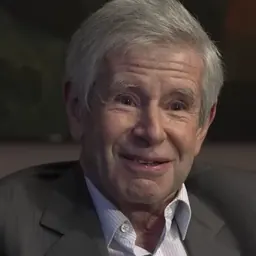

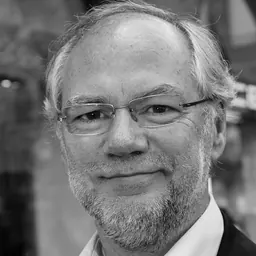
Contemporaries
People whose lives overlapped Richard Dyer's

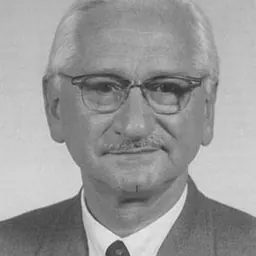
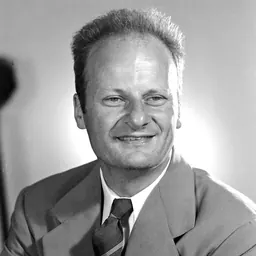
Frequently asked questions
Who is Richard Dyer?
British film scholar
When was Richard Dyer born?
Richard Dyer was born on 1 June 1945 in Leeds.
What is Richard Dyer's occupation?
Richard Dyer is a journalist, film critic and film scholar.
What nationality is Richard Dyer?
Richard Dyer is British and English.
Sources & further reading
Cite this page
APA: Biography.guide. (2026). Richard Dyer. https://biography.guide/richard-dyer-journalist/
MLA: "Richard Dyer." Biography.guide, https://biography.guide/richard-dyer-journalist/.
Chicago: "Richard Dyer." Biography.guide. https://biography.guide/richard-dyer-journalist/.
Data last updated: 2026-09-23 · Spot an error? Report a correction.
Portrait: Wikimedia Commons · author & licence
Page generated 2026-09-27 05:06 UTC