
About Richard Dixon
Born 1956. Richard Dixon is a translator and jurist.
Richard Dixon is an English translator of Italian literature. He translated the last works of Umberto Eco, including his novels The Prague Cemetery, shortlisted for the Independent Foreign Fiction Prize 2012, and Numero Zero, commended by the judges of the John Florio Prize, 2016. He has also translated works by Giacomo Leopardi, Roberto Calasso and Antonio Moresco.
Life
Richard Dixon was born in Coventry, in 1956. He was educated at King Henry VIII School and Lanchester Polytechnic, where he graduated in Business Law. He practised as a barrister in London for ten years before moving to Italy in 1989, where he now lives.
Selected translations
The Prague Cemetery by Umberto Eco, 2011: shortlisted for the Independent Foreign Fiction Prize, 2012 Inventing the Enemy by Umberto Eco, 2012 Zibaldone by Giacomo Leopardi (with other translators), 2013 The Combover by Adrián N. Bravi, 2013 Author’s revisions to The Name of the Rose by Umberto Eco, 2014 Ardor by Roberto Calasso, 2014 The Art of the Publisher by Roberto Calasso, 2015 Numero Zero by Umberto Eco, 2015: John Florio Prize, 2016: Commended translation Dante: The Story of His Life by Marco Santagata, 2016 Distant Light by Antonio Moresco, 2016: shortlisted for the American Literary Translators Association Italian Prose in Translation Award, 2017, shortlisted for the International Dublin Literary Award, 2018 The Experience of Pain by Carlo Emilio Gadda, 2017 Chronicles of a Liquid Society by Umberto Eco, 2017 The Ruin of Kasch by Roberto Calasso, 2018 The Javelin Thrower by Paolo Volponi, 2019 The Unnamable Present by Roberto Calasso, 2019 Crossing the Rubicon: Caesar’s Decision and the Fate of Rome by Luca Fezzi, 2019 The Celestial Hunter by Roberto Calasso, 2020 The Lehman Trilogy by Stefano Massini, 2020 How to Spot a Fascist by Umberto Eco (with co-translator Alastair McEwen), 2020 Valse Triste by Marcello Fois, 2021 The Book of Nonexistent Words by Stefano Massini, 2021 South 1982 by Adrián N. Bravi, 2022 Clandestinity by Antonio Moresco, 2022 Philosophy of the Home: Domestic Space and Happiness by Emanuele Coccia, 2024 The World Machine by Paolo Volponi, 2024 Hope:The Autobiography by Pope Francis, 2025 The Geek of Chic by Federico Marchetti, 2025 There Was a Time for Such a Word by Gianni Solla, 2025
He has also translated contemporary Italian poets, including Franco Buffoni and Eugenio De Signoribus
Don’t just read it —
keep it.
Full-length biographies made to live with: read them, listen on the way to work, watch them tonight.
- E-book
- Audio
- Video
Instant download · yours to keep · every purchase keeps this site free
Important facts
People in Richard Dixon's life
Named in this biography and alive at the same time
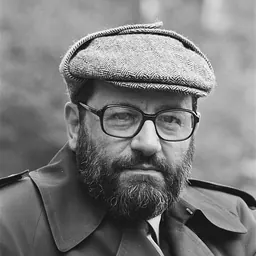
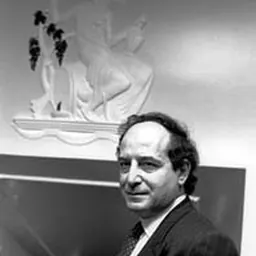




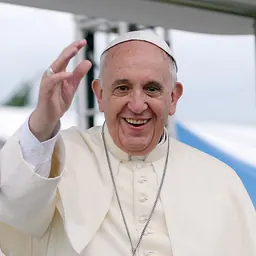
Related people
Same field, nearest in time

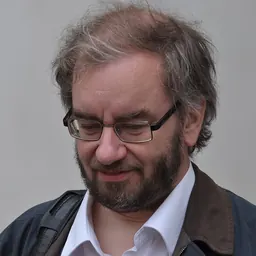

Contemporaries
People whose lives overlapped Richard Dixon's

Frequently asked questions
Who is Richard Dixon?
translator and jurist (1956-)
When was Richard Dixon born?
Richard Dixon was born in 1956.
What is Richard Dixon's occupation?
Richard Dixon is a translator and jurist.
Sources & further reading
· DBpedia: Richard Dixon (translator)
Cite this page
APA: Biography.guide. (2026). Richard Dixon. https://biography.guide/richard-dixon-translator/
MLA: "Richard Dixon." Biography.guide, https://biography.guide/richard-dixon-translator/.
Chicago: "Richard Dixon." Biography.guide. https://biography.guide/richard-dixon-translator/.
Data last updated: 2026-09-20 · Spot an error? Report a correction.
Page generated 2026-09-27 05:07 UTC