
About Richard Cushing
Lived 1895 – 1970 (aged 75). Richard Cushing was an American catholic priest and catholic bishop.
Richard James Cushing (August 24, 1895 – November 2, 1970) was an American prelate of the Catholic Church. He served as archbishop of Boston from 1944 to 1970 and was made a cardinal in 1958. Cushing's main role was as fundraiser and builder of new churches, schools, and institutions. Unlike his predecessor, he was on good terms with practically the entire Boston elite, as he softened the traditional confrontation between the Catholic Irish and the Protestant upper-class. He built useful relationships with Jews, Protestants, and institutions outside the usual Catholic community. He helped presidential candidate John F. Kennedy deflect fears of papal interference in American government if a Catholic became president.
Cushing's high energy level allowed him to meet with many people all day, often giving lengthy speeches at night. He was not efficient at business affairs, and when expenses built up he counted on his fundraising skills instead of cost-cutting. Cushing, says Nasaw, was "fun-loving, informal, and outgoing. He looked rather like a tough, handsome, Irish cop and behaved more like a ward politician than a high church cleric." His major weakness in retrospect was overexpansion, adding new institutions that could not be sustained in the long run and had to be cut back by his successors.
Early life and education Richard Cushing was born in City Point in the South Boston neighborhood of Boston, Massachusetts, on August 24, 1895. The third of five children, he was the son of Patrick and Mary (née Dahill) Cushing. His father came from Glanworth, County Cork, and his mother from Touraneena, County Waterford, both in Ireland. Patrick Cushing arrived in Boston in 1880. He worked as a blacksmith, earning $18 per week in the trolley repair pits of the Boston Elevated Railway, the public transit system.
Cushing received his early education at Perry Public Grammar School in South Boston, as there was no parochial school for boys in Gate of Heaven Parish. A compulsive truant, Cushing dropped out of high school in his freshman year. After his ordination, the archdiocese assigned Cushing as a curate at St. Patrick's Parish in the Roxbury neighborhood, where he remained for two months. He was then transferred to St. Benedict's Parish in Somerville, Massachusetts. Cushing told O'Connell that he wanted to "take heaven by storm." The Vatican elevated Cushing to the rank of monsignor on May 14, 1939. Following O'Connell's death in April 1944, Cushing was elected as apostolic administrator of the archdiocese.
Cushing was a member of the Third Order of St. Francis and the national protector of the Third Order in America. While leading the National Pilgrimage to Lourdes and Rome in 1948, he made a side trip to Assisi, Italy, the birthplace of Saint Francis, Prior to embarking on the trip, he joked that the closest he had ever been to Rome was Castle Island in South Boston. While in France, French Foreign Minister Robert Schuman awarded Cushing the Legion of Honour.
During Cushing's tenure, Boston would see the excommunication of Reverend Leonard Feeney for repeated refusals to be summoned to Rome. Feeney refused to back down from his position, although it has been reported that he was ultimately reconciled with the Church before his death. Cushing approved the moving of at least two priests into new parishes during the 1960s despite allegations of sexual misconduct.
Cardinal Cushing was created cardinal-priest of the Church of Santa Susanna in Rome by Pope John XXIII in the consistory of December 15, 1958. Cushing served as a cardinal elector in the 1963 papal conclave that elected Pope Paul VI. On November 2, 1970, All Souls Day, Cushing died of cancer while sleeping at his residence in Brighton at age 75. He was surrounded by his brother and sisters, along with his successor, Archbishop Humberto Medeiros. Cushing was buried in Hanover, Massachusetts, at the Portiuncula Chapel on the grounds of the Cardinal Cushing Centers.
Kennedys A close friend of the Kennedy family, Cushing officiated at the marriage of US Senator John F. Kennedy and Jacqueline Lee Bouvier at St. Mary's Church in Newport, Rhode Island, in 1953. During the ceremony, Cushing read a special prayer for the couple from Pius XII. Over the coming years, Cushing baptized many of the Kennedy family children. He delivered the prayer invocation at the 1961 inauguration of Kennedy as president of the United States in Washington.
Viewpoints
Interfaith relations Cushing's work contributed to making the Catholic Church acceptable to the general population at the time of Kennedy's candidacy in 1960 for the presidency. Part of this work included reaching out to the non-Catholics of Boston after "the muscular style of involved Catholicism that Cardinal O'Connell brought to bear on issues of his day - religious, social, and political - in Boston and Massachusetts".
After the first meeting between Church and Freemasonry which had been held on April 11, 1969, at the convent of the Divine Master in Ariccia, he was the protagonist of a series of public handshakes between high prelates of the Roman Catholic Church and the heads of Freemasonry.
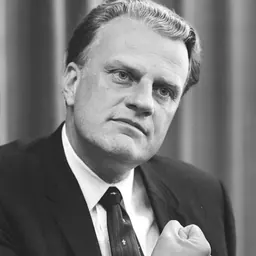
In 1964, Cushing praised the Protestant evangelist Reverend Billy Graham and encouraged Catholics to attend his crusades.
Catholic-Jewish relations From the start of Cushing's tenure as archbishop, he sought closer relations with the Jewish community. The author James Carroll has attributed Cushing's outlook to the marriage between his sister Dolly Cushing and a Jewish man, Dick Pearlstein. According to Carroll, marriages between Jews and Catholics at this time were very uncommon. Cushing made many visits to the couple's house and was on very good terms with Pearlstein.
In November 1948, Cushing became the first Catholic archbishop to address the Union of American Hebrew Congregations at their convention in Boston. He acknowledged that a "staggering" number of Americans held racial and religious prejudices. Cushing attacked communism, fascism and all ideologies that threaten the religious freedom of people.
Cushing was honored by B'nai B'rith as it "Man of the Year" in 1956 for "a lifetime of distinguished service to the cause of human brotherhood under God and in further recognition of great leadership in the fields of education and community relations." He was a close correspondent with Robert E. Segal, executive director of the Jewish Community Relations Council of Boston, who played a key role in improving Jewish-Catholic relations.
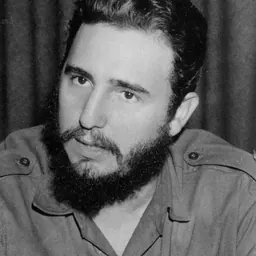
In an interview in June 1959, during the Cold War between the United States and the Soviet Union, Cushing suggested that American high schools provide courses on communism so that teenagers would learn about its "intrinsic evil." In November of that year, after the Cuban Revolution of 1955 to 1959, Cushing condemned Cuban President Fidel Castro from impounding Catholic revenues in Cuba and suggested that he was a communist. In 1962 Cushing was a member of a fundraising committee organized by the Cuban Families Committee for Liberation of Prisoners of War, which sought to raise money to pay the ransom set by Fidel Castro for the release of those taken captive as a result of the Bay of Pigs Invasion.
Nostra aetate At the Second Vatican Council in Rome between 1962 and 1965, Cushing played a vital role in drafting Nostra aetate, the 1965 document that officially exonerated the Jews of killing Christ. His emotional comments during debates over the drafts were echoed in the final version:
He was deeply committed to implementing the council's reforms and promoting renewal in the Church.
Racism In 1964, Cushing strongly denounced racism, saying that a "racist Christian" was a contradiction. He praised clergy who were participating in the American Civil Rights Movement.
War In May 1961, Cushing delivered his Good Friday sermon at the Pentagon in Arlington, Virginia. It was titled "Power - Divine and Human." Speaking during the height of the Cold War, he spoke about how God has great power, but often shows restraint in its use. Nations should do likewise, particularly in the exercise of their military might.
Miscellaneous
Cushing was a member of the NAACP. Cushing founded the Missionary Society of St. James the Apostle in 1958 to "serve the needs of the poorest of the poor in South America". Cushing wrote the foreword for the Revised Standard Version Catholic Edition of the Bible, and gave his imprimatur to the Oxford Annotated Bible.
Legacy
Named institutions The following institutions were named after Cushing: Archbishop Cushing Hall at Boston College in Newton, Massachusetts, housed the Connell School of Nursing. Cushing dedicated it in 1961; it was demolished in 2019. Cardinal Cushing Centers in Hanover and Braintree, Massachusetts. In 1947, Cushing founded St. Coletta by the Sea, with sponsorship from the Sisters of St. Francis of Assisi to support developmentally disabled individuals. The organization was renamed after him in 1974. Cardinal Cushing College in Brookline, Massachusetts. Founded in 1952, Cushing helped obtain the land for the college. It closed in 1972. Cardinal Cushing Library Building at Emmanuel College in Boston Cushing Center at Saint Anselm College in Goffstown, New Hampshire was a student union for the college. It was demolished in 2018. Cushing House at Boston College in Newton is a residence hall. Richard Cardinal Cushing Building at Merrimack Health Methuen Hospital. In 1950, Cushing founded the Bon Secours Hospital. The Cushing Building was named in his honor in 1970. Richard Cardinal Cushing Classroom at St. John's Seminary, a theology classroom
Other legacies In 1958, Cushing made a large financial donation to Reverend Oreste Benzi, enabling him to begin construction of Casa Madonna delle Vette, a monastery in Trentino, Italy. As of 2025, it is a hotel operated by the Pope John XXIII Association. In 1961 in Santa Cruz (Bolivia), Cushing he left funds for the construction of two schools: The Marista and another that at the beginning was the Cardinal Cushing Institute and then in 1969 the Colegio Cardinal Cushing administered by the religious of Jesus Mary. Cushing held a Eucharistic congress on August 9, 1961, and inaugurated the Christ the Redeemer statue.
Works In 1959, Cushing published his only book, a biography of Pius XII. It is an almost hagiographic biography, written shortly after the death of the pontiff. Cushing depicted Pius as the "Pope of Peace" who, armed only with the spiritual weapons of his office, triumphed over insidious attacks that seemed about to destroy the center of Christendom.
His other writings included: Answering the Call, 1942 Soldiers of the Cross, 1942 Native Clergy are the Pillars of the Church, 1943 The Missions in War and Peace, 1944 Grey Nuns: An Appeal for Vocations, 1944 The Battle Against Self, 1945 The Guide-Posts of the Almighty to Permanent Industrial Peace and Prosperity, 1946 Restoring all Things in Christ: The Spirit and the Teaching of Pope Pius X, 1946 Where is Father Hennessey?: Now We Know the Answer, 1946 The Spiritual Approach to the Atomic Age, 1946 Notes for the confessors of religious: a collection of excerpts from articles and books on the spiritual direction of sisters prepared for the guidance of ordinary and extraordinary confessors in the Archdiocese of Boston (ad usum privatum), 1946 The Confraternity of Christian Doctrine, 1947? A Novena of Talks on the Our Father, 1947? The Third Choice, Americanism: from an address against universal military training, 1948 The Diamond Jubilee of the Poor Clares in the United States, 1950? The Return of the "Other Sheep" to the One Fold of St. Peter, 1957 A Call to the Laity: Addresses on the Lay Apostolate, 1957 Meditations for Religious, 1959 Rendezvous with Revolution 196- Questions and Answers on Communism, 1960 A Seminary for Advanced Vocations, 1960? The Purpose of Living, 1960 The Ecumenical Council and its Hopes, 1960 The Age of Lay Sanctity, 1960? Assorted Prayers 196? Spiritual Guideposts, 1960 Americans Unite!, 1960 I'm Proud of My Dirty Hands, 1960? Moral Values and the American Society: Pastoral Letter, The Holy Season of Lent, 1961 1961 The Sacraments: Seven Channels of Grace for every State in Life, 1962 The Mission of the Teacher, 1962 The Call of the council: Pastoral Letter, 1962 St. Martin de Porres, 1962 A Bridge Between East and West, 1963 Call Me John; A Life of Pope John XXIII, 1963 Saint Patrick and the Irish, 1963 Liturgy and Life : First Sunday of Advent, November 1964: Pastoral Letter, 1964 A Summons to Racial Justice, 1964 Richard Cardinal Cushing in Prose and Photos, 1965 Along with Christ, 1965 "A Quiet Burial" for a Biography, 1965 The Servant Church, 1966
Articles
The Church and Philosophy, Proceedings of the American Catholic Philosophical Association, v23 (1949); 9–15
Don’t just read it —
keep it.
Full-length biographies made to live with: read them, listen on the way to work, watch them tonight.
- E-book
- Audio
- Video
Instant download · yours to keep · every purchase keeps this site free
Important facts
People in Richard Cushing's life
Named in this biography and alive at the same time




Related people
Same field, nearest in time
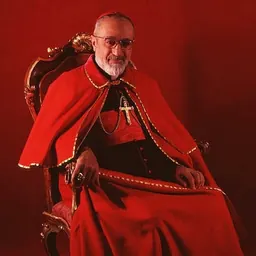
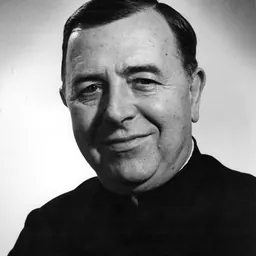
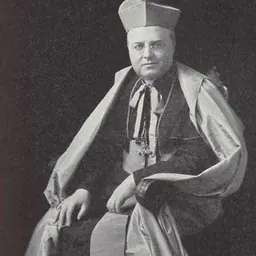

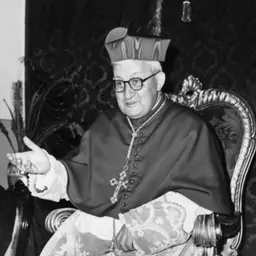

Contemporaries
People whose lives overlapped Richard Cushing's

Frequently asked questions
Who was Richard Cushing?
American Catholic cardinal (1895–1970)
When was Richard Cushing born?
Richard Cushing was born on 24 August 1895 in Boston.
When did Richard Cushing die?
Richard Cushing died on 2 November 1970 in Boston.
What was Richard Cushing's occupation?
Richard Cushing was a catholic priest and catholic bishop.
What nationality was Richard Cushing?
Richard Cushing was American.
Sources & further reading
Cite this page
APA: Biography.guide. (2026). Richard Cushing. https://biography.guide/richard-cushing/
MLA: "Richard Cushing." Biography.guide, https://biography.guide/richard-cushing/.
Chicago: "Richard Cushing." Biography.guide. https://biography.guide/richard-cushing/.
Data last updated: 2026-09-26 · Spot an error? Report a correction.
Page generated 2026-09-27 05:14 UTC