
About Richard Clyde Taylor
Lived 1919 – 2003 (aged 83). Richard Clyde Taylor was an American philosopher, beekeeper and writer.
Richard Clyde Taylor (November 5, 1919 – October 30, 2003) was an American philosopher renowned for his contributions to metaphysics and virtue ethics. He was also an internationally known beekeeper.
Biography Richard C. Taylor was born in Charlotte, Michigan on November 5, 1919 and earned his B.A. at the University of Illinois in 1941. In an interview with the philosopher Timothy Madigan, he laments that he never undertook philosophical studies as an undergraduate and that his mother's pastor suggested he might become a fine preacher. Consequently, he undertook studies in religion at the University of Chicago, where he was exposed to philosophers such as Plato for the first time and developed a disdain for the Christian religion. After Japan's attack on Pearl harbor, he enlisted in the Navy and pursued studies at the Postgraduate School of the Naval Academy at Annapolis. During World War II he served his country as a commissioned submarine officer in a squadron located in the Pacific near the Philippines and filled the time during lonely watches by continuing to read philosophical texts including George Santayana’s Realms of Being. He subsequently earned his M.A. from Oberlin College in 1947. In 1951, he received his PhD at Brown University, where his supervisor was Roderick Chisholm.
Over the course of his academic career, Taylor served as the William H. P. Faunce Professor of Philosophy at Brown University (1953-1963), a Professor of Philosophy (Graduate Faculty) at Columbia University (1963-1966) and a Professor of Philosophy at the University of Rochester (1965-1985). He served as Chairman of the Department of Philosophy at the University of Rochester from 1966 until 1969. In addition, he assumed visiting appointments at about a dozen other institutions including: Cornell University, Hamilton College, Hartwick, Ohio State, Princeton University, Union and Wells College.
Early in his career, Taylor also published works utilizing the nom de plume Diodorus Cronus in honor of the obscure ancient Greek philosopher of the same name.
Academic work It has been observed that Taylor can be described as an Analytic philosopher due to his research into such topics as: time, causality, as well as action and purpose. However, his views on the limitations of "serious philosophy" and "philosophie perennis" distinguished him from many traditional analytic philosophers of his time. He was also influenced by the works of Johann Gottlieb Fichte, Curt John Ducasse, Arthur Schopenhauer and Roderick Chisholm. His research interests included the study of metaphysics as well as the philosophy of religion. and that "there simply is no such thing as philosophical knowledge, nor any philosophical way of knowing anything."
Defying conventional academic expectations, Taylor readily embraced the works of such ancient philosophers such as Thales, Epicurus, Plato and Aristotle while also admiring the more pessimistic contributions of Arthur Schopenhauer. He remained disdainful of the works of Immanuel Kant, however, and was equally dismissive of the "foolishness" which sometimes characterized organized religious practice in general. Nevertheless, he was careful not to characterize himself as a secular humanist.
In the realm of social philososphy, Taylor's views on the presence of mankind's "natural right" to life and property were equally emphatic. He cautioned against a dogmatic devotion or blind assertion for the presence of such rights by asserting that their ultimate foundation is purely utilitarian in nature.
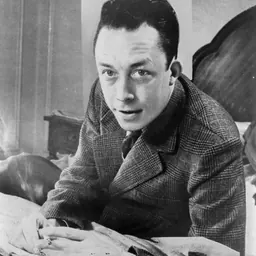
Taylor's best-known book was Metaphysics (1963). Other works included Action and Purpose (1966), Good and Evil (1970) and Virtue Ethics (1991). Taylor was also the editor of The Will to Live: Selected Writings of Arthur Schopenhauer. He was an enthusiastic advocate of virtue ethics. He also wrote influential papers on the meaning of life, which, like Albert Camus, he explored through an examination of the myth of Sisyphus.
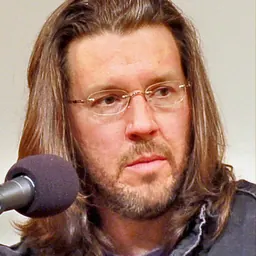
Taylor's 1962 essay "Fatalism" was the subject of David Foster Wallace's undergraduate thesis at Amherst College, published in 2011 together with Taylor's essay and contemporary responses under the title Fate, Time, and Language: An Essay on Free Will.
Notable philosophers who studied under Taylor as graduate students include Norman Bowie, Myles Brand, Keith Lehrer, and Peter van Inwagen.
Apiarist In addition to his achievements within the academic realm, Taylor was a devoted apiarist and also made significant contributions to the art of beekeeping. He owned three hundred hives of bees and, from 1970, produced mostly comb honey. He explained his management techniques in several books, including The Comb Honey Book and The Joys of Beekeeping. In keeping with his philosophical convictions, his honey stand was located in front of his country home on Cayuga Lake and was operated strictly on the honor system, which Taylor encouraged through the use of gentle and kind solicitations posted on its walls.
The Will to Live: Selected Writings of Arthur Schopenhauer. Ed. Richard Tayler.(1962) Metaphysics by Richard Taylor (1963) On the Basis of Morality by Arthur Schopenhauer, Richard Taylor, E. F. J. Payne (1965) "Time, Truth and Ability". Analysis, Steven Cahn coauthor (1965) 137-141 Freedom and Determinism. Ed. Richard Taylor (1966) Action and Purpose by Richard Taylor (1966) "Dare to be Wise". The Review of Metaphysics (1968) 615-629 Good and Evil: A New Direction by Richard Taylor (1970) Freedom, Anarchy, and the Law: An Introduction to Political Philosophy by Richard Taylor (1973) With Heart and Mind by Richard Taylor (1973) On the Fourfold Root of the Principle of Sufficient Reason. Arthur Schopenhauer. Introduction by Richard Taylor (1974) The New Comb Honey Book by Richard Taylor (1981) Ethics, Faith and Reason by Richard Taylor (1985) Reflective Wisdom. by Richard Taylor (1989) Virtue Ethics An Introduction by Richard Taylor (1991) Restoring Pride: The Lost Virtue of Our Age (1996) by Richard Taylor
Don’t just read it —
keep it.
Full-length biographies made to live with: read them, listen on the way to work, watch them tonight.
- E-book
- Audio
- Video
Instant download · yours to keep · every purchase keeps this site free
Important facts
People in Richard Clyde Taylor's life
Named in this biography and alive at the same time



Related people
Same field, nearest in time

Contemporaries
People whose lives overlapped Richard Clyde Taylor's



Frequently asked questions
Who was Richard Clyde Taylor?
American philosopher, born 1919 (1919–2003)
When was Richard Clyde Taylor born?
Richard Clyde Taylor was born on 5 November 1919 in Charlotte.
When did Richard Clyde Taylor die?
Richard Clyde Taylor died on 30 October 2003.
What was Richard Clyde Taylor's occupation?
Richard Clyde Taylor was a philosopher, beekeeper and writer.
What nationality was Richard Clyde Taylor?
Richard Clyde Taylor was American.
Sources & further reading
· Wikipedia: Richard Clyde Taylor
· DBpedia: Richard Clyde Taylor
Cite this page
APA: Biography.guide. (2026). Richard Clyde Taylor. https://biography.guide/richard-clyde-taylor/
MLA: "Richard Clyde Taylor." Biography.guide, https://biography.guide/richard-clyde-taylor/.
Chicago: "Richard Clyde Taylor." Biography.guide. https://biography.guide/richard-clyde-taylor/.
Data last updated: 2026-09-20 · Spot an error? Report a correction.
Page generated 2026-09-27 05:23 UTC