
About Richard Cartwright
Lived 1759 – 1815 (aged 56). Richard Cartwright was a Canadian judge.
Richard Cartwright (February 2, 1759 – July 27, 1815) was a merchant, land speculator, judge, and legislative councillor in Upper Canada. An avowed Loyalist during the American Revolution, he was forced to leave his Albany, New York home in 1777. Cartwright's account of events during his time as John Butler's secretary provides a civilian's perspective of key events in the history of the Revolutionary War including the Battle of Wyoming and the Sullivan Campaign. He became a merchant at Fort Niagara in 1780, and relocated to what is now Kingston, Ontario after the war. Cartwright was appointed a judge in the Court of Common Pleas in 1788, and a member of the Legislative Council of Upper Canada in 1792.
Early life Richard Cartwright was born in Albany on February 2, 1759. His father, also named Richard, emigrated to the Province of New York from London England in 1742. His mother, Joanne Beasley, was from a "loyal Dutch family," and his father, an innkeeper and small landowner, was deputy postmaster of Albany and an active member of the Church of England. As a boy, Cartwright suffered an injury that left him blind in one eye. Despite this Cartwright received a classical education at private primary and advanced schools in preparation for a career in the church.
American Revolution During the early years of the American Revolution, Cartwright's father attempted to stay neutral in rebel-controlled Albany. In February 1777, a letter Cartwright wrote to his sister Elizabeth at British-controlled Fort Niagara was intercepted by Albany's committee of correspondence. Cartwright was required to provide assurances of his future good behaviour. A few months later, his father arranged for Cartwright and Elizabeth's daughter Hannah to leave for British territory.
Cartwright's parents were tainted by their son's loyalty to the British Crown, and were suspected of having helped Walter Butler escape captivity in April 1778. They were abused and their property was "destroyed and plundered," before they were escorted under guard to Crown Point on Lake Champlain and turned over to the British. They spent the rest of the war as refugees in Montreal but afterwards joined their son at Cataraqui, later known as Kingston.
While in Montreal, Cartwright was hired as secretary to John Butler, major-commandant of the newly formed Butler's Rangers.
In the spring of 1778, Cartwright accompanied Butler to Tioga at the confluence of the Chemung and Susquehanna rivers in preparation for a large-scale raid on the Wyoming Valley. He appears to have remained behind at Tioga when the Rangers and their Indigenous allies defeated a body of Patriot militia at the Battle of Wyoming. Cartwright spent most of the summer of 1779 with Butler at the Seneca village of Kanadaseaga, and was with Butler when the Rangers, Brant's Volunteers, and several hundred Seneca and Cayuga warriors were defeated at the Battle of Newtown by the forces of Major General John Sullivan.
Niagara and Kingston
In May 1780, Richard resigned his position as Butler's secretary and formed a business partnership with Robert Hamilton. At Niagara, Cartwright and Hamilton provided materials for Butler's Rangers, the British Indian Department, and the Fort Niagara garrison, and developed a reputation for reliability and honesty. In 1788, Cartwright was appointed a judge in the Court of Common Pleas and was named to the land board for the Mecklenburg District the following year. Lieutenant Governor John Graves Simcoe appointed Cartwright a member of the Legislative Council for the newly created province of Upper Canada in 1792. Cartwright invited John Strachan to Upper Canada to teach his sons and establish a grammar school. He was an early proponent of free trade with the United States, but opposed encouraging Americans to emigrate to the province. Unlike Simcoe, Cartwright believed that English institutions should be adapted to Upper Canada's needs.
Family
In 1785, Cartwright married Magdalen Secord, daughter of James Secord, and future sister-in-law of Laura Secord (née Ingersoll). Richard and Magdalen had eight children. Two sons, James and Richard died in 1811, followed by their sister Hannah and brother Stephen. Richard's son, John Solomon Cartwright, became a lawyer, judge, entrepreneur and political figure in the Province of Canada. Another son, Robert Cartwright, married Harriet Dobbs, a Christian philanthropist. Richard's grandson, Sir Richard John Cartwright, became a Kingston lawyer and Canadian political figure.
Don’t just read it —
keep it.
Full-length biographies made to live with: read them, listen on the way to work, watch them tonight.
- E-book
- Audio
- Video
Instant download · yours to keep · every purchase keeps this site free
Important facts
People in Richard Cartwright's life
Named in this biography and alive at the same time
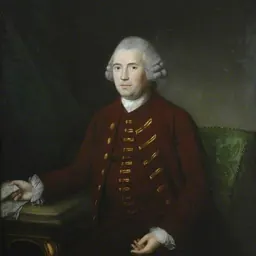



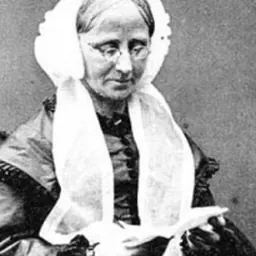
Related people
Same field, nearest in time
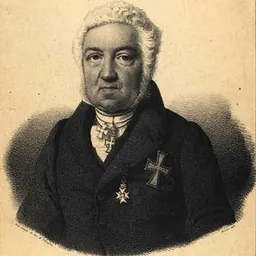
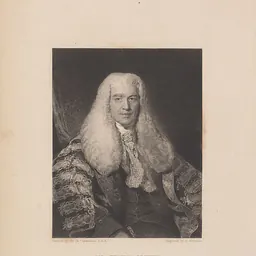
Contemporaries
People whose lives overlapped Richard Cartwright's





Frequently asked questions
Who was Richard Cartwright?
Canadian businessman, judge, politician
When was Richard Cartwright born?
Richard Cartwright was born on 2 February 1759 in Albany.
When did Richard Cartwright die?
Richard Cartwright died on 27 July 1815 in Kingston, Montreal.
What was Richard Cartwright's occupation?
Richard Cartwright was a judge.
What nationality was Richard Cartwright?
Richard Cartwright was Canadian.
Sources & further reading
· Wikipedia: Richard Cartwright
· DBpedia: Richard Cartwright (Loyalist)
Cite this page
APA: Biography.guide. (2026). Richard Cartwright. https://biography.guide/richard-cartwright/
MLA: "Richard Cartwright." Biography.guide, https://biography.guide/richard-cartwright/.
Chicago: "Richard Cartwright." Biography.guide. https://biography.guide/richard-cartwright/.
Data last updated: 2026-09-20 · Spot an error? Report a correction.
Page generated 2026-09-27 05:31 UTC