
About Richard Boone
Lived 1917 – 1981 (aged 63). Richard Boone was an American stage actor, film actor, television actor and film director.
Richard Allen Boone (June 18, 1917 – January 10, 1981) was an American actor who starred in over 50 films and was notable for his roles in Westerns, including a starring role in the television series Have Gun – Will Travel.
RIchard Boone (B&W & Colorized) in HAVE GUN, WILL TRAVEL "The Return of Dr. Thackeray" (Season 1, Episode 35), May 17, 1958. Created by Sam Rolfe and Herb Meadow and produced and broadcast by the CBS (Columbia Broadcasting System) network
Background Boone was born in Los Angeles the middle child of Cecile (née Beckerman) and Kirk E. Boone, a corporate lawyer and great-great-great-great-grandson of Squire Boone, frontiersman Daniel Boone's brother. His mother was Jewish, the daughter of immigrants from Russia.
Richard Boone graduated from Hoover High School in Glendale, California. He attended Stanford University in Palo Alto, California, where he was a member of Theta Xi fraternity. He dropped out of Stanford prior to graduation and then worked as an oil rigger, bartender, painter, and writer. In 1941, Boone joined the United States Navy and served on three ships in the Pacific during World War II, seeing combat as an aviation ordnanceman, aircrewman, and tail gunner on Grumman TBF Avenger torpedo bombers, and ended his service with the rank of petty officer first class.
Acting career Instruction In his youth, Boone had attended the San Diego Army and Navy Academy in Carlsbad, California, where he was introduced to theater under the tutelage of Virginia Atkinson. After the war, Boone used the G.I. Bill to study acting at the Actors Studio in Manhattan, New York. Broadway "Serious" and "methodical", Boone debuted on the Broadway theatrical scene in 1947 with Medea, starring Judith Anderson and John Gielgud; it ran for 214 performances. Next, he was in a production of Macbeth (1948). Boone appeared in a short-lived TV series based on the play The Front Page (1949–50), and in Actors Studio and Suspense, two anthology series. He returned to Broadway in The Man (1950), directed by Martin Ritt, with Dorothy Gish; it ran for 92 performances.
Elia Kazan used Boone to feed lines to an actress for a film screen-test done for director Lewis Milestone. Milestone was not impressed with the actress, but he was impressed enough with Boone's voice to summon him to Hollywood, where he was given a seven-year contract with Fox.
20th Century Fox In 1950, Boone made his screen debut as a Marine officer in Milestone's Halls of Montezuma (1951). Fox used him in military parts in Call Me Mister (1951) and The Desert Fox: The Story of Rommel (1951). He had bigger roles in Red Skies of Montana (1952), Return of the Texan (1952), Kangaroo (1952; directed by Milestone), and Way of a Gaucho (1952). His role in Kangaroo was greatly expanded from what it was in the original script.
Elia Kazan directed him in Man on a Tightrope (1953). He had solid parts in Vicki (1953) and City of Bad Men (1953). In 1953, he played Pontius Pilate in The Robe, the first Cinemascope film. He had only one scene in the film, in which he gives instructions to Richard Burton, who plays the centurion ordered to crucify Christ. Boone also appeared in the second Cinemascope film, Beneath the 12-Mile Reef (1953). Boone made two films for Panoramic, which distributed through Fox: The Siege at Red River (1954) and The Raid (1954). He then left the studio, breaking his contract.
Medic During the filming of Halls of Montezuma, he befriended Jack Webb, who was then producing and starring in Dragnet. Boone appeared in the film version of Dragnet (1954). Webb was preparing a series about a doctor for NBC. From 1954–56, Boone became a familiar face in the lead role of that medical drama, titled Medic,
Boone had one of his best roles in The Tall T (1957) with Randolph Scott. He co-starred with Eleanor Parker in Lizzie (1957) and was a villain in The Garment Jungle (1957).
Have Gun – Will Travel
Boone's next television series, Have Gun – Will Travel, made him a national star because of his role as Paladin, the intelligent and sophisticated, but tough gun-for-hire in the late 19th-century American West. The show had first been offered to actor Randolph Scott, who turned it down and gave the script to Boone while they were making Ten Wanted Men. The show ran from 1957 to 1963, with Boone receiving more Emmy nominations in 1959 and 1960.
During the show's run, Boone starred in the film I Bury the Living (1958) and appeared on Broadway in 1959, starring as Abraham Lincoln in The Rivalry, which ran for 81 performances.
He occasionally did other acting appearances such as episodes of Playhouse 90 and The United States Steel Hour and TV movie The Right Man (1960). He had a cameo as Sam Houston in The Alamo (1960), a starring role in A Thunder of Drums (1961) and narrated a TV version of John Brown's Body. Boone was an occasional guest panelist and also a mystery guest on What's My Line?, the Sunday-night CBS-TV quiz show. On that show, he talked with host John Charles Daly about their days working together on the TV show The Front Page.
The Richard Boone Show Boone had his own television anthology, The Richard Boone Show. Although it aired only from 1963 to 1964, he received his fourth Emmy nomination for it in 1964 along with The Danny Kaye Show and The Dick Van Dyke Show. The Richard Boone Show won a Golden Globe for Best Show in 1964.
Hawaii
After the end of the run of his weekly show, Boone and his family moved to Honolulu, Hawaii. He returned to the mainland to appear in films including Rio Conchos (1964), The War Lord (1965) with Charlton Heston, Hombre (1967) with Paul Newman, and an episode of Cimarron Strip. The latter was the first time he guest-starred on someone else's show and he did it as a favor for the director, friend Lamont Johnson. "It's harder and harder to do your best work on TV," he said.
In 1965, he came in third in the Laurel Award for Rio Conchos in Best Action Performance; Sean Connery won first place with Goldfinger and Burt Lancaster won second place with The Train.
While he was living on Oahu, Boone helped persuade Leonard Freeman to film Hawaii Five-O exclusively in Hawaii. Prior to that, Freeman had planned to do "establishing" location shots in Hawaii, but principal production in Southern California. Boone and others convinced Freeman that the islands could offer all necessary support for a major TV series and would provide an authenticity otherwise unobtainable. Freeman, impressed by Boone's love of Hawaii, offered him the role of Steve McGarrett; Boone turned it down, however, and the role went to Jack Lord, who shared Boone's enthusiasm for the state, which Freeman considered vital. Lord had appeared alongside Boone in the first episode of Have Gun – Will Travel, titled "Three Bells to Perdido".
At the time, Boone had shot a pilot for CBS called Kona Coast (1968), which he hoped CBS would adopt as a series ("I really don't want to do another series," he said "but I've been battling for three years to get production going in Hawaii and if a series will do it, I'll do it." Kona Coast – which Boone co produced – was released theatrically.
Boone did some TV movies, In Broad Daylight (1971), Deadly Harvest (1972), and Goodnight, My Love (1972). Around this time he moved to Florida.
Hec Ramsey In the early 1970s, Boone starred in the short-lived TV series Hec Ramsey, which Jack Webb produced for Mark VII Limited Productions. It was about a turn-of-the-20th-century Western-style police detective who preferred to use his brain and criminal forensic skills instead of his gun. The character Ramsey's back story had him as a frontier lawman and gunman in his younger days. Older now, he was the deputy chief of police of a small city in Oklahoma, still a skilled shooter, and carrying a short-barreled Colt Single Action Army revolver. Boone said to an interviewer in 1972, "You know, Hec Ramsey is a lot like Paladin, only fatter."
Israel Boone starred in the film Madron (1970), the first Israeli-produced film shot outside Israel, set in the American West of the 1800s. In 1979, he received an award from Israeli Prime Minister Yitzhak Rabin "for his contribution to Israeli cinema". Boone's last roles were in Winter Kills (1979) and The Bushido Blade (1979).
Personal life Boone was married three times: to Jane Hopper (1937–1940), Mimi Kelly (1949–1950), and Claire McAloon (from 1951 until his death). His son with McAloon, Peter Boone, worked as a child actor in several Have Gun – Will Travel episodes. In 1963, Boone was injured in a car accident.
Boone moved to St. Augustine, Florida from Hawaii in 1970 and worked with the annual local production of Cross and Sword, when he was not acting on television or in movies, until shortly before his death in 1981. In the last year of his life, Boone was appointed Florida's cultural ambassador.
During the 1970s, he wrote a newspaper column, called "It Seems to Me", for a small, free publication called The Town and Traveler. Some paper copies are in his biographical file at the St. Augustine Historical Society. He gave acting lectures at Flagler College in the city in 1972–1973.
Death Boone died at his home in St. Augustine due to complications from throat cancer on January 10, 1981 at the age of 63. His ashes were scattered in the Pacific Ocean off Hawaii.
Filmography Film
TV
Don’t just read it —
keep it.
Full-length biographies made to live with: read them, listen on the way to work, watch them tonight.
- E-book
- Audio
- Video
Instant download · yours to keep · every purchase keeps this site free
Important facts
People in Richard Boone's life
Named in this biography and alive at the same time


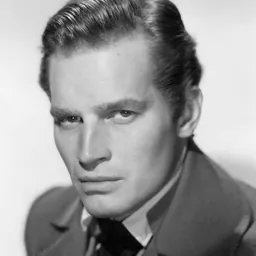
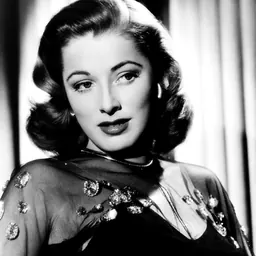
Related people
Same field, nearest in time



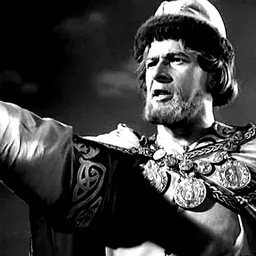
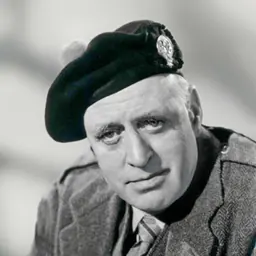

Contemporaries
People whose lives overlapped Richard Boone's

Frequently asked questions
Who was Richard Boone?
American actor (1917–1981)
When was Richard Boone born?
Richard Boone was born on 18 June 1917 in Los Angeles.
When did Richard Boone die?
Richard Boone died on 10 January 1981 in St. Augustine.
What was Richard Boone's occupation?
Richard Boone was a stage actor, film actor, television actor and film director.
What nationality was Richard Boone?
Richard Boone was American.
Sources & further reading
Cite this page
APA: Biography.guide. (2026). Richard Boone. https://biography.guide/richard-boone/
MLA: "Richard Boone." Biography.guide, https://biography.guide/richard-boone/.
Chicago: "Richard Boone." Biography.guide. https://biography.guide/richard-boone/.
Data last updated: 2026-09-22 · Spot an error? Report a correction.
Page generated 2026-09-27 05:27 UTC