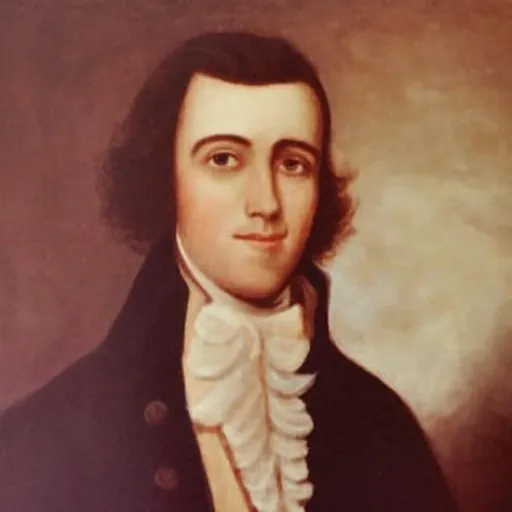
About Richard Bland Lee
Lived 1761 – 1827 (aged 66). Richard Bland Lee was an American politician, judge and planter (American South).
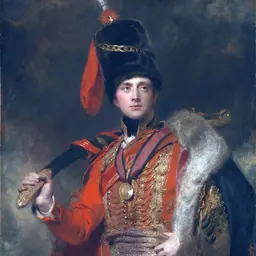
Richard Bland Lee I (January 20, 1761 – March 12, 1827) was an American planter, jurist, and politician from Fairfax County, Virginia. He was the son of Henry Lee II (1730–1787) of "Leesylvania" and Lucy Grymes (1734–1792) and the younger brother of both Maj. Gen. Henry ("Light Horse Harry") Lee (1756–1818) and of Charles Lee (1758–1815), Attorney General of the United States from 1795 to 1801, who served in both the Washington and Adams administrations.
Early life and education Richard Bland Lee, the third son of Henry Lee II, of the Lee Family of Virginia, and Lucy Grymes, was born on January 20, 1761, at Leesylvania, the estate built by his father on land overlooking the Potomac River in Prince William County in the Colony of Virginia. He was named after two distinguished relatives, his great-grandfather Richard Bland of "Jordan's Point", and his great-uncle, jurist and statesman Richard Bland, whom Thomas Jefferson called "the wisest man south of the James".
Possibly educated by tutors as a youth at "Chantilly", the home of his venerated cousin Richard Henry Lee in Westmoreland County, Virginia, Richard enrolled at the College of William and Mary in 1779. Though not directly involved in the Revolutionary war as his brother Henry Lee III was, Richard nevertheless took an active interest in the American cause. In June 1779 for example, Richard's uncle "Squire" Richard Lee of Lee Hall introduced a resolution in the House of Delegates that would authorize the building of a new statehouse. Though only eighteen years of age, Richard Bland Lee, in a letter written later that month, rebuked his famous uncle, characterizing the effort as "abominable ... [at a] ... time of public danger when our expenses are already unsupportable." In December of that year, a British invasion fleet transporting newly minted British General Benedict Arnold and his troops appeared off Jamestown, prepared it seemed, to launch an advance upon Richmond. During his second term in the state legislature, he was involved in debates surrounding the ratification of the United States Constitution. which he wholeheartedly supported. After ratification, he opposed efforts by Patrick Henry and others to call a second constitutional convention to add a bill of rights and believed the new system should be given a chance to operate before wholesale alterations were made. He also believed that the new congress could be trusted to add the necessary amendments.
It was also during his term that the election of Virginia's first two United States Senators took place. Lee was a strong supporter of James Madison's candidacy. Ultimately, however, Madison was rejected by the Henry-led House of Delegates on the assumption that he would not push for addition of a bill of rights, a contention that Lee worked hard to counteract. After that rejection. Lee continued to work on Madison's behalf in his congressional race by proposing publication of letters between Madison and others "as would counteract the report industriously circulated in the assembly and consequently in the state that you were opposed to every amendment to the new government, and in every mode...." Unwilling to risk publication of letters critical of others, Madison rejected the idea but would nevertheless defeat future President James Monroe in a hard-fought contest.
In both of the debates Lee recognized the power of Henry's oratory and lamented the weakness of opposition to him. A letter from Lee to Madison complained:
Our Assembly is weak. Mr. [Patrick] Henry is the only orator we have against us and the friends to the new government being all young and inexperienced, form a feeble bond against him.
While Henry was ultimately able to get the Virginia legislature to pass the measure urging Congress to call a new constitutional convention, Congress refused to do so but instead passed the first ten amendments to the constitution that make up the Bill of Rights.
US House of Representatives New York City Federal Hall, Seat of Congress. 1790 copper engraving by A. Doolittle, depicting Washington's April 30, 1789 inauguration.
In 1788, having served three years in the Virginia House of Delegates, Lee decided to stand for election to the new federal congress established under the recently ratified constitution. Though political parties had yet to form, ideological schisms were already developing by time of the first federal election. In general, those who were the strongest supporters of the constitution in the form adopted by the Constitutional Convention, including its provision for a strong executive with power tilted toward the federal government were identified as Federalists, and those who were less supportive of a strong federal government, and believed that a bill of rights should have been included with the document prior to ratification were called Anti-Federalists. Lee was identified with the former camp. He had strongly supported ratification of the constitution, opposed efforts to force a second constitutional convention for the purpose of adding a bill of rights, and was a strong supporter of George Washington. His district which included his estate, Sully, then part of Loudoun County (now Fairfax County), and included Fairfax County, was the home of both Washington as well as the Anti-Federalist leader George Mason.
Lee eventually became the consensus candidate of the Federalists by overcoming competition from likeminded men including his relative Ludwell Lee, William Fitzhugh, Martin Pickett, as well as two friends; Leven Powell and Dr. David Stuart. and William Allason wrote to John Woodcock and described the contest: "I understand one makes very free with the other's Reputation &c by wch. I would not be surprised to hear of their having Exchanged a few dry blows." Lee eventually outpolled Pope by defeating him nearly four-to-one in Fairfax County alone, which included the vote of Washington.
Other government service The United States Capitol after the burning of Washington, DC, in the War of 1812. Watercolor and ink depiction from 1814, restored.
Following his removal from "Sully" to Washington, DC in 1815, Richard, along with John Peter Van Ness and Tench Ringgold, was appointed by longtime friend President James Madison as one of three Commissioners to superintend the reconstruction of the Federal buildings damaged by British troops in the attack on Washington, DC, on August 24, 1814, during the War of 1812. After the expiration of that commission in 1816, President Madison intended to nominate Lee to the new position of "Commissioner of Public Buildings." With his power severely curtailed, Lee, despondent over his treatment, left his position and for a short time seriously considered moving his family to Kentucky. Realizing that his prospects would be limited there and that his wife opposed the move, he decided to stay in Washington, DC. In 1819 he was appointed by President Monroe as a judge of the Orphans' Court of the District of Columbia, a position that he held until his death on March 12, 1827.
Societies During the 1820s, Lee was a member of the prestigious society, Columbian Institute for the Promotion of Arts and Sciences, who counted among their members former presidents Andrew Jackson and John Quincy Adams and many prominent men of the day, including well-known representatives of the military, government service, medical, and other professions.
Planter
Upon his death in 1787, Henry Lee II bequeathed of his Cub Run estates to be equally divided between his sons Richard Bland and Theodorick. Being the older of the two, Richard was given the more alluvial northern half, on which he already resided, having lived there as manager of the estate since approximately 1781. After his election to Congress, and for most of the next five years, Richard turned day-to-day management of his estate over to his brother Theodorick, who supervised spring planting, fall harvest, collection of rent from tenant farmers, and the construction of the large house Richard had planned for the estate on which construction had begun in 1794. Before he left for Congress in 1789, Richard had chosen a name for his estate, Sully. The exact origin of the name is unknown, though Robert S. Gamble in Sully: Biography of a House speculates that Sully was named after "Chateau de Sully" in the Valley of Loire in France. According to Gamble, "if he turned to a specific source, it was doubtless the Memoires of Maximilien de Bethune, Duke of Sully and France's Minister of Finance under Henry IV." born May 11, 1795, died June 21, 1796, of dysentery. Buried at Sully in unmarked grave. Col. Richard Bland Lee II
Ancestry
Richard Bland Lee was the son of Henry Lee II (1730–1787) of "Leesylvania" and, Lucy Grymes (1734–1792).
Lucy Grymes Lee was the daughter of Hon. Charles Grymes (1693–1743) and Frances Jennings.
Henry Lee, II, was the third son of Capt. Henry Lee I (1691–1747) of "Lee Hall", Westmoreland County, and his wife, Mary Bland (1704–1764).
Mary Bland Lee was the daughter of Hon. Richard Bland I (1665–1720) and his second wife, Elizabeth Randolph (1685–1719).
Henry Lee, I, was the son of Col. Richard Lee II, Esq., "the scholar" (1647–1715) and Laetitia Corbin (c. 1657–1706).
Laetitia Corbin Lee was the daughter of Richard's neighbor and, Councillor, Hon. Henry Corbin, Sr. (1629–1676) and Alice (Eltonhead) Burnham (c. 1627–1684).
Richard Lee, II, was the son of Col. Richard Lee I, Esq., "the immigrant" (1618–1664) and Anne Constable (c. 1621–1666).
Anne Constable Lee was the daughter of Thomas Constable and a ward of Sir John Thoroughgood.
Don’t just read it —
keep it.
Full-length biographies made to live with: read them, listen on the way to work, watch them tonight.
- E-book
- Audio
- Video
Instant download · yours to keep · every purchase keeps this site free
Important facts
Family & relationships
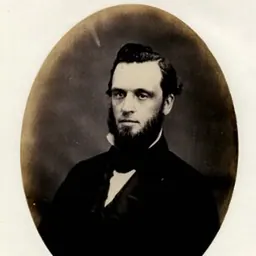
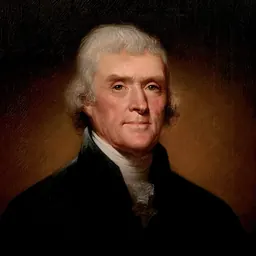
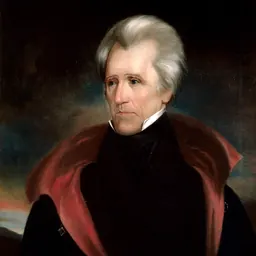
People in Richard Bland Lee's life
Named in this biography and alive at the same time


Related people
Same field, nearest in time


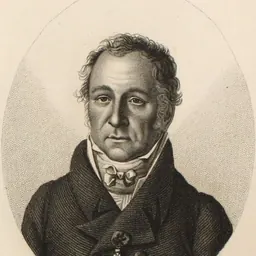

Contemporaries
People whose lives overlapped Richard Bland Lee's




Frequently asked questions
Who was Richard Bland Lee?
American politician
When was Richard Bland Lee born?
Richard Bland Lee was born on 20 January 1761 in Prince William County.
When did Richard Bland Lee die?
Richard Bland Lee died on 12 March 1827 in Washington, D.C..
What was Richard Bland Lee's occupation?
Richard Bland Lee was a politician, judge and planter (American South).
What nationality was Richard Bland Lee?
Richard Bland Lee was American.
Sources & further reading
· Wikipedia: Richard Bland Lee
Cite this page
APA: Biography.guide. (2026). Richard Bland Lee. https://biography.guide/richard-bland-lee/
MLA: "Richard Bland Lee." Biography.guide, https://biography.guide/richard-bland-lee/.
Chicago: "Richard Bland Lee." Biography.guide. https://biography.guide/richard-bland-lee/.
Data last updated: 2026-09-21 · Spot an error? Report a correction.
Portrait: Wikimedia Commons · author & licence
Page generated 2026-09-27 05:00 UTC