
About Riazuddin
Lived 1930 – 2013 (aged 82). Riazuddin was a Pakistani and Indian physicist, academic, philosopher and theoretical physicist, known for Neutrino, Pakistan and weapons of mass destruction and Project-706.
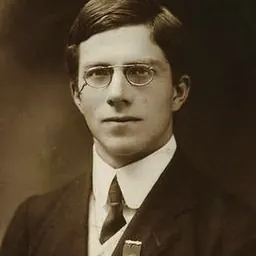
Riazuddin (10 November 1930 – 9 September 2013) was a Pakistani theoretical physicist, specialising in high-energy physics and nuclear physics. He is considered one of the early pioneers of Pakistan's nuclear weapons development and atomic deterrence development. Starting his scientific research in 1958, he served as the director of the Theoretical Physics Group (TPG) of the Pakistan Atomic Energy Commission (PAEC) from 1974 until 1984. Riazuddin was a pupil of Abdus Salam, a Nobel laureate in Physics. Riazuddin also studied under the supervision of Abdus Salam at the Postgraduate level at Cambridge University. As a student of mathematics, he learned the advanced course on quantum mechanics under Abdus Salam, as he had made the course of quantum mechanics outside the regular curriculum. In 1951, Salam funded his scholarship, and helped him gain admission to the graduate school of Punjab University. In 1953, Salam supervised his MSc in applied mathematics where his master's dissertation dealt with fundamental concepts of mathematical physics.
With the help of Salam, Riazuddin went to the United Kingdom on a scholarship and attended University of Cambridge. At Cambridge, he was awarded his PhD in Theoretical physics in 1959. Riazuddin returned to Pakistan where he joined Punjab University as an associate professor. In 1968, Riazuddin was awarded the Gold Medal in Physical Sciences for scientists under 40 years of age by the Pakistan Academy of Sciences. He was the founding director of the Institute of Physics (IP) where he engaged in research on string theory, the theory of relativity, particle physics and nuclear physics. For this contribution, he was awarded the doctorate in physics (theoretical) by Cambridge University. He seldom published papers, preferring long correspondences with his brother Fayyazuddin, mentor Abdus Salam, and colleagues including Asghar Qadir, Michael Duff, and Masud Ahmad. During the 1960s, he associated himself with complex mathematical applications of nuclear physics. In 1960, Riazuddin used Nucleon-nucleon dispersion relation to discriminate proton-proton scattering in pseudoscalar mesons. In 1965, Riazuddin carried out the pioneering work on vector currents, in which he showed the discrepancy between μ-decay and the constant gravity, and the strong interaction renormalisation of the Beta (β)-decay.
The same year, the U.S. Atomic Energy Commission, partnering with the Pakistan Atomic Energy Commission, sponsored Riazuddin to undertake further research. Along with Munir Ahmad Rashid and Fayyazuddin, Riazuddin realised that the physical baryons are considered broken in special unitary groups, symmetric groups and the tensor product. The relevant papers were submitted at the United States Atomic Energy Commission. In 1967, at the Fermi Institute, Riazuddin, with his brother Fayyazuddin, carried out research in the field of current algebra, where they applied the mathematical framework of current algebra in the applications of radiative decays of mesons.
In 1982, Riazuddin and Fayyazuddin published a pioneering work on K mesons. Riazuddin postulated that radioactive decay in K mesons have almost vanished when chiral symmetry is introduced. After the introduction, the symmetries break the Standard Model of particle physics, even when the contribution from penguin diagrams is included.
From 1972, Riazuddin made pioneering research on neutrinos— an elusive particle postulated by Wolfgang Pauli in 1930. In 1972, Riazuddin and Fayyazuddin were the first to post mathematical frameworks of Current-algebra in neutrino scattering to determine the Scale invariance of Chiral symmetry breaking the Hamiltonian Quantum Mechanics. In 1987, Riazuddin and Fayyazuddin theorised that it is possible get light-neutrino masses in the range of a few electron volts by equalising the masses of superheavy neutrinos in background independence (universality).
In 2000, Riazuddin began his research in the series unsolved problems in physics. In 2005, at the National Center for Physics (NCP), Riazuddin presented his papers on neutrinos where he provided the mathematical framework of the neutrinos. Neutrinos have heavier masses but the neutrino oscillations do not completely identify the overall scale of their exact masses because they are exceedingly tiny. To determine the exact masses, Riazuddin introduced the laws of limits, as he realised there was a limit, to the electron energy spectra in tritium β-decay. In 2007, Riazuddin introduced SU(3) symmetry in the theory of double beta decay. He postulated the light neutrinos formed a triplet state in a SU(3) symmetry during the process. In 2008, Riazuddin pointed out that the neutrino mass has μ and τ symmetry and the Lepton number remains constant, a new type of Seesaw mechanism is formed, the so-called Riazuddin's Seesaw Model, the Dirac mass matrix provided the Yukawa coupling to follow the Majorana fermion to satisfy the Leptogenesis asymmetry. Riazuddin proposed that this interaction can be avoided when two of the heavy right-hand neutrinos are (nearly) degenerate.
In 2009, Riazuddin published a mathematical theory of the non-standard model, and its brief extensions to τ (tau) particles – particles that are similar to electrons with negative electric charge. In an experiment performed at the Synchrotron light source installed at the National Center for Physics (NCP), now the Abdus Salam Centre for Physics, Riazuddin observed the decay of the Tau particle, in which he theorised that hadronisation vector currents and axial vectors can be used to study the implicit properties and functions of hadronic resonances, together with Chiral symmetry. Salam asked Riazuddin to report to Munir Ahmad Khan – chairman of the Pakistan Atomic Energy Commission at that time. At PAEC, Salam assigned Riazuddin to his Theoretical Physics Group (TPG). The Theoretical Physics Group took research in fast neutron calculations – how neutrons moved in a nuclear chain reaction – the theory simultaneity — how would fission weapon would detonated from several points at the same point during the detonation process – and hydrodynamics – how the explosion produced by a chain reaction might behave – and what kind of and how much fissile material and reflectors would be used. Salam had attracted theoretical physicists who worked under Riazuddin despite his younger age. Riazuddin was among the scientists who attended the Multan meeting that was managed by Salam and convened by Pakistan President Zulfikar Ali Bhutto. After the meeting, Salam took Riazuddin, with Munir Ahmad Khan, to Bhutto's residence in Islamabad where the scientists briefed Bhutto about the development of the nuclear weapons programme.
Although Salam had traveled to the United States to evade the Indo-Pakistani war of 1971, he returned to Pakistan with stacks of historical books on the Manhattan Project in December 1971. In December 1973, the University of Maryland offered him a fellowship, and on the advice of Salam, Riazuddin went to United States. There, he became a senior research scientist at the University of Maryland, and obtained the open-source information on the "Manhattan Project" from the Library of Congress. Riazuddin carefully studied American theoretical physicist J. Robert Oppenheimer's approach to develop the first implosion device, and made further advances on Tolman–Oppenheimer–Volkoff limit, Oppenheimer–Phillips process, Born–Oppenheimer approximation.
After his return from the United States, Riazuddin was inducted into the Pakistan Atomic Energy Commission (PAEC) as member (technical). In 1974, he began to take research with the TPG, and began one of the pioneering member of the TPG. In 1973, Raziddin Siddiqui formed the Mathematical Physics Group (MPG) which closely collaborated with Theoretical Physics Group. Riazuddin called his mathematician friend Asghar Qadir, who specialised in special relativity under Riazuddin and Salam, to join the Mathematical Physics Group. Later in his career, Qadir published a college text book on theory of special relativity. Shortly after the India surprise nuclear test — Pokhran-I, Munir Ahmad Khan called for a meeting to initiate the work on atomic bomb. Riazuddin and Salam represented the Theoretical Physics Group (TPG), and it was decided to develop the implosion method for the first device. During the meeting, the word "bomb" was never used; instead academic scientists preferred to use the scientific research rationale. The Theoretical Physics Group began its research and directly reported to Abdus Salam.
In 1977, both MPG and TPG scientists completed the design and calculation of an atomic bomb. Along with Qadir, Riazuddin continued to develop the theoretical designs of the atomic weapon during 1978. In 1982 the PAEC finally developed the device under the leadership of Munir Ahmad Khan. The PAEC carried out the first cold-test of the TPG's theoretical design by May 1983 at Kirana Hills. The test teams were headed by Ishfaq Ahmad, a nuclear physicist, and Munir Ahmad Khan supervised the testings.
Riazuddin later disclosed that he worked as part of the team, under Abdus Salam, that worked on designs for Pakistan's nuclear explosive device. As he explained: "We were the designers of the bomb, like the tailor who tells you how much of the material is required to stitch a suit. We had to identify the fissile material, whether to use plutonium or...enriched uranium, which method of detonation, which explosive, which type of tampers and lenses to use, how material will be compressed, how shock waves will be created, what would be the yield.". also at Quaid-e-Azam University. He was most famous for his TPG Group work Riazuddin and his team of theoretical physicists are widely credited to have developed and designed Pakistan's nuclear weapon devices.
On 26 April 2009, a day-long conference was held in Islamabad to pay tribute to an eminent research scientist and theoretical physicist, Riazuddin. The conference was organised by National University of Sciences and Technology (NUST) and Riazuddin National Centre for Physics (RNCP). In the conference, Masud Ahmad, who is also the student of his, said:
"Prof. Riaz always put in his best efforts to obtain original results while working on various issues related to science and technology".
NUST Rector, Engr. Muhammad Asghar also paid tributes to him and said:
"Prof. Riazuddin has a very strong and professional background in the field of Physics. He achieved many distinctions and awards from national as well as international institutes, which includes Tamgha-e-Imtiaz, Sitara-i-Imtiaz and Hilal-e-Imtiaz and awards from UNESCO, Economic Cooperation Organization and COMSTECH Prize in Physics".
Institutes named after Riazuddin Riazuddin National Center for Physics, Quaid-e-Azam University, in Islamabad.
Publications and scientific articles
Don’t just read it —
keep it.
Full-length biographies made to live with: read them, listen on the way to work, watch them tonight.
- E-book
- Audio
- Video
Instant download · yours to keep · every purchase keeps this site free
Important facts
People in Riazuddin's life
Named in this biography and alive at the same time



Related people
Same field, nearest in time



Contemporaries
People whose lives overlapped Riazuddin's


Frequently asked questions
Who was Riazuddin?
Pakistani nuclear physicist (1930–2013)
When was Riazuddin born?
Riazuddin was born on 10 November 1930 in Ludhiana.
When did Riazuddin die?
Riazuddin died on 9 September 2013 in Islamabad.
What was Riazuddin's occupation?
Riazuddin was a physicist, academic, philosopher and theoretical physicist.
What was Riazuddin known for?
Riazuddin was known for Neutrino, Pakistan and weapons of mass destruction and Project-706.
What nationality was Riazuddin?
Riazuddin was Pakistani and Indian.
Sources & further reading
· DBpedia: Riazuddin (physicist)
Cite this page
APA: Biography.guide. (2026). Riazuddin. https://biography.guide/riazuddin/
MLA: "Riazuddin." Biography.guide, https://biography.guide/riazuddin/.
Chicago: "Riazuddin." Biography.guide. https://biography.guide/riazuddin/.
Data last updated: 2026-09-25 · Spot an error? Report a correction.
Page generated 2026-09-27 05:11 UTC