
About Rex Richards
Lived 1922 – 2019 (aged 96). Rex Richards was a British chemist and university teacher, known for Leverhulme Trust, Merton College and University of Exeter.
Sir Rex Edward Richards (28 October 1922 – 15 July 2019) was a British scientist and academic. He served as vice-chancellor of University of Oxford and as a director of the Leverhulme Trust.
Education Richards was educated at Colyton Grammar School, and became the first pupil from the school to attend the University of Oxford when he went up to St John's College, Oxford in January 1942. He was awarded a first class Bachelor of Arts degree in 1945 and a Doctor of Philosophy in 1948.
Career After graduating, Richards stayed at the university as a Fellow in chemistry at Lincoln College from 1947 to 1964. In 1964 he succeeded Sir Cyril Hinshelwood as Dr Lee's Professor of Chemistry at Exeter College. In 1969, he became Warden of Merton College. A painted portrait of Richards by Allan Ramsay hangs in the Senate and Council Chamber, Northcote House, University of Exeter, and another by Bryan Organ in Merton College, Oxford.
Richards chaired numerous committees concerned with higher education, including an independent enquiry to investigate factors that might deter young physicians and dentists from choosing clinical academic careers.
Richards maintained an interest in the art world as well; he was a member of the National Gallery Scientific Advisory Committee from 1978 to 2007 and its chairman from 1991 to 1993. In 1981, Richards became a founding member of the World Cultural Council. He was trustee of the Tate Gallery from 1982 to 1988 and 1989–1993, of the National Gallery from 1982 to 1988 and 1989–1993, and of the Henry Moore Foundation from 1989 to 2002; he was Chairman of the Moore from 1994 to 2001. He was also Chairman of the British Postgraduate Medical Foundation from 1986 to 1993.
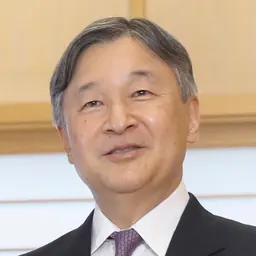
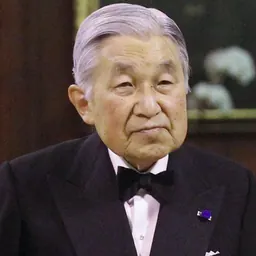
The emperor of Japan Naruhito mentions him in his memoir, and when Emperor Akihito visited his son, then Prince Naruhito, at Merton College, Oxford, he was a very gracious warden and the emperor praised Sir Rex Richards. He was warden for only half his stay, but he was a big influence on him and his researches.
Richards's research work in the physical and theoretical chemistry laboratory at Oxford was primarily concerned with nuclear magnetic resonance; the magnet from his 1956 prototype is in the collection of the Science Museum, London.. His early work, leading to the award of a DPhil. in 1948, was on infrared spectroscopy and was supervised by Harold Warris Thompson.
Personal life In 1948 Richards married Eva Vago; the couple had two daughters.
Don’t just read it —
keep it.
Full-length biographies made to live with: read them, listen on the way to work, watch them tonight.
- E-book
- Audio
- Video
Instant download · yours to keep · every purchase keeps this site free
Important facts
People in Rex Richards's life
Named in this biography and alive at the same time





Related people
Same field, nearest in time




Contemporaries
People whose lives overlapped Rex Richards's
Frequently asked questions
Who was Rex Richards?
British scientist and academic (1922–2019)
When was Rex Richards born?
Rex Richards was born on 28 October 1922 in Colyton.
When did Rex Richards die?
Rex Richards died on 15 July 2019.
What was Rex Richards's occupation?
Rex Richards was a chemist and university teacher.
What was Rex Richards known for?
Rex Richards was known for Leverhulme Trust, Merton College, University of Exeter and Vice Chancellor.
What nationality was Rex Richards?
Rex Richards was British.
Sources & further reading
· DBpedia: Rex Richards (chemist)
Cite this page
APA: Biography.guide. (2026). Rex Richards. https://biography.guide/rex-richards/
MLA: "Rex Richards." Biography.guide, https://biography.guide/rex-richards/.
Chicago: "Rex Richards." Biography.guide. https://biography.guide/rex-richards/.
Data last updated: 2026-09-20 · Spot an error? Report a correction.
Page generated 2026-09-27 05:27 UTC