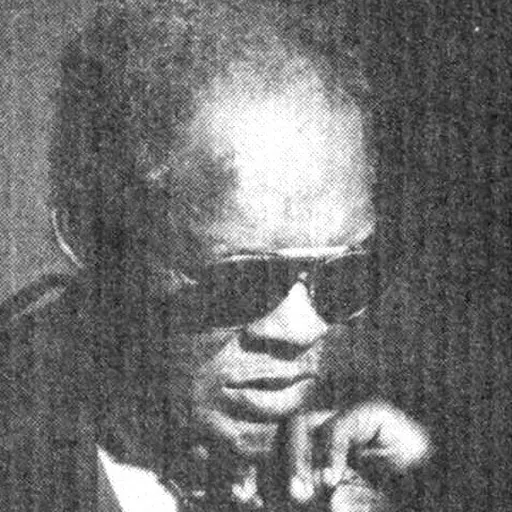
About Reverend Gary Davis
Lived 1896 – 1972 (aged 76). Reverend Gary Davis was an American street artist, composer, guitarist, singer, blues musician and musician.
Gary D. Davis (April 30, 1896 – May 5, 1972), known as Reverend Gary Davis and Blind Gary Davis, was an American blues and gospel singer who was also proficient on the banjo, guitar and harmonica. Born in Laurens, South Carolina, and blind since infancy, Davis first performed professionally in the Piedmont blues scene of Durham, North Carolina, in the 1930s, then converted to Christianity and became a minister. After moving to New York in the 1940s, Davis experienced a career rebirth as part of the American folk music revival that peaked during the 1960s. Davis' most notable recordings include "Samson and Delilah" and "Death Don't Have No Mercy".
Davis' fingerpicking guitar style influenced many other artists. His students included Stefan Grossman, Rick Ruskin, David Bromberg, Steve Katz, Roy Book Binder, Larry Johnson, Alex Shoumatoff, Nick Katzman, Dave Van Ronk, Rory Block, Ernie Hawkins, Larry Campbell, Bob Weir, Woody Mann, and Tom Winslow. He also influenced Bob Dylan, the Grateful Dead, Wizz Jones, Jorma Kaukonen, Keb' Mo', Ollabelle, Resurrection Band, and John Sebastian (of the Lovin' Spoonful).
Biography Early years to 1942 Davis was born in Laurens, South Carolina in the Piedmont region, He became blind as an infant. He recalled his grandmother telling him he got "sore eyes" when he was three-weeks old, and the doctors put something in his eyes that "cause ulcers to grow" over the eyes and he ended up blind. His mother remarried and gave birth to a boy. He took up the guitar, first attempting to construct home made instruments, then acquired a cheap mail order instrument paid for by his mother on which he played any time he could, learning his first chords from a local musician named Craig Fowler. An even earlier home recording session also survives, comprising seven tracks recorded in 1951, and only recently discovered and made available as the Ellen Stekert tapes, now made available for listening via YouTube. Between these three informal recording sessions, Stekert and Cohen's recordings documented some 34 different items in Davis' repertoire of the time, including such subsequent well known pieces as "Civil War Parade", "I Am The True Vine", "Say No To The Devil", "Twelve Gates To The City" and "Twelve Sticks", but also renditions of several songs nowhere else recorded.
In 1954, a recording session was arranged for Davis for the New York-based Stinson Records by a young Kenneth S. Goldstein, then at the start of his career as a record producer, featuring Davis on guitar and vocals backed by Sonny Terry on harmonica, the result being released as a ten-inch LP entitled The Singing Reverend. According to Ian Zack, the record is marred by Terry's harmonica being recorded at too high a level while the level of the guitar is low, although on careful listening it is quite adequate as a representation of the two players, however in any case it failed to attract much attention. Meanwhile, between 1954 and 1957, Davis began to be featured, along with other blues artists, at a series of concerts under the name "Midnight Special". In a quote from future music writer Lawrence Cohn, Ian Zack states: "Brownie [McGhee], Sonny [Terry] and Gary all took turns... [while the others were playing], Gary would catnap. When it came to his turn, Brownie would give him a shot in the ribs, Gary would startle awake, proceed to knock the audience out with some incredible piece of music, then go back to sleep until it was his turn again", and that Davis must have been exhausted from his other two jobs, preaching and street singing, and having to wait his turn at midnight concerts that sometimes did not get going until 1 a.m. had to have been difficult.
Through the early 1960s Davis started to travel a little for bookings including in Boston, and while at home in New York would attend folk music gatherings at Washington Square on Sundays. In 1962, a then 16 year old Jewish kid Stefan Grossman sought out Davis for lessons, with Davis becoming "like a surrogate grandfather in a way" and Grossman in return absorbing everything Davis could show him, and sometimes spending eight hours at the Davises. In March 1966, Davis appeared (sharing the episode with Donovan and sitar playing singer Shawn Phillips) playing two numbers on Pete Seeger's long running Rainbow Quest television program, appearing in Episode 23 of the 39 made. Davis appeared to disconcert the show's host with his lengthy performances—"Children of Zion" and "Oh Glory, How Happy I Am", both on 12-string guitar—but the result forms a valuable audio visual document of Davis' performing style at this time. Four months later, Davis left for his third visit to the UK, this time as a solo artist, performing in folk clubs, now aged 70; over a three-week period he appeared in 13 different locations. although artistically it has been considered of less interest than his earlier output, additional royalties allowed them to purchase a second house in Newtonville, New Jersey, which they used as a weekend getaway.
In the liner notes to the Yazoo release Reverend Gary Davis 1935-1949 (mis-represented as "1935-1939" on the back cover), Stefan Grossman wrote: "Blues historians tend to classify the guitar style of Reverend Davis as an imitation of Blind Blake's. But this is quite absurd. Blake's technique was limited to his style of music. Davis uses a much more complicated approach to guitar playing which employs rhythmic and linear counter-point behind a sung musical statement. His instrumentals go beyond the ordinary "dance rag" and can depict a marching band, a battle, a broken car or the dreams of the devil. Reverend Davis has also perfected more than one style. He can play in the gentle style of John Hurt [...] or the more primitive bottleneck style or even double thumb frail banjo dance tunes or play carnival style banjo. But his major achievement is developing a guitar style that incorporated more than a syncopated bass or an alternating bass but used a variation of these played against a treble melody that was coupled with a middle registered harmony. ... Many times the thumb plays treble notes [editor's note: the converse of regular guitar playing] to give them the right accent ... He has developed "rolls" that double time the rhythm or accentuate the existing time signature. ... As with many other ragtime guitarists, Reverend Davis tends to favor the key of C. But for him each key has its own individual sound and there are pieces played in A, C, E. F and G on this disc. Davis has the uncanny ability of being able to play proficiently in any key. His most unusual arrangement conceptions are found in those songs placed in the key of F."
Presenting some examples of Davis' style as illustrated by specific songs, Ernie Hawkins initially states:
Filmed appearances Davis scholars and enthusiasts are fortunate that he lived long enough to be filmed on a number of occasions, generally while in his prime as a performer. Stefan Grossman compiled a 105-minute set of all then known Davis film clips, released as SKU Vestapol 13111 Rev Gary Davis: The Video Collection, covering two tracks taken from the 1964 short film Blind Gary Davis that played in theatres in the early 1960s; two tunes broadcast on Rainbow Quest in 1966; eight tunes filmed for the Seattle Folklore Society in 1969 by the Anthropology Department, followed by another nine shot at a local television station on the same trip; plus two tunes filmed by Lionel Rogosin for his 1970 film Black Roots. Not included here, but available via other sources, are a brief clip from French television recorded in May 1964 when "the Blues & Gospel Caravan" was performing in Paris, and two tracks of better audio and video quality recorded at Newport in 1965 ("Death Don't Have No Mercy", "Twelve Gates to the City") included in the DVD documentary Harlem Street Singer (Acoustic Films, 2014). This documentary also includes some additional, fragmentary silent footage (with semi synchronized audio dubbed from other sources) filmed in Montreal, Canada, in January 1967, as well as informal footage of Davis at home providing advice and instruction for a student.
Discography Many of Davis' recordings were published posthumously.
Recognition While he was alive, Davis' music was recognized by musicians of the era as exceptional. Bob Dylan called him "one of the wizards of modern music," while Bob Weir of the Grateful Dead said Davis had "a Bacchian sense of music which transcended any common notion of a bluesman." Jorma Kaukonen of the Jefferson Airplane suggested Davis is "one of the greatest figures of 20th-century music."
In 2002, Inside Sounds released a 20-track compilation Gary Davis Style (The Legacy Of Reverend Gary Davis) by a range of artists, a project described by the compiler as "started as an attempt to celebrate the centenary of Rev. Gary Davis's birth" which ended up comprising 20 tracks of which approximately half were previously released, and the remainder at that time previously unrecorded by the contributing artists.
Don’t just read it —
keep it.
Full-length biographies made to live with: read them, listen on the way to work, watch them tonight.
- E-book
- Audio
- Video
Instant download · yours to keep · every purchase keeps this site free
Important facts
People in Reverend Gary Davis's life
Named in this biography and alive at the same time

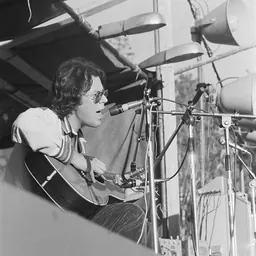


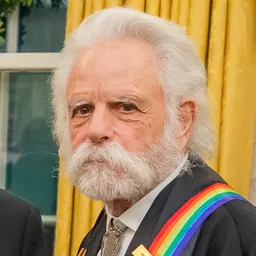
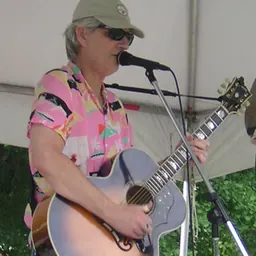
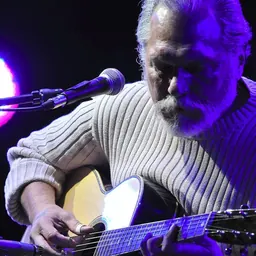

Related people
Same field, nearest in time
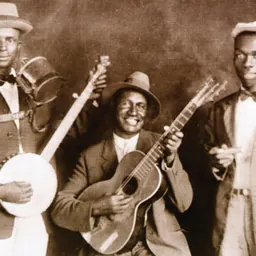
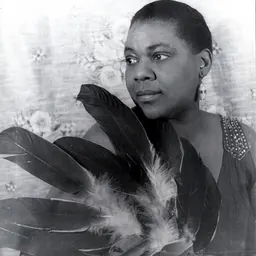


Contemporaries
People whose lives overlapped Reverend Gary Davis's



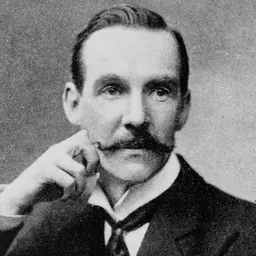
Frequently asked questions
Who was Reverend Gary Davis?
American blues and gospel singer and guitarist (1896–1972)
When was Reverend Gary Davis born?
Reverend Gary Davis was born on 30 April 1896 in Laurens County, Laurens.
When did Reverend Gary Davis die?
Reverend Gary Davis died on 5 May 1972 in Hammonton.
What was Reverend Gary Davis's occupation?
Reverend Gary Davis was a street artist, composer, guitarist, singer, blues musician and musician.
What nationality was Reverend Gary Davis?
Reverend Gary Davis was American.
Sources & further reading
· Wikipedia: Reverend Gary Davis
· DBpedia: Reverend Gary Davis
Cite this page
APA: Biography.guide. (2026). Reverend Gary Davis. https://biography.guide/reverend-gary-davis/
MLA: "Reverend Gary Davis." Biography.guide, https://biography.guide/reverend-gary-davis/.
Chicago: "Reverend Gary Davis." Biography.guide. https://biography.guide/reverend-gary-davis/.
Data last updated: 2026-09-20 · Spot an error? Report a correction.
Page generated 2026-09-27 05:10 UTC