
About René Pleven
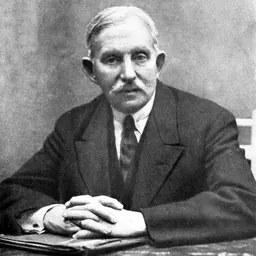
Lived 1901 – 1993 (aged 91). René Pleven was a French politician, diplomat, justice minister, head of government and defence minister.
René Jean Pleven (; 15 April 190113 January 1993) was a notable political figure of the French Resistance and Fourth Republic. An early associate of Jean Monnet then member of the Free French led by Charles de Gaulle, he took a leading role in colonial and financial matters including the Gaullist takeover of French Equatorial Africa in 1940, the creation of the Caisse Centrale de la France Libre in 1941, the Brazzaville Conference in 1944, and the nationalization of the largest French banks in 1945.
In 1946, Pleven broke with De Gaulle and helped found the Democratic and Socialist Union of the Resistance (UDSR), a political party that was meant to be a successor to the wartime Resistance movement. He served as prime minister twice in the early 1950s and is remembered for the Pleven Plan for a European Defence Community, which he proposed in October 1950 in coordination with Monnet.
Early life
René Pleven was born in Rennes on 15 April 1901 as the son of a commissioned officer and director of studies at the Special Military School of St. Cyr. After studying law at the University of Paris, he failed the exam for the financial corps of the civil service, so he decided to move to the United States, Canada, and Great Britain to work there. He rose to become a telephone company executive. In 1924, he married Anne Bompard.
Wartime
Immediately after the breakout of the Second World War, he was in charge of encouraging the construction of aircraft for the Allies in the United States and of purchasing planes for France. but then a year later, he joined Charles de Gaulle's Free French Forces, which resisted the Nazi-allied French Vichy Regime. Pleven suggested a political union between Britain and France, with a unification of sovereignty and defensive forces. The plan, supported by Winston Churchill, Paul Reynaud and Charles de Gaulle was not approved due to the opposition of the French armistice with Germany. Pleven helped rally support for Free France in French Equatorial Africa. Returning to London, where de Gaulle and his forces were exiled, in 1941, he became national commissioner for the economy, finance, the colonies and foreign affairs of the French National Committee. In this role, he presided over a 1944 conference in Brazzaville, which opted for a more liberal policy towards the colonies.
He then became Defense Minister again. His proposal for a European Defense Community, in which to integrate a re-armed Germany, known as the Pleven Plan, was defeated by the Gaullists, communists, and socialists. He also advocated a hard hand in defending French colonial rule in Indochina. In 1953, he resigned as chairman of the UDSR after his party supported the Vietnam peace talks. Being Minister of Defense from 1952 to 1954, he was responsible when the French lost the Battle of Dien Bien Phu initiating the crumbling of French hegemony in the whole region. Instead, he became the Fourth Republic's last Foreign Minister in 1958.
In 1966, Pleven's wife died. He had had two daughters, Françoise and Nicole, with her. From 1969 to 1973, he served as Minister of Justice in the governments of Jacques Chaban-Delmas and Pierre Messmer, signing the pardon of notorious escapee Henri Charrière in 1970. Losing re-election as legislator in 1973, he became president of a regional development council in his native Brittany. He died of heart failure on 13 January 1993 at the age of 91.
Governments
First ministry (12 July 1950 – 10 March 1951) René Pleven – President of the Council Robert Schuman – Minister of Foreign Affairs Guy Mollet – Minister for the Council of Europe Jules Moch – Minister of National Defense Henri Queuille – Minister of the Interior Maurice Petsche – Minister of Finance and Economic Affairs Edgar Faure – Minister of Budget Jean-Marie Louvel – Minister of Commerce and Industry Paul Bacon – Minister of Labour and Social Security René Mayer – Minister of Justice Gaston Defferre – Minister of Merchant Marine Pierre-Olivier Lapie – Minister of National Education Louis Jacquinot – Minister of Veterans and War Victims Pierre Pflimlin – Minister of Agriculture François Mitterrand – Minister of Overseas France Antoine Pinay – Minister of Public Works, Transport, and Tourism Pierre Schneiter – Minister of Public Health and Population Eugène Claudius-Petit – Minister of Reconstruction and Town Planning Charles Brune – Minister of Posts Albert Gazier – Minister of Information Jean Letourneau – Minister of Relations with Partner States Paul Giacobbi – Minister without Portfolio
Second Ministry (11 August 1951 – 20 January 1952) René Pleven – President of the Council Georges Bidault – Vice President of the Council and Minister of National Defense René Mayer – Vice President of the Council and Minister of Finance and Economic Affairs Robert Schuman – Minister of Foreign Affairs Charles Brune – Minister of the Interior Pierre Courant – Minister of Budget Jean-Marie Louvel – Minister of Industry Paul Bacon – Minister of Labour and Social Security Edgar Faure – Minister of Justice André Morice – Minister of Merchant Marine André Marie – Minister of National Education Emmanuel Temple – Minister of Veterans and War Victims Paul Antier – Minister of Agriculture Louis Jacquinot – Minister of Overseas France Antoine Pinay – Minister of Public Works, Transport, and Tourism Paul Ribeyre – Minister of Public Health and Population Eugène Claudius-Petit – Minister of Reconstruction and Town Planning Joseph Laniel – Minister of Posts Robert Buron – Minister of Information Pierre Pflimlin – Minister of Commerce and External Economic Relations Jean Letourneau – Minister of State Maurice Petsche – Minister of State Henri Queuille – Minister of State
Changes: 16 September 1951 – Minister of State Maurice Petsche dies. 4 October 1951 – Joseph Laniel becomes a Minister of State. Roger Duchet succeeds Laniel as Minister of Posts. 21 November 1951 – Camille Laurens succeeds Antier as Minister of Agriculture.
Don’t just read it —
keep it.
Full-length biographies made to live with: read them, listen on the way to work, watch them tonight.
- E-book
- Audio
- Video
Instant download · yours to keep · every purchase keeps this site free
Important facts
People in René Pleven's life
Named in this biography and alive at the same time




Related people
Same field, nearest in time




Contemporaries
People whose lives overlapped René Pleven's



Frequently asked questions
Who was René Pleven?
French politician (1901-1993)
When was René Pleven born?
René Pleven was born on 15 April 1901 in Rennes.
When did René Pleven die?
René Pleven died on 13 January 1993 in Paris.
What was René Pleven's occupation?
René Pleven was a politician, diplomat, justice minister, head of government and defence minister.
What nationality was René Pleven?
René Pleven was French.
Sources & further reading
Cite this page
APA: Biography.guide. (2026). René Pleven. https://biography.guide/rene-pleven/
MLA: "René Pleven." Biography.guide, https://biography.guide/rene-pleven/.
Chicago: "René Pleven." Biography.guide. https://biography.guide/rene-pleven/.
Data last updated: 2026-09-20 · Spot an error? Report a correction.
Page generated 2026-09-27 05:28 UTC